

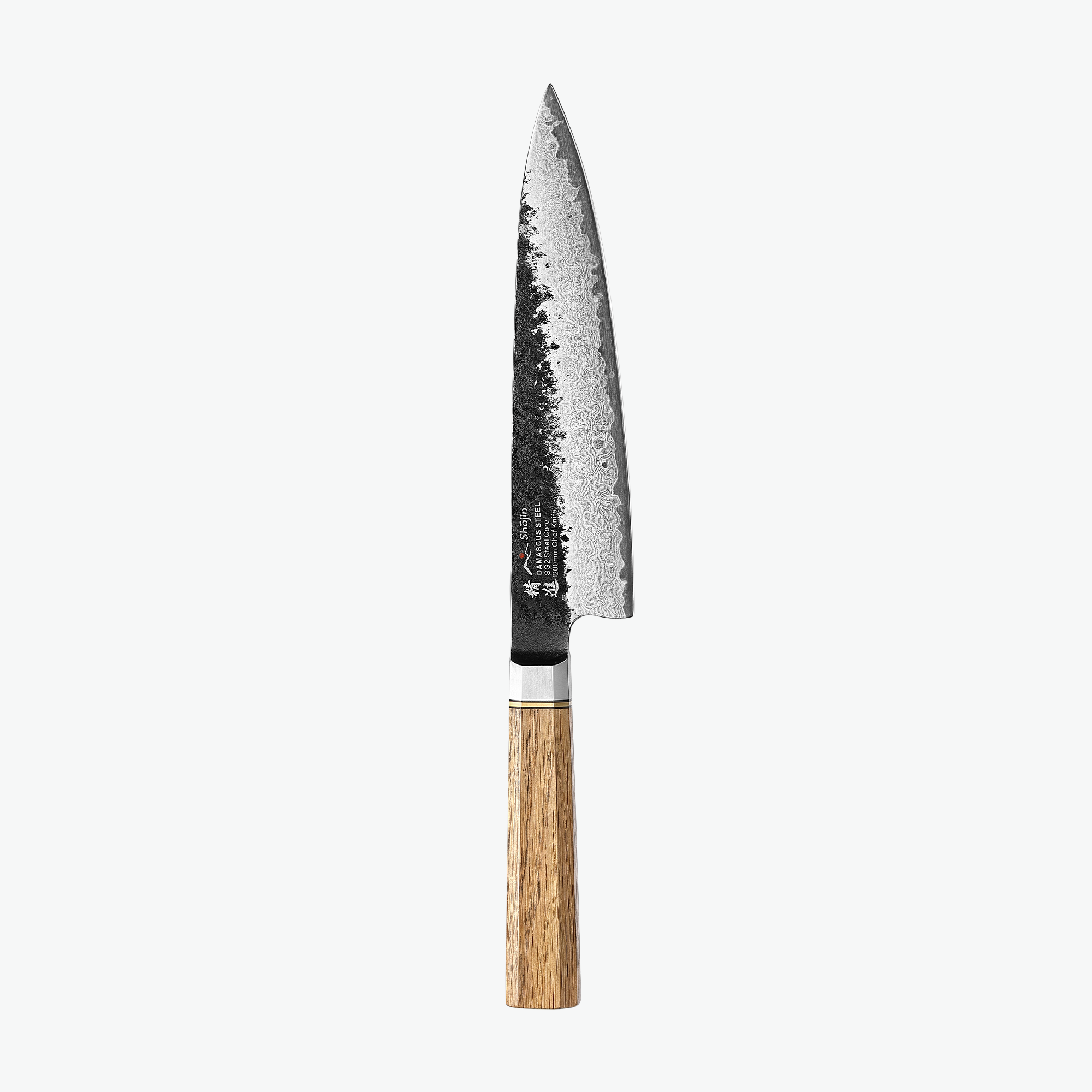
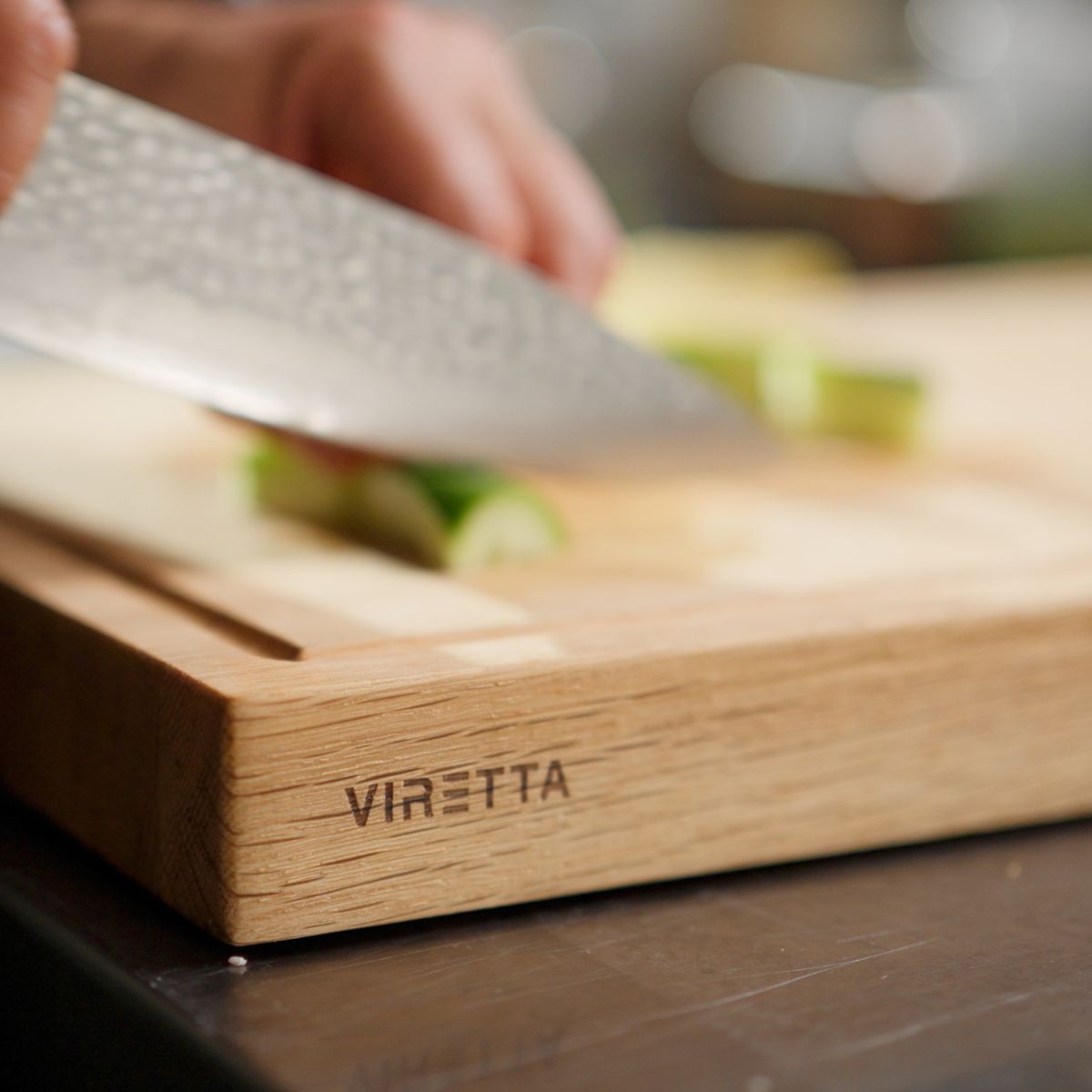



The wavy, organic patterns of a Damascus blade are a sight that captivates both chefs and craft enthusiasts. The pattern is not a superficial embellishment but the direct result of an incredibly complex forging process. To fully appreciate the craftsmanship behind a knife from our Shojin series, we must take a look behind the scenes and understand the journey the steel undergoes.
At Viretta, this centuries-old technique combines modern production facilities, where years of experience are merged with the latest technology, to ensure uncompromising and consistent quality in every blade. This article is a step-by-step guide to how modern, pattern-welded Damascus steel is created – a journey through heat, pressure, and precision.
Modern Tools, Traditional Craftsmanship
Forging Damascus steel today is a highly sophisticated process based on traditional principles. In the modern factories where our knives are manufactured, advanced machines are used to perform tasks that were historically done by hand:
-
Precision-controlled furnaces: Replacing the old forge, they ensure the steel is heated to the exact right temperature for perfect welding.
-
Hydraulic presses & forging hammers: These machines exert enormous and consistent pressure, perfectly and consistently bonding the layers of steel – something difficult to achieve by hand.
-
Precision grinding machines: Advanced belt grinders shape the blade with the highest accuracy.
-
Controlled acid bath: In the final step, the pattern becomes visible, with carefully monitored baths ensuring a uniform and aesthetically pleasing result.
The Process Step by Step: From Steel Bar to Work of Art
Step 1: Selection and Preparation of the Steel
Everything begins with the careful selection of materials. Thin plates of at least two different types of steel are stacked. For a modern, stainless Damascus blade, such as those in our Shojin series, a very hard core steel is often combined with layers of a tougher, more flexible steel. The core can be a high-performance steel like Japanese VG-10 or 10Cr15CoMoV, which provides unparalleled sharpness, while the outer layers offer protection and create the beautiful pattern.
Step 2: Forge Welding – Birth of the Laminate
The stack is placed in a precision-controlled furnace and heated to a welding temperature often exceeding 1,000 °C. Under enormous pressure from a hydraulic press or a forging hammer, the layers of steel fuse at a molecular level into a solid, laminated bar.
Step 3: Drawing and Folding – Doubling the Layers
The now solid bar is heated again, worked thinner and longer. Then it is cut, folded, and re-welded. With each pass, the number of layers doubles: 3 layers become 6, 6 become 12, and so on. To achieve the 67 layers in a Shojin Suna knife, multiple passes with machine precision are required.
Step 4: Shaping the Blade
Once the desired number of layers is achieved, the arduous shaping of the laminated bar into a knife form begins. Modern machines also take over heavy work, but the step still requires a trained eye and experience to achieve perfect balance and shape.
Step 5: Grinding and Hardening
The raw blade is roughly ground to remove impurities and define its geometry. This is followed by precise, computer-controlled heat treatment: heating, quenching, and tempering in custom-made furnaces to ensure uniform hardness.
Step 6: Etching – The Pattern Awakens
After fine grinding and polishing, the blade is still an ordinary piece of steel. In the final step, it is immersed in a controlled acid bath (often ferric chloride). The acid reacts differently to the various types of steel: some layers become dark, others light. This gradually creates the complex, beautiful Damascus pattern.
The Art of the Pattern
Through controlled techniques, the pattern can be designed during the process:
-
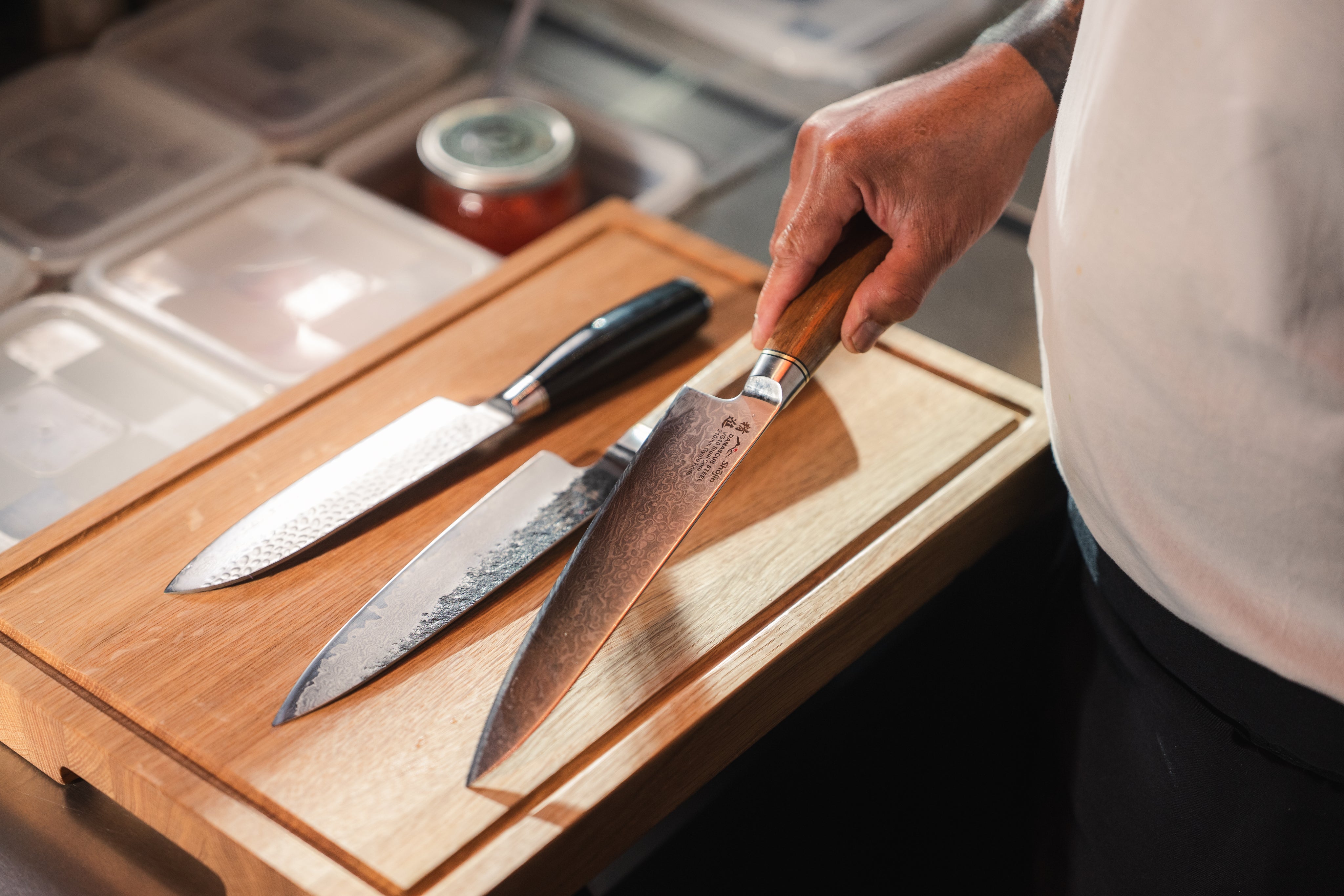
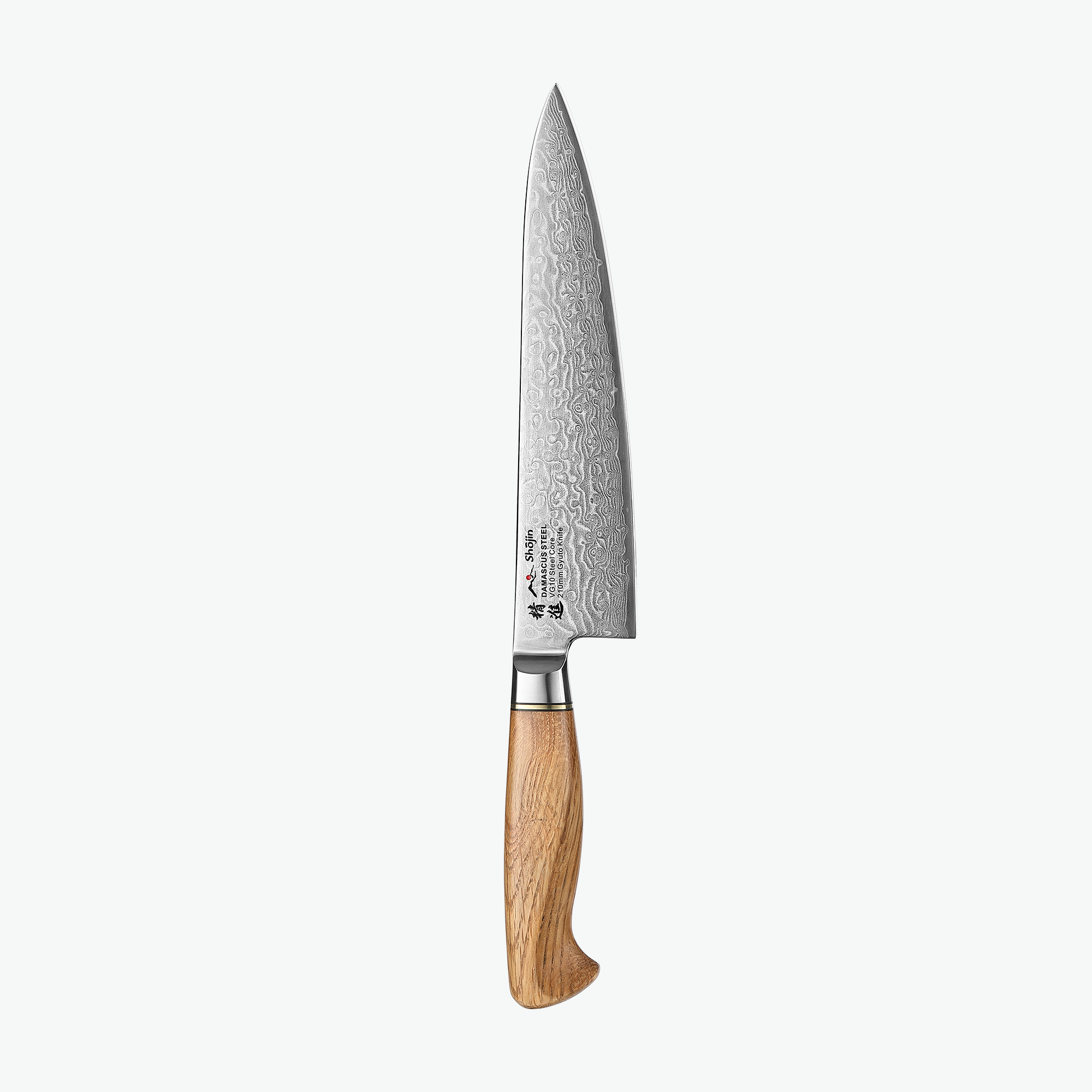
Random/Wavy Pattern: The classic pattern that naturally arises from folding – like the flowing lines of our Shojin Suna knives.
-
Twist/Torsion Pattern: The bar is twisted during forging, creating a star-like, intricate pattern.
-
Ladder & Raindrop Patterns: Indentations are pressed or milled before the final hammer blows, creating patterns that look like ladders or raindrops.
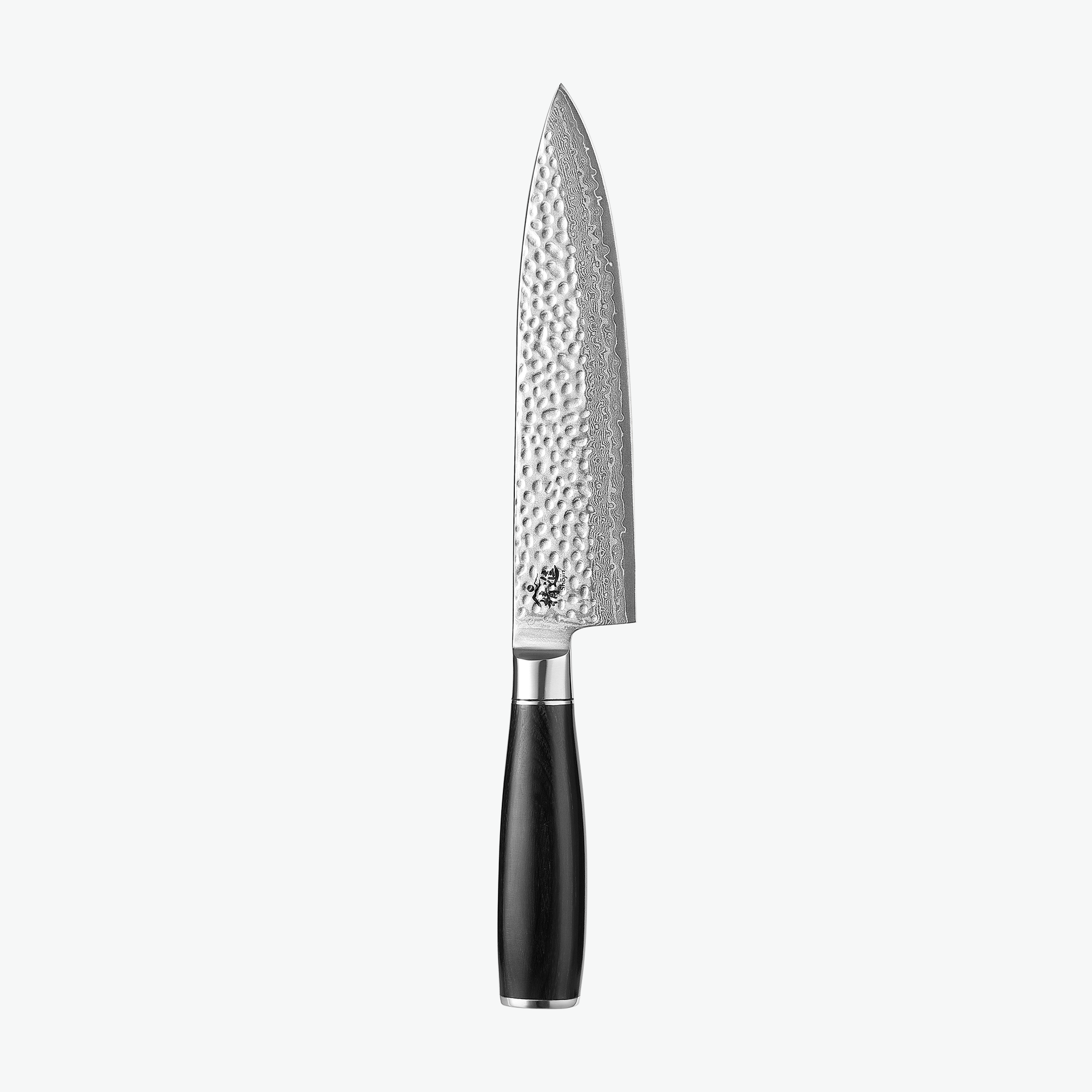
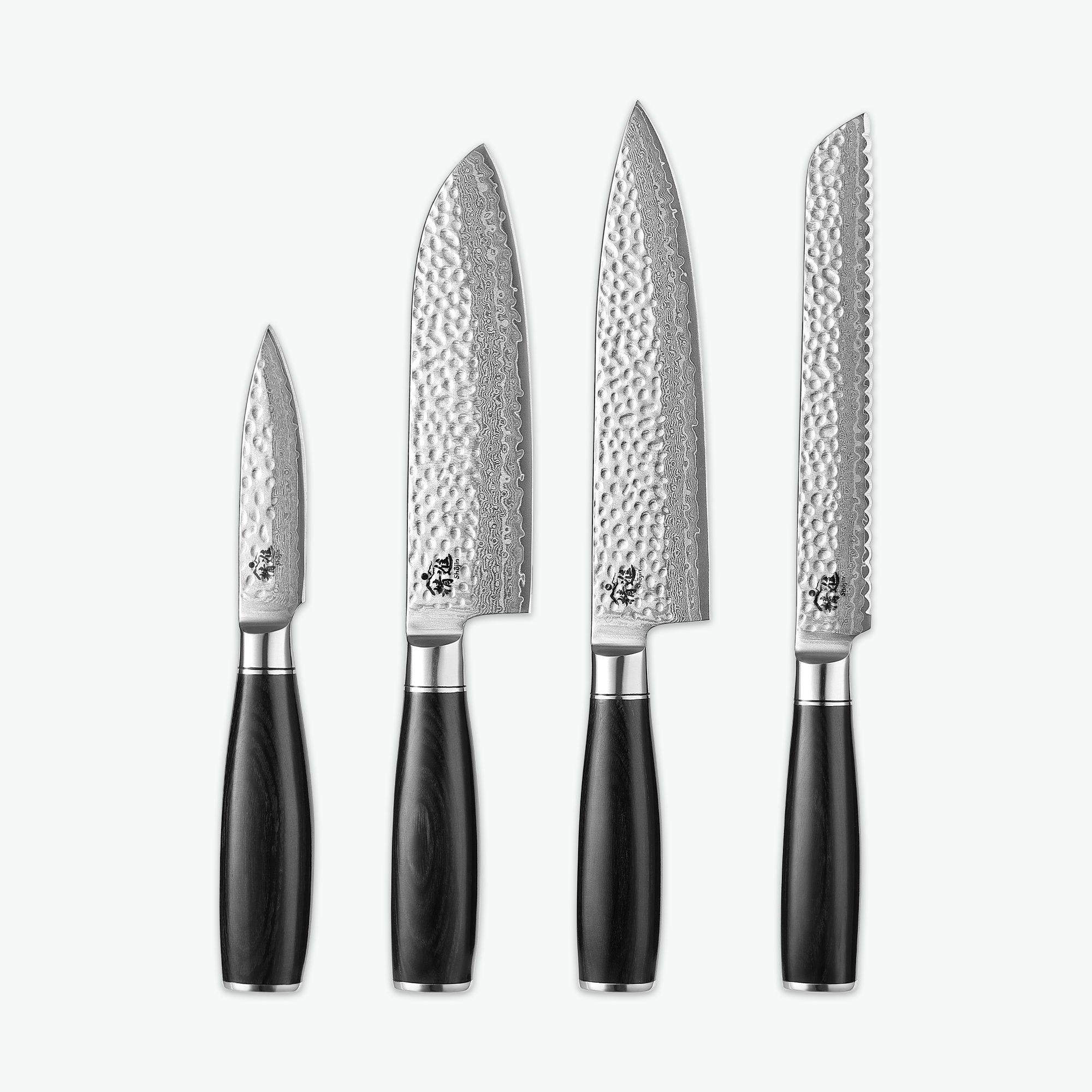
In addition, there are unique variations: On our Shojin Taru series, the Damascus pattern combines with a hand-hammered "Tsuchime" surface that creates small air pockets and gives a rustic appearance. In the exclusive Shojin Akari knife series, copper is integrated into the layers, creating a vibrant play of colors.
Conclusion: A Tribute to Modern Craftsmanship
Today, crafting Damascus steel is an impressive fusion of centuries-old principles of craftsmanship and modern production technology. The wavy pattern is not just decoration, but visible proof of a complex process that combines decades of experience with the highest precision.
When you hold a Viretta Damascus knife in your hand, you hold a product that has emerged from this unique synergy. It shows that tradition and innovation are not opposites, but partners in creating a tool that is both a work of art and a powerful instrument for the modern kitchen.


