


This is the most central question for anyone looking to invest in a high-quality kitchen tool: which steel is objectively the best? The truth is, there's no single, definitive answer. The search for the "best" steel is actually the search for the perfect balance – a balance individually tailored to the user's cooking style, ambitions, and maintenance routines.
Understanding blade steel means understanding a world of conscious compromises and metallurgical innovation. At Viretta, it is our passion to navigate this complex field and curate the types of steel that, in our conviction, offer optimal performance in their respective classes. In this comprehensive guide, we share our expert knowledge, demystify technical terms, and give you a complete overview so you can make an informed decision and find your perfect partner in the kitchen.
The Decisive Properties: A Technical Classification
To evaluate and compare steel, we must first speak the same language. Here is an in-depth explanation of the five cornerstones that define every blade:
- Hardness: Measured on the Rockwell C scale (HRC), hardness indicates the steel's resistance to permanent deformation. A high carbon content and the presence of hard particles (carbides) are key to high HRC. A harder blade can be ground to a finer, sharper angle, resulting in a sharper and more effortless cut.
- Toughness: This describes the steel's ability to absorb energy and withstand sudden impacts without chipping or breaking. There is a fundamental inverse relationship between hardness and toughness: the harder a material, the more brittle it generally becomes. Alloying elements like molybdenum and a fine-grained microstructure can improve toughness.
- Edge Retention: A combination of hardness and wear resistance. Hardness prevents the edge from rolling or deforming, while wear resistance – primarily from hard carbides (especially vanadium carbides) – withstands the abrasive action of cutting boards and food. A steel with high edge retention stays sharp significantly longer.
- Corrosion Resistance: The steel's ability to resist rust and stains. This is primarily achieved by a high chromium content (typically over 13%), which forms a protective, passive oxide layer on the surface. There is a delicate balance here, as a very high carbon content can bind some of the chromium in carbides, leaving less "free" chromium available for rust protection.
- Sharpenability: Indicates how easily material can be removed from the edge to restore sharpness. This is influenced by hardness and, in particular, the type and quantity of carbides. Steels with large, extremely hard vanadium carbides are significantly more difficult to sharpen than steels with smaller or softer chromium carbides.
The Steel Classes: A Journey Through Materials
High-quality knife steels can be divided into three overarching categories. Each class represents a specific philosophy, and at Viretta, we have deliberately selected a steel for each discipline that, in our opinion, embodies it masterfully.
1. The Reliable Everyday Class: Focus on Robustness and User-Friendliness
This class includes steels whose design philosophy is geared towards true workhorses. Priority is given to maximum toughness, excellent corrosion resistance, and straightforward maintenance. These knives are built for demanding everyday kitchen use and can forgive less precise handling.
The classic benchmark: X50CrMoV15 – This German steel is the standard in this category and is used by many renowned brands.
Viretta's choice: 5Cr15MoV (Classic Series) – Functionally, this steel is identical to its German counterpart. With a hardness of approx. 57 HRC, it is extremely tough, very rust-resistant, and incredibly easy to maintain with a simple honing steel. The intelligent choice for anyone looking for a reliable knife that simply works day after day.
Other noteworthy steels: 440A and 8Cr13MoV also fall into this category and offer good value for money, often with a slightly higher carbon content than 5Cr15MoV, but with a similar focus on balance.
2. The High-Performance Enthusiast Class: In Search of the Perfect Balance
This category is aimed at passionate home cooks and professionals who are looking for a noticeable increase in cutting performance. The goal is to maximize hardness and edge retention without sacrificing practical properties like good toughness and corrosion resistance. This is where the true art of steelmaking is demonstrated.
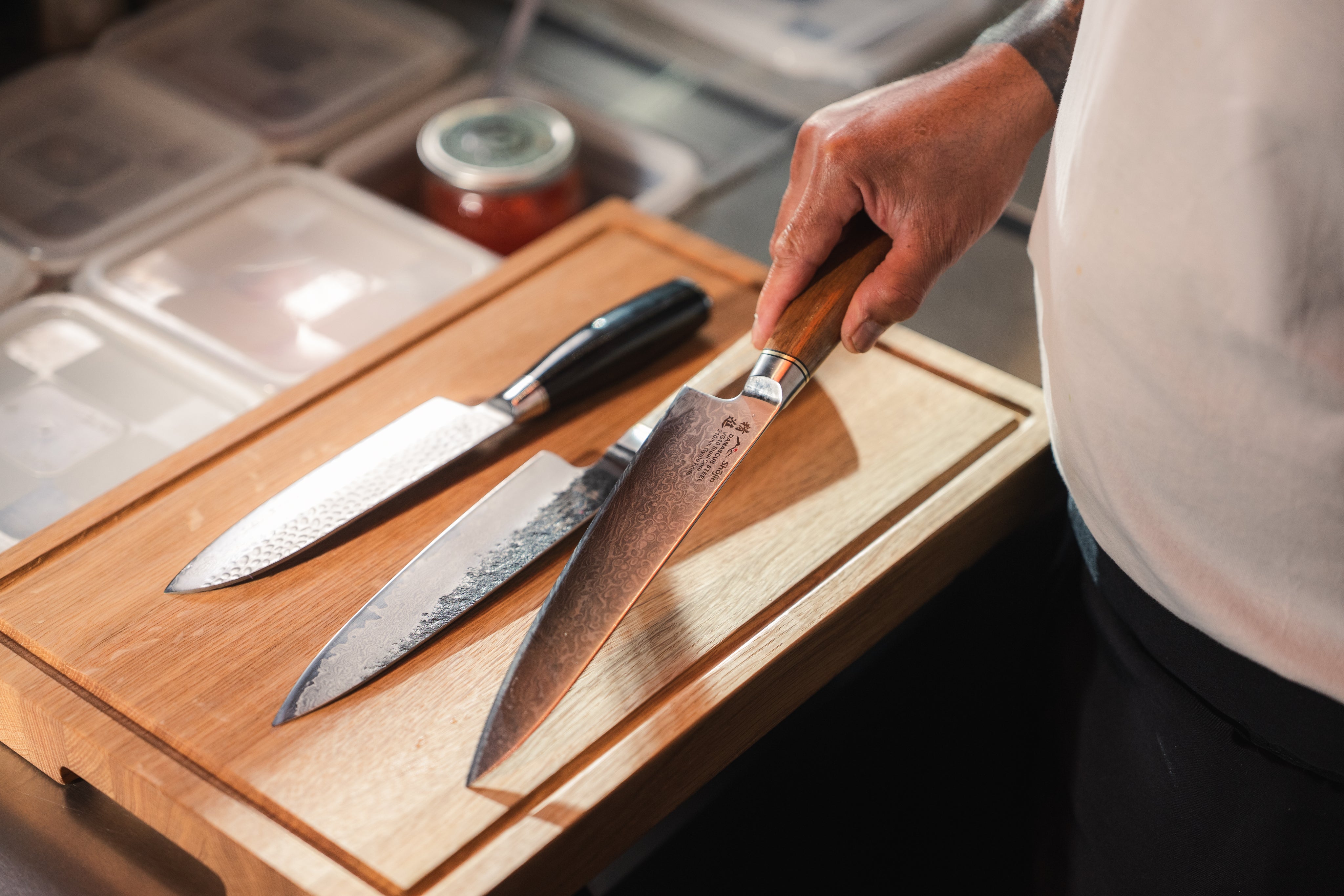
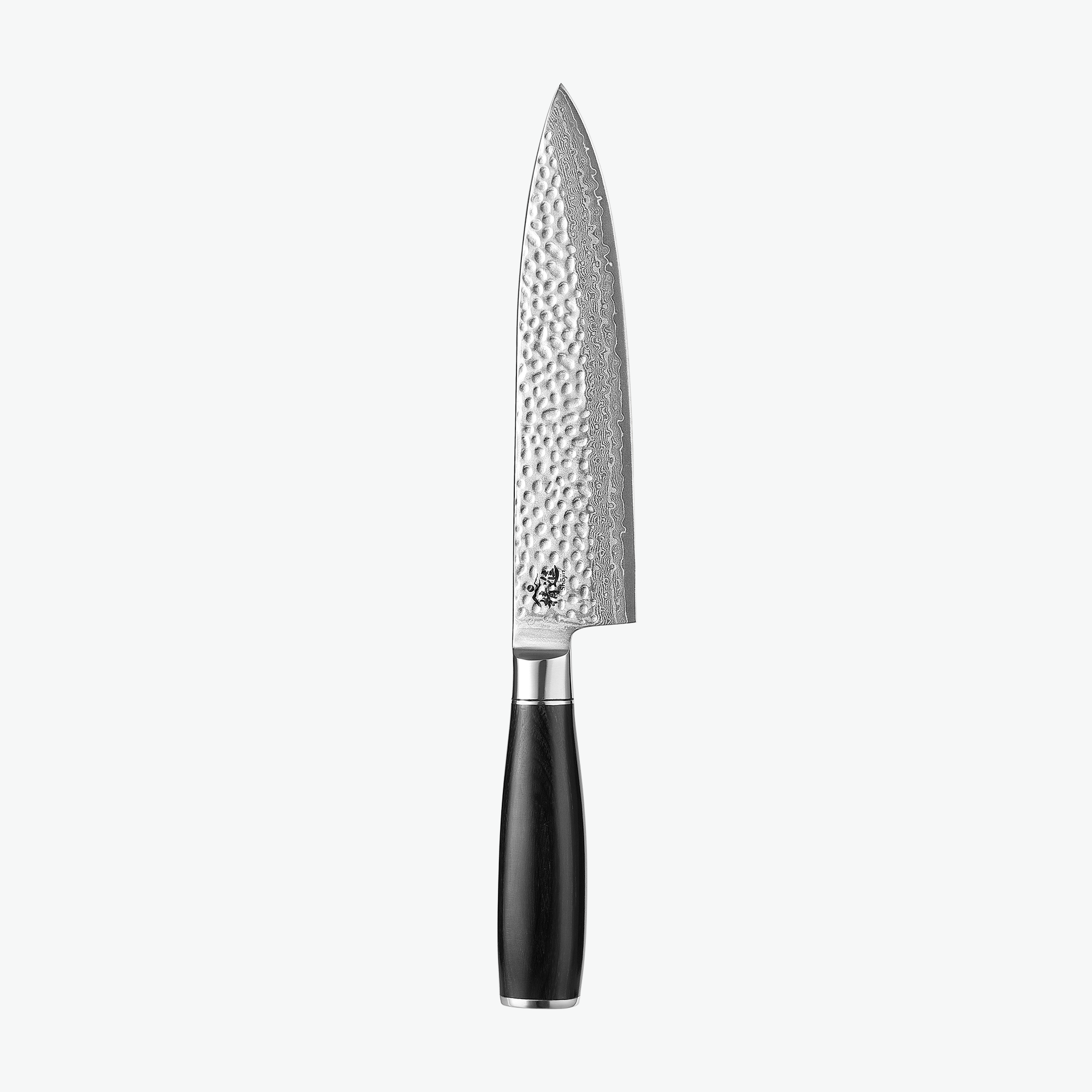
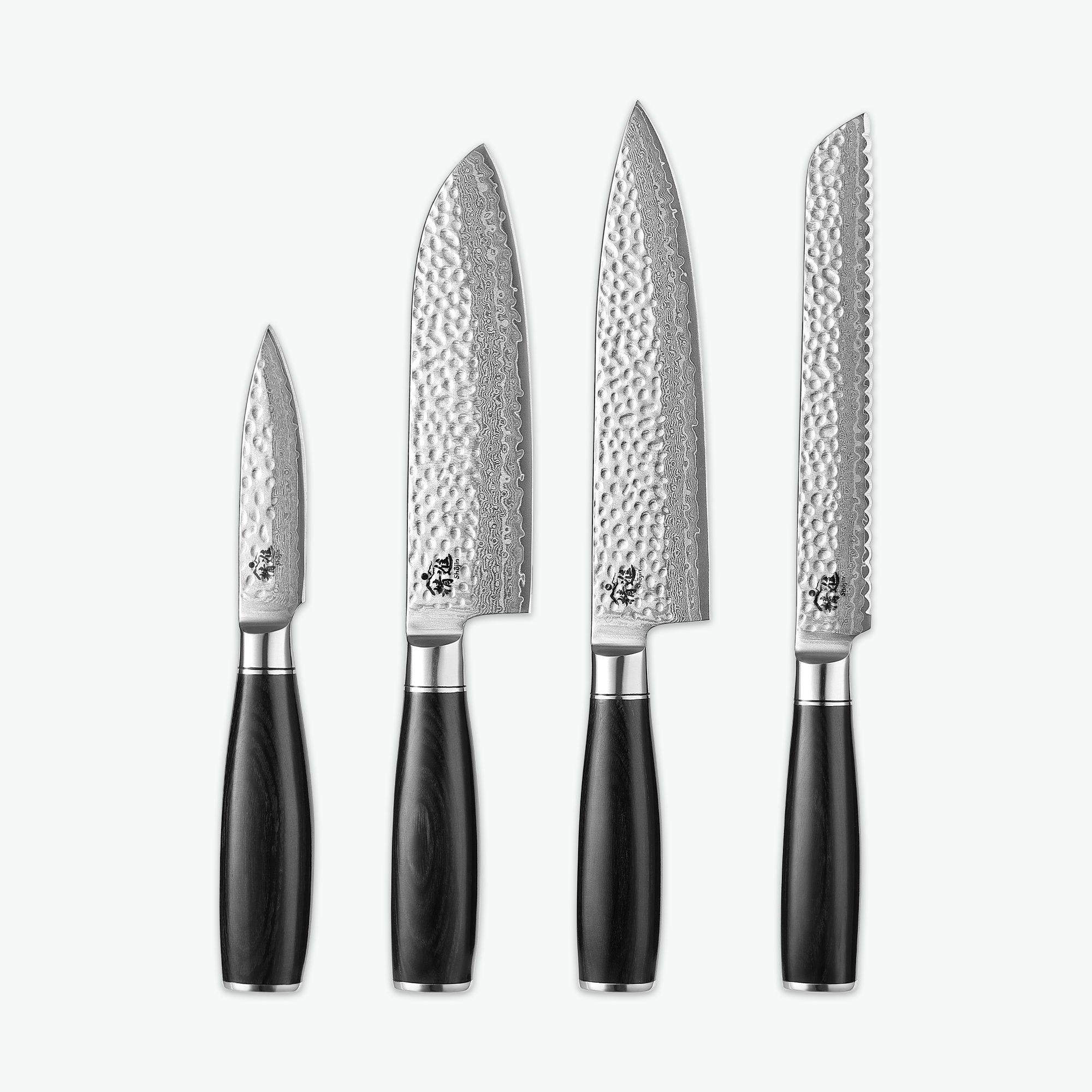
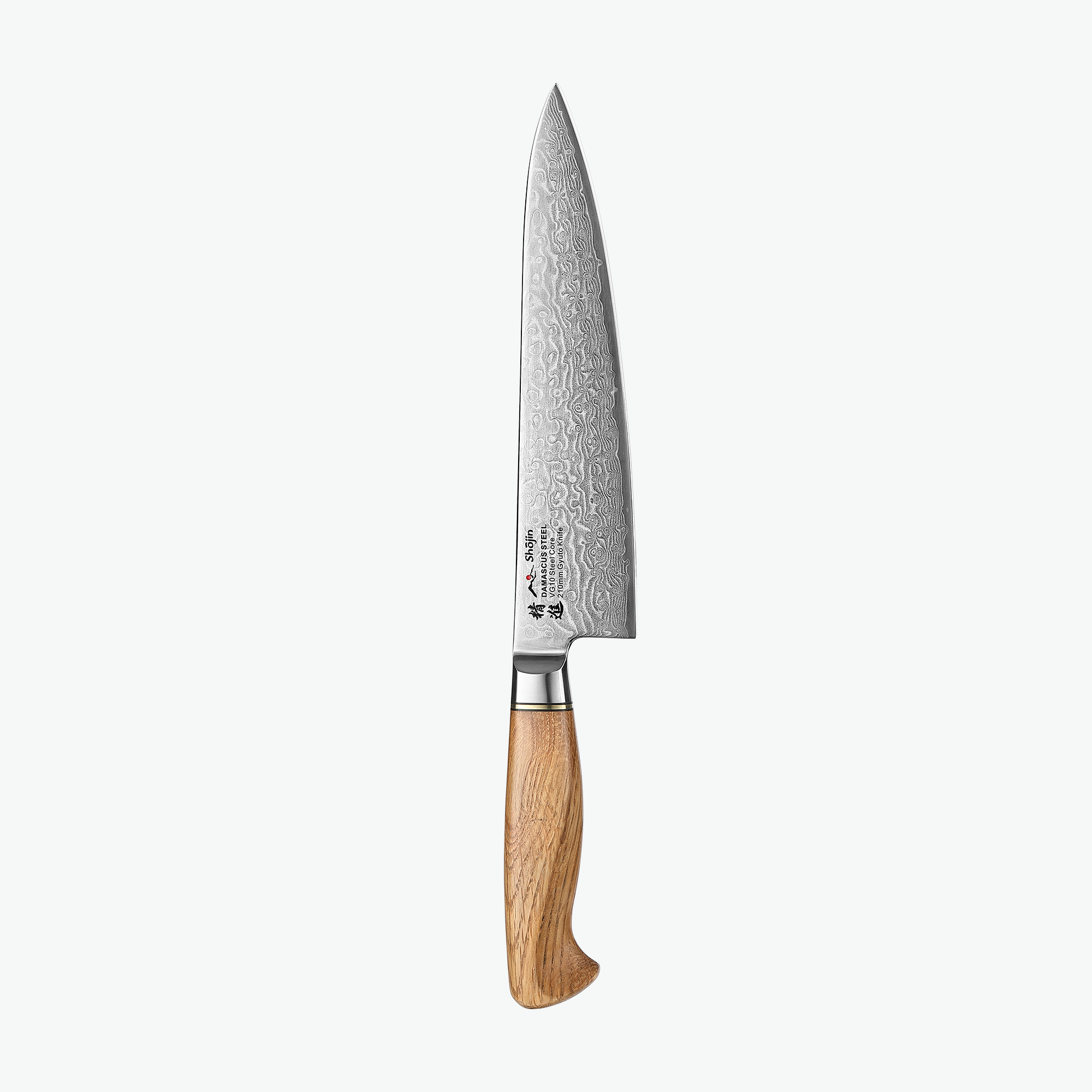
Viretta's choice: VG-10 & 10Cr15CoMoV (Shojin Series) – These two steels are, in our opinion, the kings of this class. With a hardness of around 62 HRC and an intelligent chemical composition, including cobalt, they deliver exceptional and long-lasting sharpness that is otherwise reserved for more expensive steels. They represent the perfect balance and therefore form the heart of our esteemed Shojin Suna, Taru, Kaku, and Akari series.
Other noteworthy steels: AUS-10 from Japan is a strong competitor with similar hardness but slightly lower wear resistance. 440C is an older, respected standard with very good corrosion resistance, but it doesn't quite achieve the fine balance of VG-10.
3. Supersteels: The Uncompromising Elite
At the top of the hierarchy are supersteels. These are almost exclusively powder steels, produced in a high-tech process and featuring an extremely pure, fine-grained microstructure. This allows for very high alloy content, with the absolute priority being maximum edge retention.
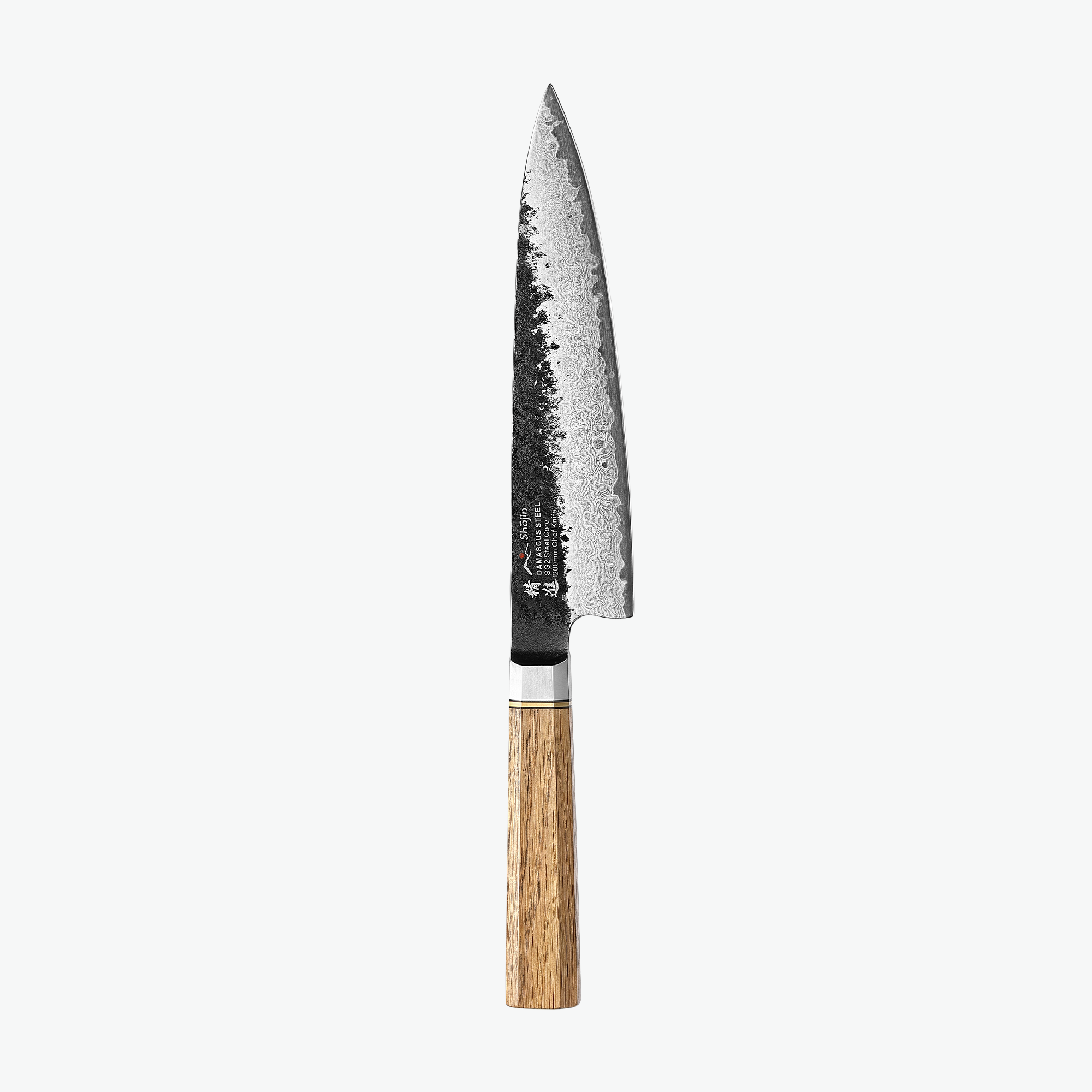
Viretta's choice: SG2 Powder Steel (Shojin Kashi Series) – Our favorite in the elite class is the renowned Japanese powder steel SG2. With a hardness of up to 64 HRC and a high vanadium content, it offers phenomenal, almost permanent sharpness. SG2 is for users for whom only the absolute best is good enough – and therefore forms the natural heart of our flagship Shojin Kashi series.
Other noteworthy steels: M390 and S30V are well-known powder steels with extreme edge retention. ZDP-189 is a specialized exotic that sacrifices almost everything to achieve extreme hardness (up to 67 HRC) – at the cost of toughness and corrosion resistance.
The Great Philosophical Debate: German vs. Japanese Knife Concept
Beyond the steel itself, knife design also reflects a philosophy. Understanding these differences is key to making the right choice.
German Philosophy:
Characterized by robustness. The steel is tougher (typically 55–58 HRC), the blade often thicker, and with a wider grinding angle (approx. 20 degrees per side). The result is a strong, durable knife for heavier tasks. Our Classic series is a perfect example of this reliable philosophy.
Japanese Philosophy:
Characterized by precision. The steel is harder (mostly 60+ HRC), the blade thinner, and with a very acute grinding angle (often 12–15 degrees per side). The result is almost unparalleled cutting performance that glides effortlessly through food. Our entire Shojin series embodies this uncompromising pursuit of the perfect cut.
At Viretta, we acknowledge the strengths of both philosophies and therefore offer series that combine the best of both worlds.
Conclusion: How to Choose the Best Steel for You
Now, with a deeper understanding, let's return to the initial question. The best steel for you depends on what you value most:
If you are looking for a robust, forgiving, and easy-to-maintain knife that handles all tasks in a busy kitchen without worry, 5Cr15MoV – as in our Classic series – is the best steel for you.
If you are a passionate cook looking for the perfect balance between extreme sharpness and solid durability, VG-10 or 10Cr15CoMoV – the heart of our Shojin series – is the best choice.
If your only priority is uncompromising and maximally long-lasting sharpness, and you view your knife as a precision instrument, then a supersteel like SG2, which defines our flagship Shojin Kashi series, is the best steel for you.
The decision is yours. At Viretta, we have already done the groundwork, analyzed the market, and curated the materials that deliver top performance in their respective classes. Your task now is to choose the balance that perfectly suits your kitchen.


