

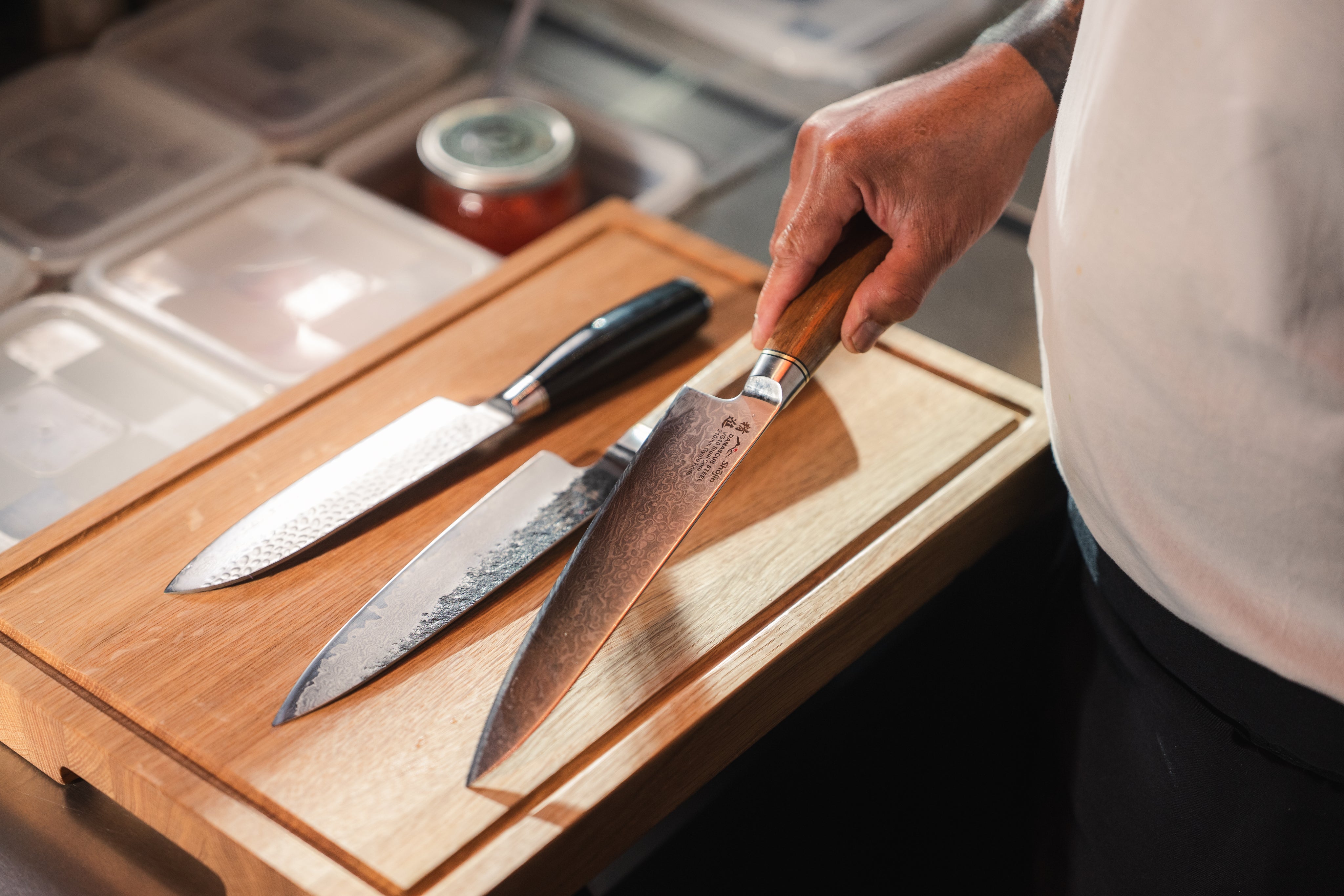
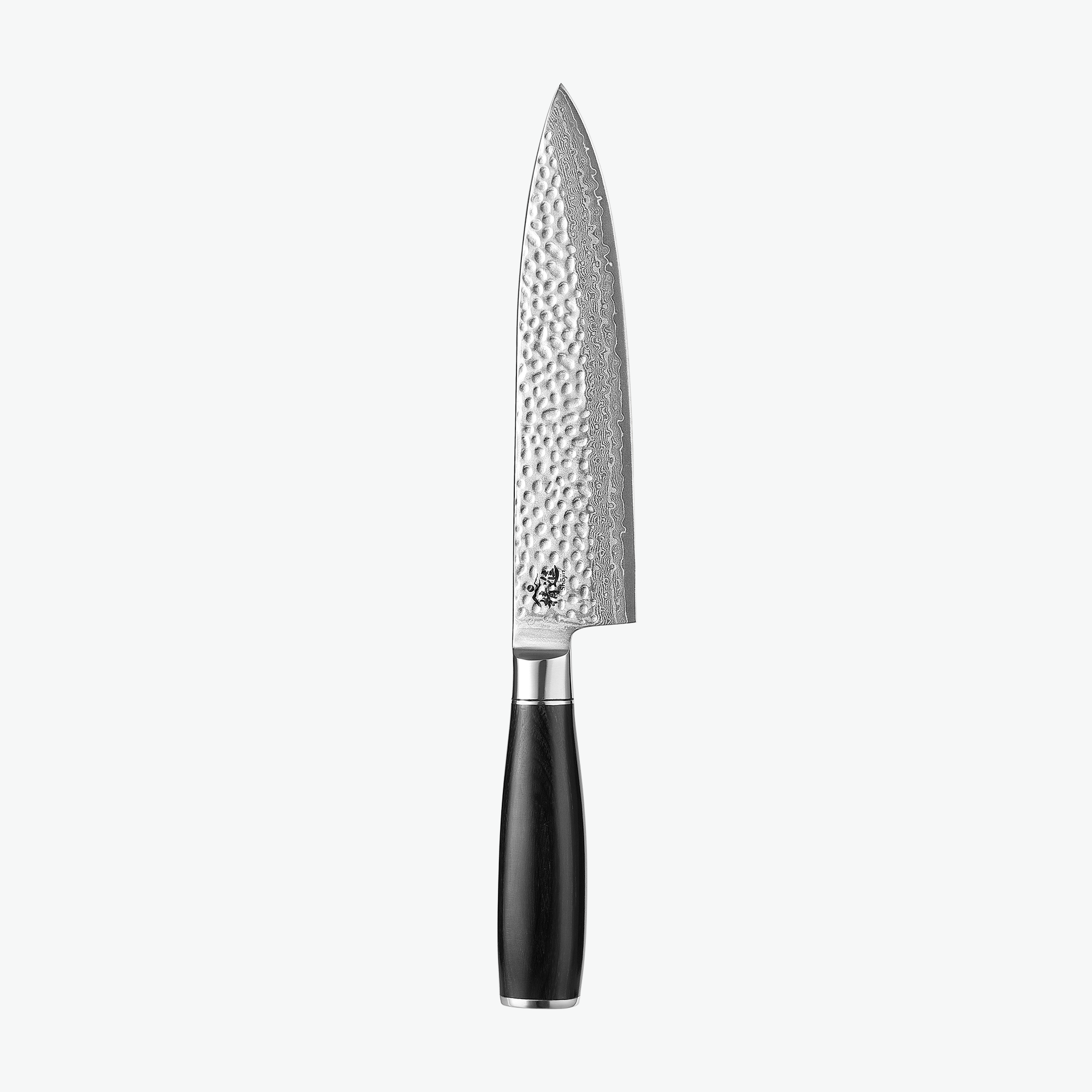
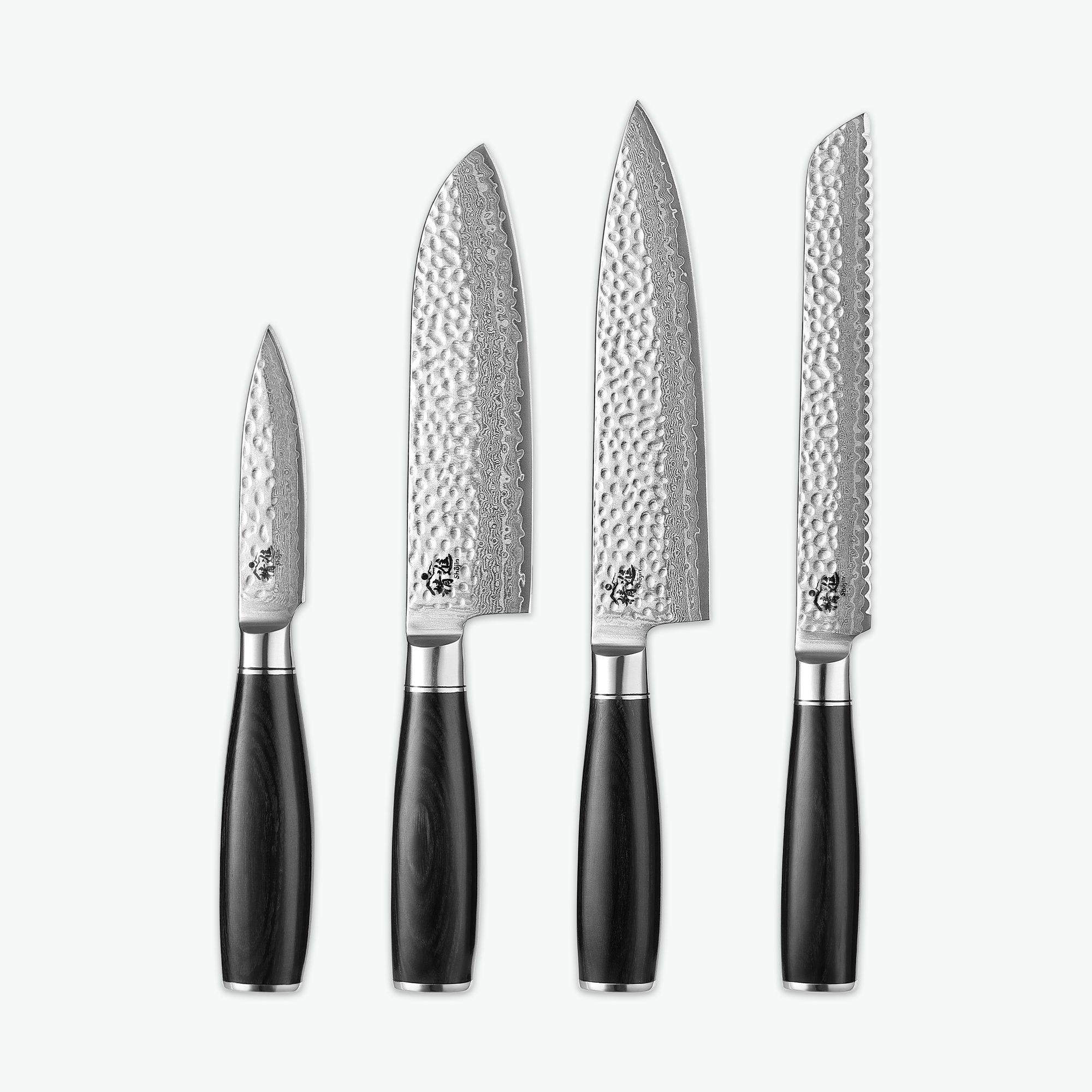
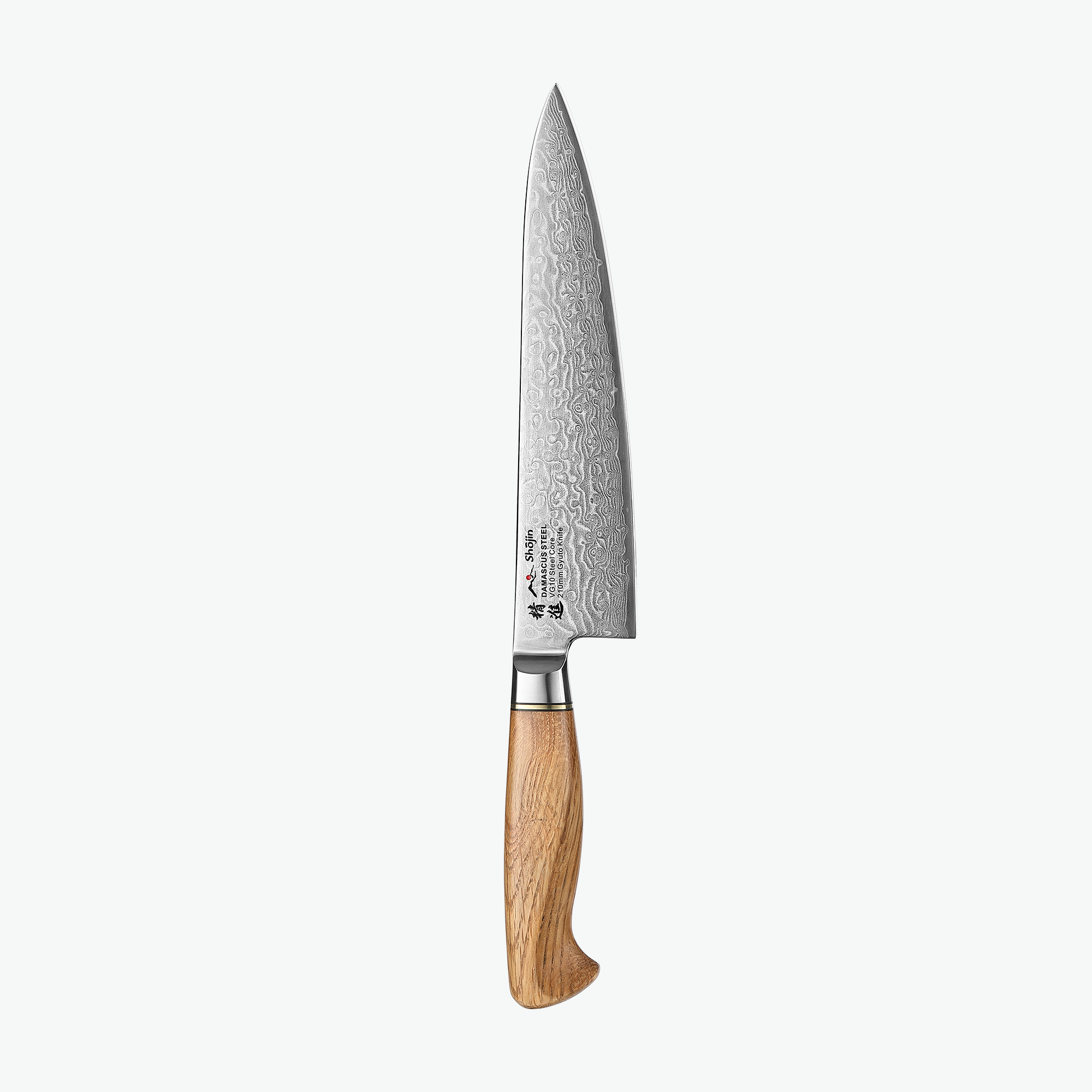
The fascinating patterns of a Damascus blade are undeniably beautiful. But the question naturally arises: Is this beauty merely superficial, or is Damascus steel actually strong and durable? The answer is nuanced, but for a high-quality blade, it is unequivocally yes. However, the strength of Damascus steel is not inherent; it results directly from the materials used and the craftsmanship of the forging process.
At Viretta, performance is always at the forefront. In this article, we break down the concept of "strength" and analyze how a modern Damascus blade achieves its impressive properties and what distinguishes a high-quality Damascus kitchen knife blade from a cheap imitation.
What does "strength" mean for a knife?
When we talk about the "strength" of a knife, we mean the interplay of several technical properties:
-
Hardness: The ability to resist deformation and wear. It determines how sharp a blade can become and how long it retains that sharpness.
-
Toughness: The ability to withstand impacts, blows, and twists without breaking or chipping. A tough knife is more robust and forgiving of small errors.
-
Wear resistance: Resistance to abrasion over time, closely linked to edge retention.
-
Corrosion resistance: Resistance to rust and stains.
The ideal knife is not necessarily the hardest, but the one with the best balance between these properties for its intended use.
How does Damascus steel achieve its strength? The art of combination
The basic principle of layered Damascus steels is to combine different types of steel to leverage their respective advantages. Historically, a hard but brittle steel (for sharpness) was forge-welded with a softer, tougher iron (for flexibility).
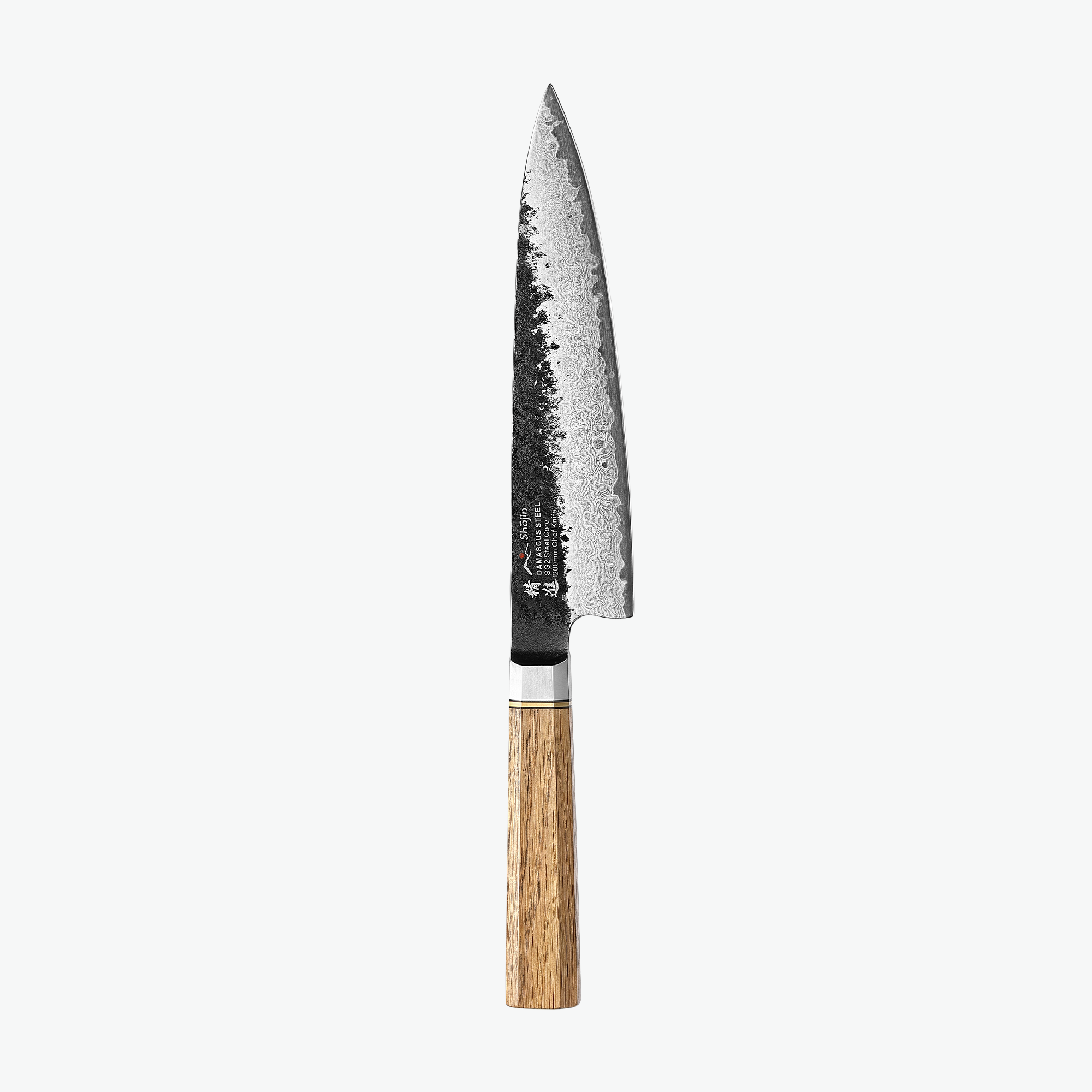
In modern stainless Damascus blades, as used in our Shojin series, the same principle applies, but refined. We use an extremely hard core of VG-10 or 10Cr15CoMoV steel, which forms the cutting edge. This core is laminated with several layers of softer, tougher, and corrosion-resistant steel. The result: a blade that combines the uncompromising sharpness of the core with the protective toughness and rust resistance of the outer layers – the best of both worlds.
Quality is key: 3 factors that determine strength
Not all Damascus steel is created equal. A cheap Damascus blade can be significantly weaker than a simple mono-steel knife. Strength depends on three crucial quality factors:
-
Quality of the steel used
The foundation of a strong Damascus blade is the raw materials. Cheap, impure steels inevitably lead to a weak and unreliable blade, no matter how beautiful the pattern. At Viretta, we use premium steels like Japanese VG-10 to ensure the core delivers maximum performance. -
Quality of forge welding
Welding the layers is critical. Imprecise temperature or uneven pressure can create microscopic defects or air bubbles (cold welds) that create weak spots. On our modern production facilities, hydraulic presses and precision-controlled furnaces ensure perfect welds without such defects. -
Quality of heat treatment
Even a perfectly forged blade is worthless without proper heat treatment. This defines hardness, toughness, and structure. Incorrect hardening leads to blades that are too soft or too brittle, which break easily. Our computer-controlled hardening processes ensure precise HRC and optimal balance for each blade.
Is Damascus steel good for kitchen knives?
Yes, high-quality Damascus steel is excellent. The combination of a hard, ultra-sharp core and a tough, protective outer layer is ideal for the dynamic demands of the kitchen. It provides long-lasting sharpness and resistance to impacts and wear.
Conclusion: A question of quality
So: Is Damascus steel strong? The answer is: High-quality Damascus steel is extremely strong, durable, and high-performing. The visible pattern is not just decoration, but honest proof of an advanced, laminated construction.
With a Damascus knife from Viretta, you are not just investing in a beautiful pattern, but in a consciously constructed blade whose premium core steel has been strengthened and protected by modern, quality-controlled forging. The beauty of our knives directly reflects the strength within them.


