



Damascus steel is more popular than ever today – and for good reason. The beautiful, organic patterns are visible proof of masterful craftsmanship and a rich history. With this popularity, however, the market for imitations unfortunately also grows. Many cheap knives are advertised with a "Damascus look" but in reality have nothing to do with real, layered steel.
At Viretta, we value honest materials. Knowledge is the best protection against bad purchases. That's why we've created this guide to give you the tools to distinguish genuine, forged Damascus steel from superficial copies.
What is "fake" Damascus steel?
If a knife is advertised as "Damascus" but isn't, it's almost always a simple surface treatment. The most common method is laser etching.
This involves taking an ordinary, cheap mono-steel knife (a single piece of steel) and using a laser to burn a pattern into the surface. This pattern is not part of the steel structure itself, but is comparable to a tattoo – only superficial. It offers no functional advantages and merely serves an aesthetic purpose, imitating real craftsmanship.
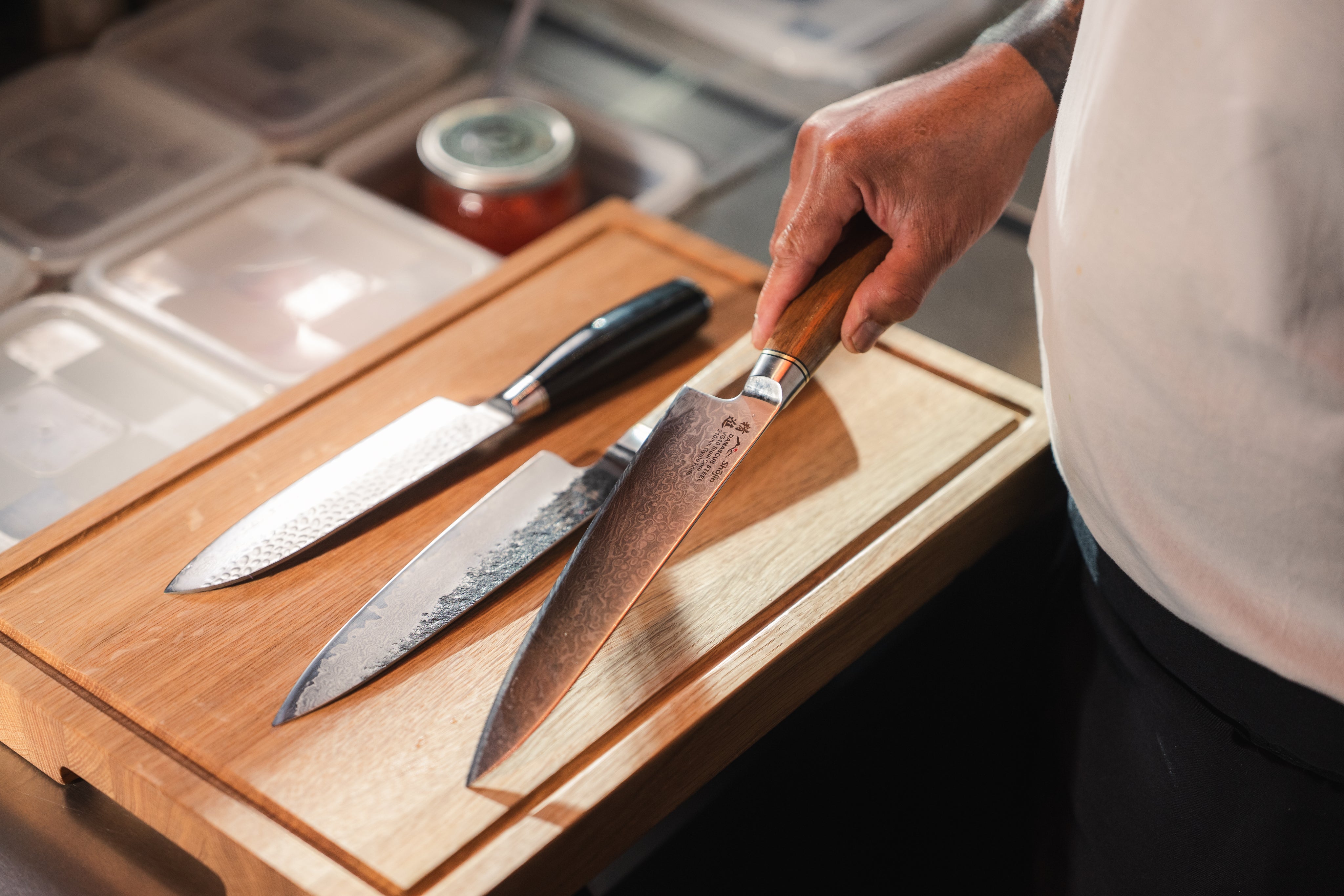
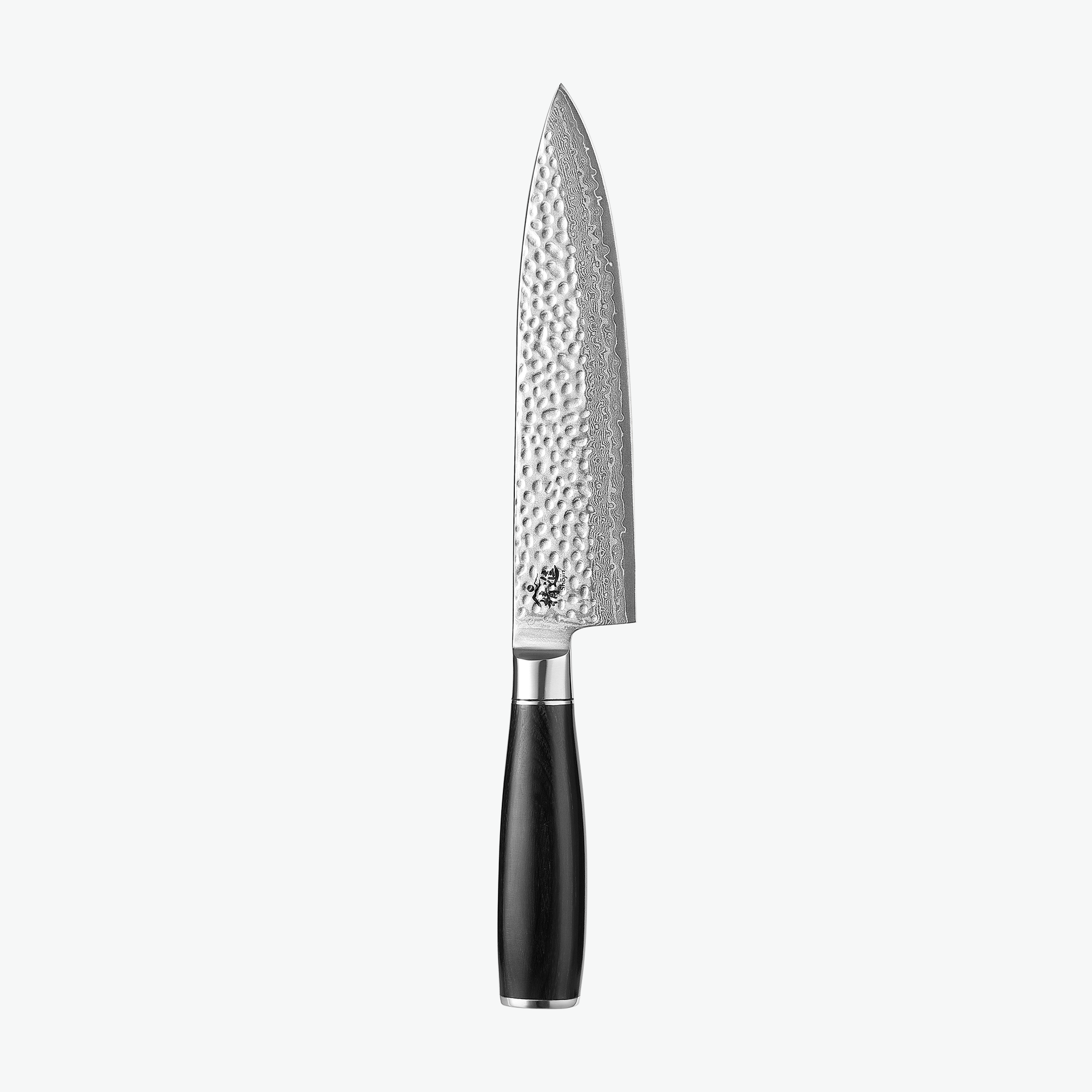
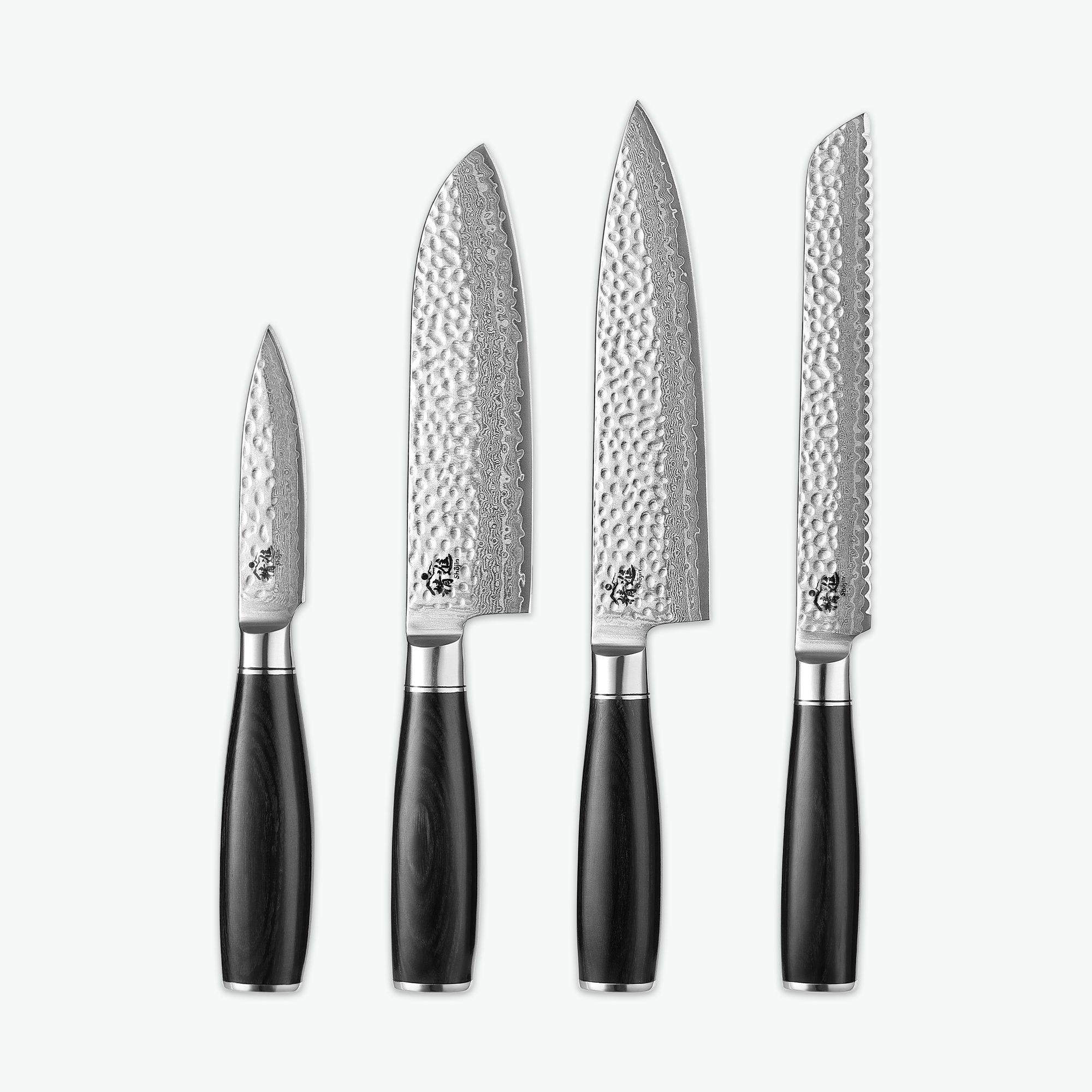
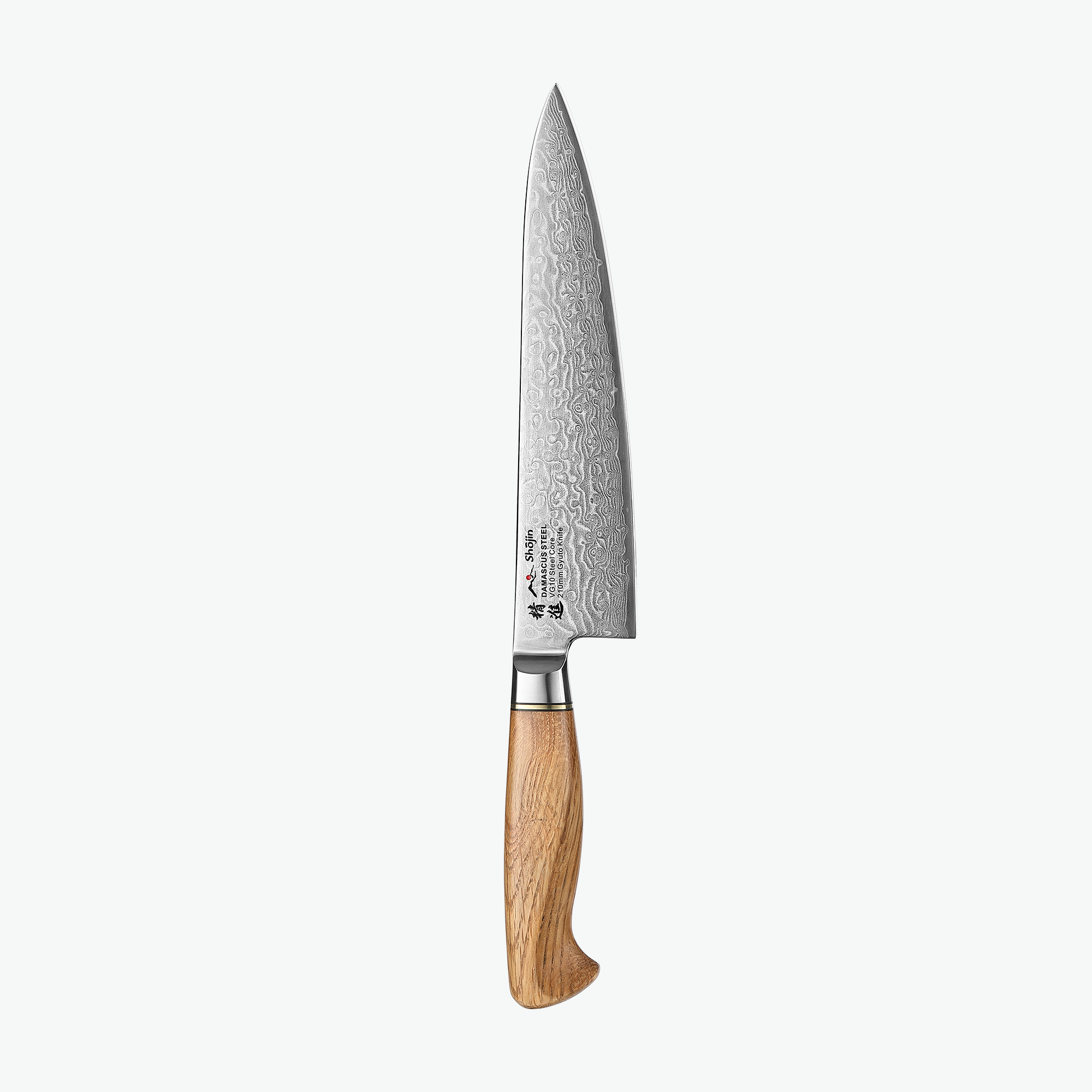
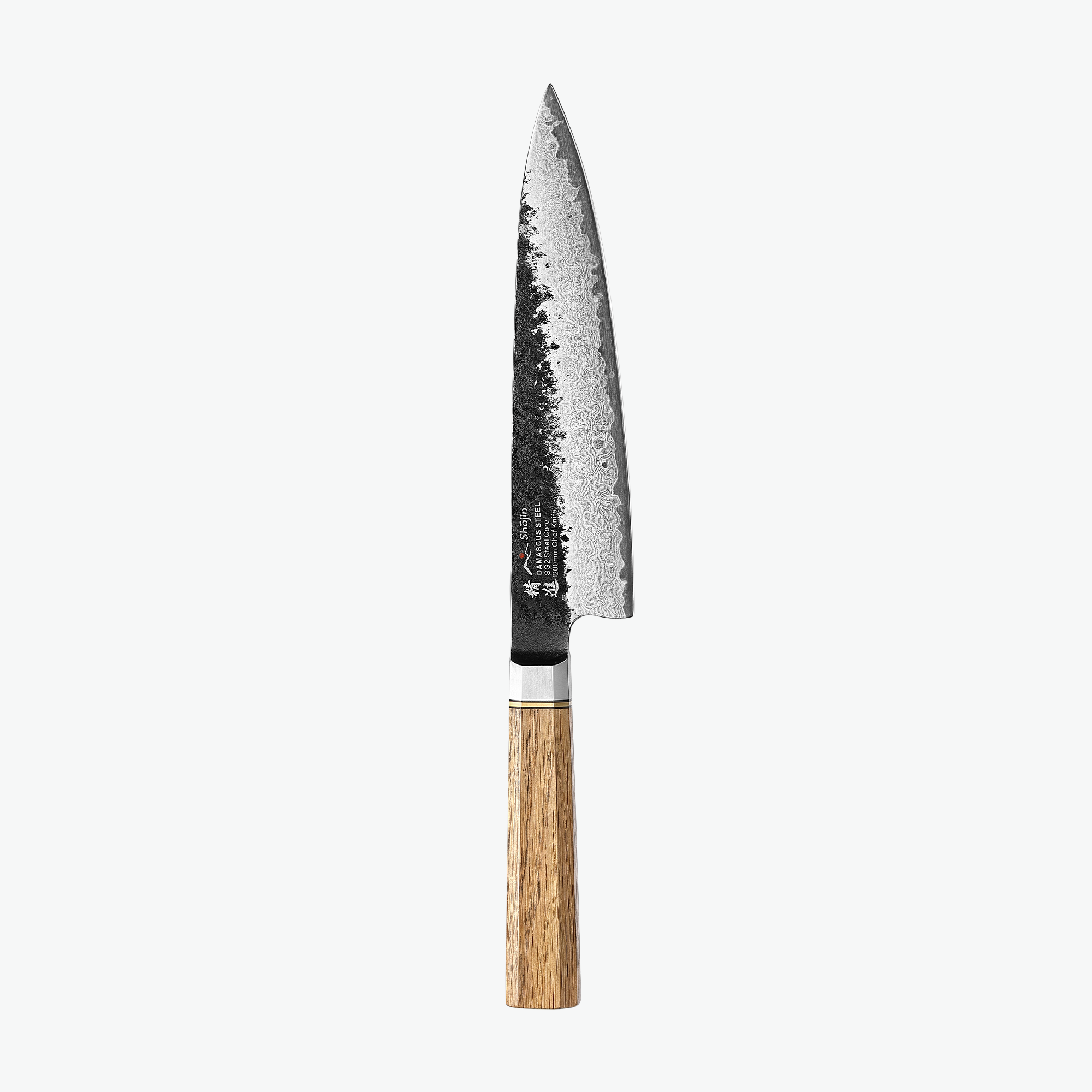
In contrast, genuine Damascus steel pattern is an integral part of the material, created by many folds and forging, as is the case with our Shojin knives.
5 methods to identify genuine Damascus steel
-
Examine the entire blade: spine and tang
This is the most reliable test. On a fake, laser-etched knife, the pattern is only on the flat sides. The spine is often blank. With genuine Damascus steel, the lines of the layers run through the entire blade to the spine and tang. -
Depth and character of the pattern
Genuine Damascus steel patterns appear organic and three-dimensional. Laser or superficial patterns often look flat or too perfect. Small irregularities are a sign of true craftsmanship. -
Polishing test (carefully)
Carefully work a small area of the blade with fine sandpaper or polishing compound: If the pattern disappears and blank steel becomes visible, it is an imitation. If the pattern remains recognizable, it is genuine, as it goes through all layers. -
The price rarely lies
Genuine Damascus steel knives are labor-intensive and made from expensive, premium materials. A price that is too cheap almost always indicates an imitation. -
Buy from a trusted source
The safest way is to buy from a recognized manufacturer or dealer who provides transparent information about the materials and manufacturing process. Viretta always specifies which types of steel (VG-10, 10Cr15CoMoV) are used in the core and Damascus layers.
Conclusion: Don't be fooled by the pattern
The pattern of a Damascus knife should be an honest symbol of quality and craftsmanship – not a marketing trick. With a few minutes of inspecting the blade's spine, observing the pattern's characteristics, and paying attention to price and dealer transparency, you can easily protect yourself from fakes.
With a Damascus knife from Viretta, you choose authenticity. The outer beauty is the direct result of the inner strength and complex, layered structure that defines true Damascus steel.

Leave a comment
This site is protected by hCaptcha and the hCaptcha Privacy Policy and Terms of Service apply.