

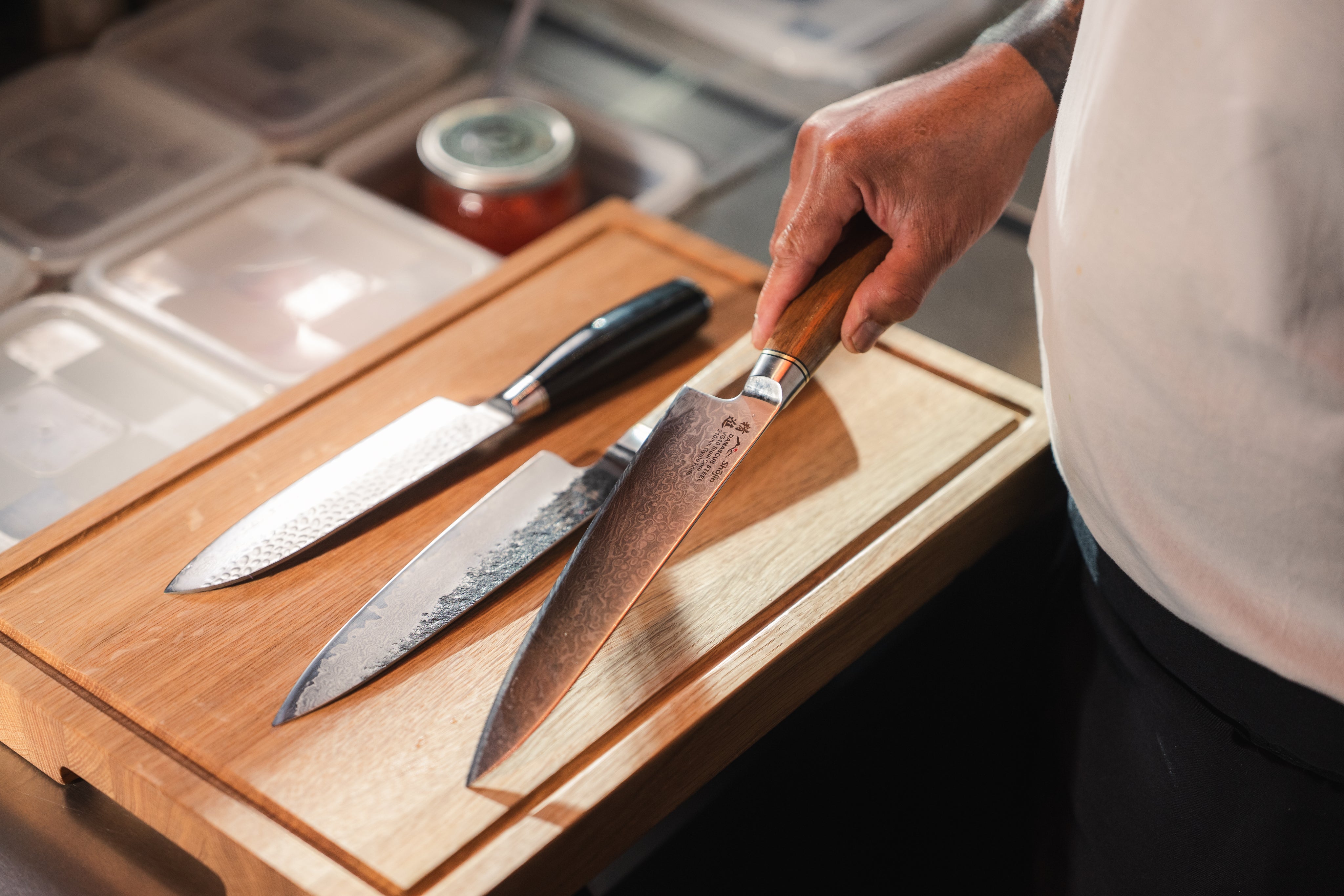
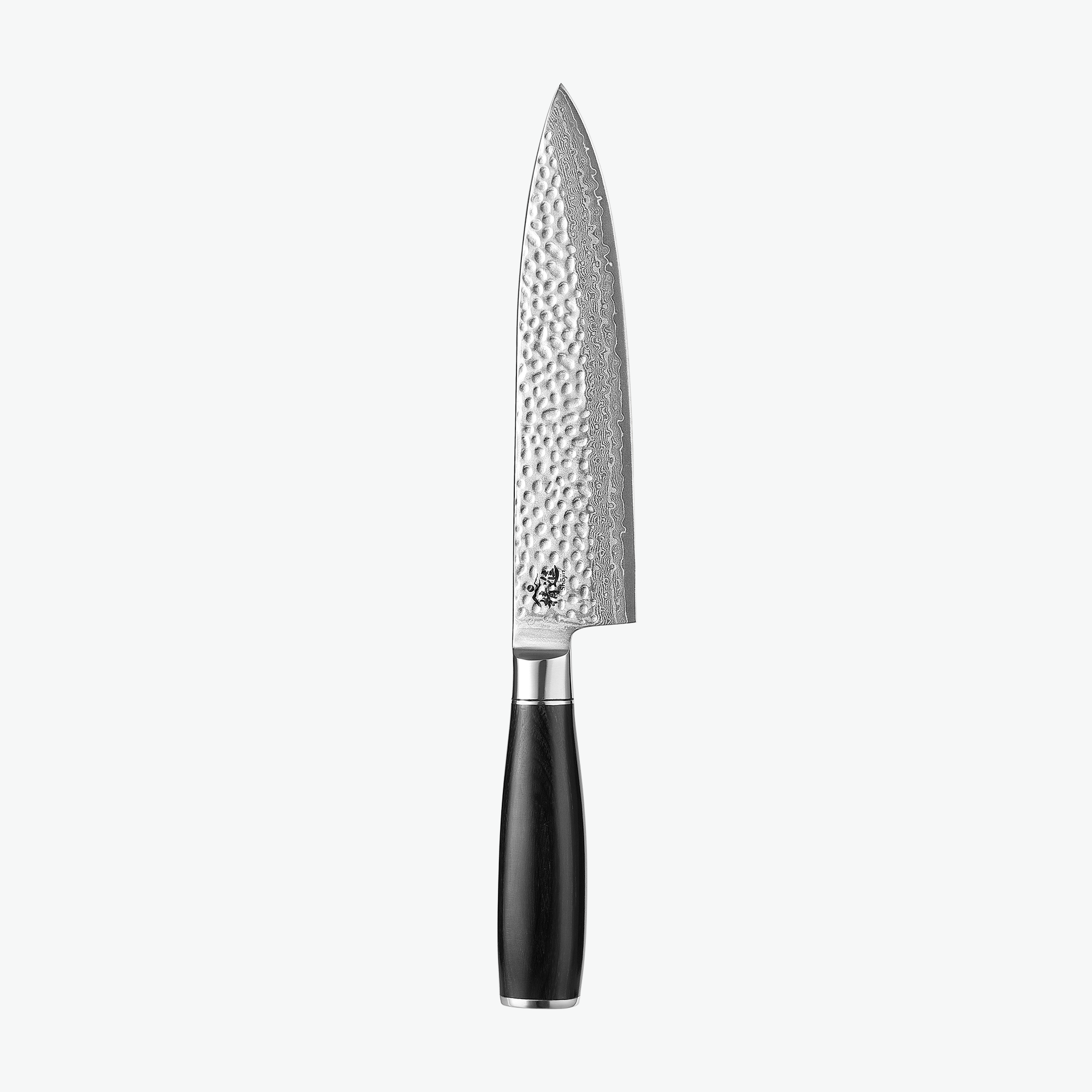
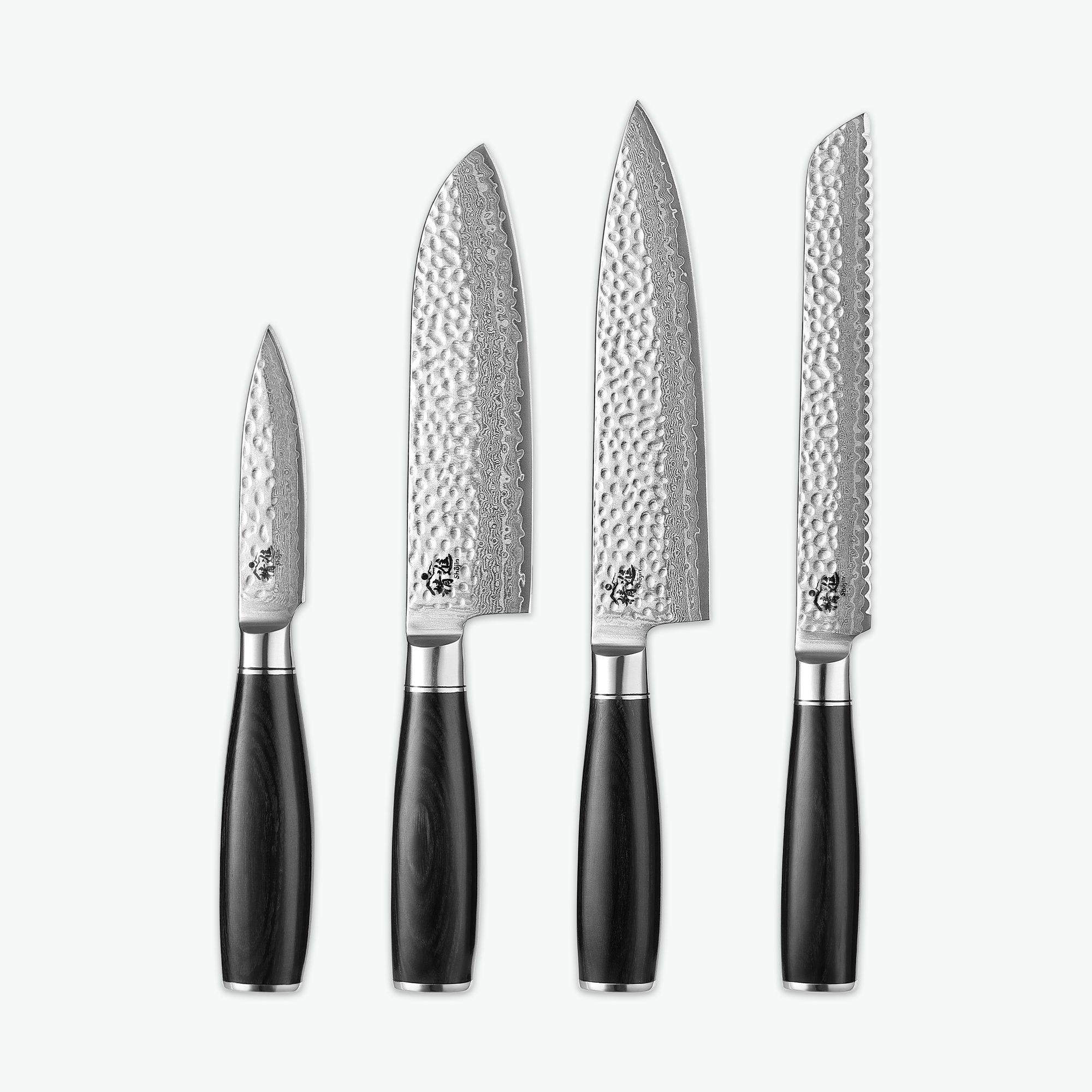
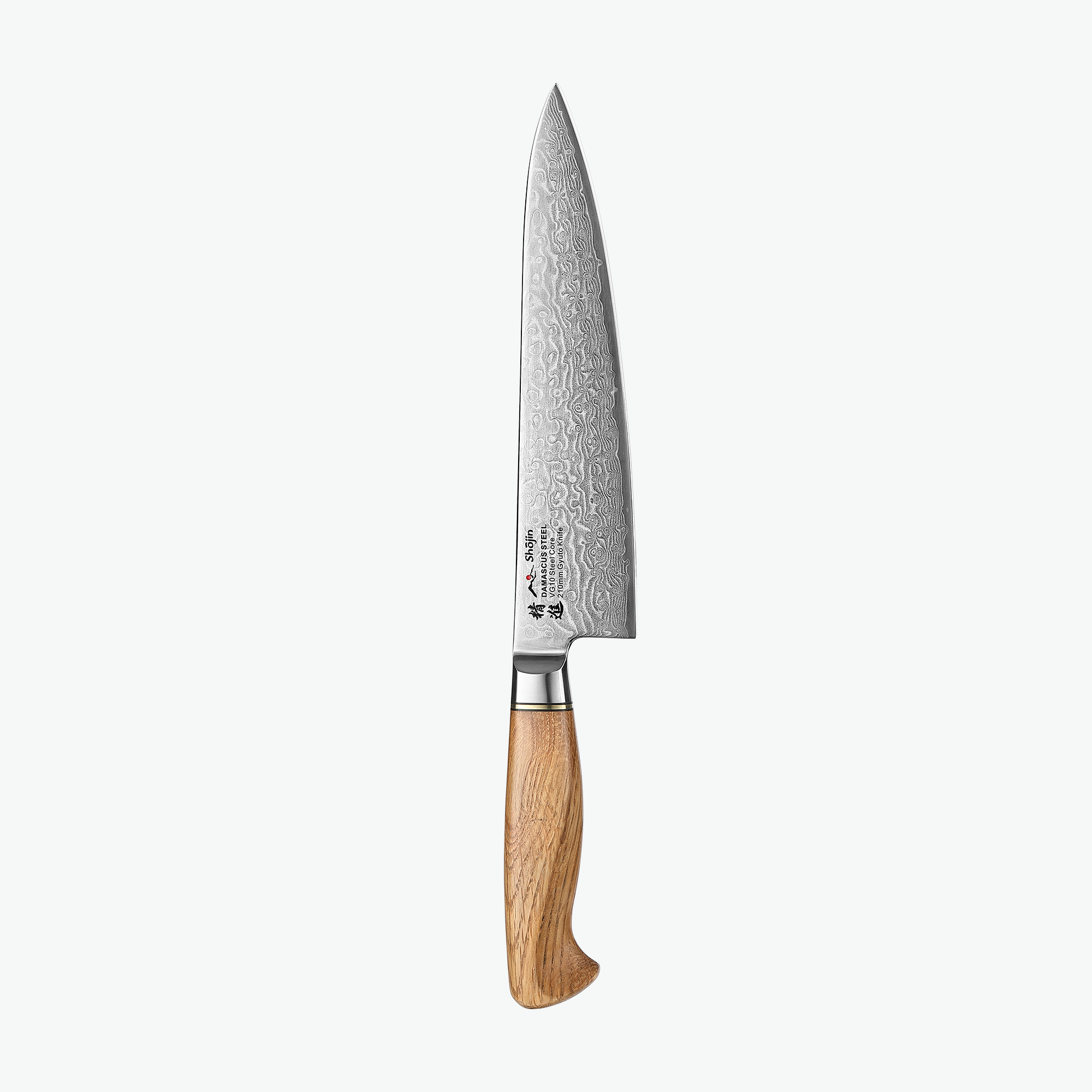
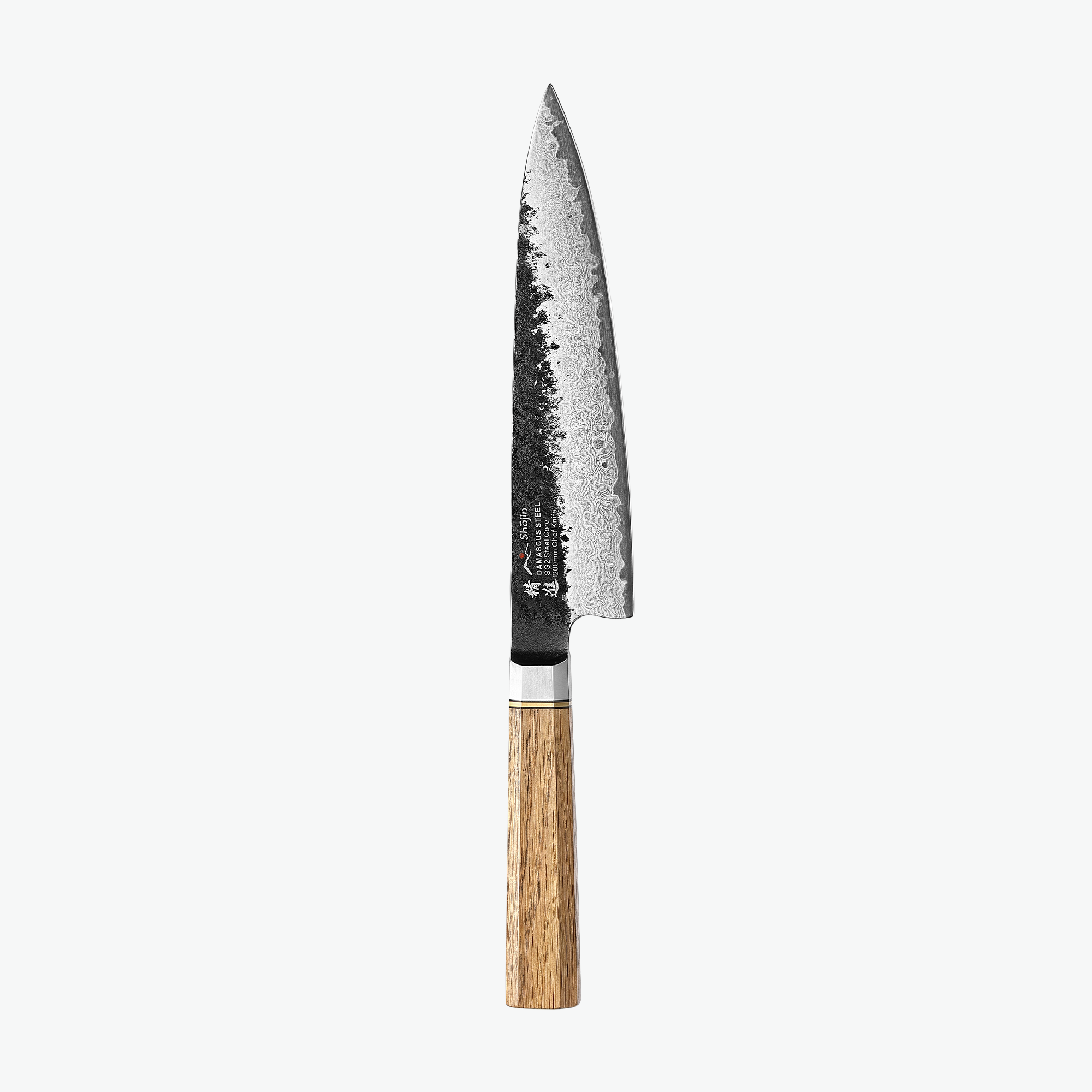

The wavy, organic patterns of a Damascus blade fascinate chefs and craft enthusiasts alike. The pattern is not a superficial embellishment, but the direct result of an incredibly complex forging process. To fully appreciate the craftsmanship behind a knife from our Shojin series, we need to take a look under the hood and understand the steel's journey.
At Viretta, this ancient technique is combined with state-of-the-art production facilities. Years of experience and the latest technology unite to ensure uncompromising and consistent quality for every blade. This article explains, step by step, how modern pattern-welded Damascus steel is made – a journey through fire, pressure, and precision.
Modern Tools, Traditional Craftsmanship
Forging Damascus steel today is a high-tech process based on traditional principles. In the modern factories where our knives are made, state-of-the-art equipment is used to perform tasks that once required manual labor:
- Precision-controlled furnaces: Replace the old furnaces and ensure the steel is heated to the exact temperature required for a perfect weld.
- Hydraulic press & power hammer: These machines generate enormous and consistent pressure, welding the steel layers with a perfection and consistency that is difficult to achieve manually.
- Precision grinding machines: Modern belt grinders shape the blade with the highest precision.
- Controlled etching: The final step, where the pattern becomes visible, takes place in strictly monitored baths to ensure a beautiful and uniform result.
The Process Step by Step: From Steel Bar to Work of Art
Step 1: Selection and Preparation of the Steel (Billet)
Everything begins with careful material selection. The process starts by stacking thin sheets of at least two different types of steel. For a modern, stainless Damascus blade, such as those used in our Shojin series, a very hard core steel is often combined with layers of tougher, more flexible steel. The core can be made of a high-performance steel like Japanese VG-10 or 10Cr15CoMoV, which provides unparalleled sharpness, while the outer layers protect and create the beautiful pattern.
Step 2: Perfect Welding – The Birth of the Laminate
The stack of steel sheets is placed in a precisely controlled furnace and heated to a precise welding temperature, often over 1,000 °C. At this critical moment, the layers are pressed together under enormous pressure from a hydraulic press or hammer. Through heat and pressure, the individual steel layers fuse on a molecular level and are now permanently welded into a solid, laminated bar.
Step 3: Stretching and Folding – The Layers Multiply
The now solid bar is heated and worked again to become thinner and longer. Then the magic happens: the bar is cut, folded, and welded together again. With each repetition of this process, the number of steel layers doubles: 3 layers become 6, 6 become 12, and so on. To achieve the 67 layers of a knife from our Shojin Suna series, several passes are required, all performed with the precision of our machines and years of experience.
Step 4: Shaping the Blade
Once the desired number of layers is achieved, the demanding process of shaping the layered billet into a knife blade begins. Although modern machines simplify the work, this step still requires a keen eye and a deep, traditional understanding of steel's behavior under pressure to achieve the perfect shape and balance.
Step 5: Grinding and Hardening
The raw blade is roughly ground to remove impurities and define the blade geometry. This is followed by the crucial heat treatment. In this process, the blade undergoes a precise, computer-controlled cycle of heating, cooling, and tempering in specially designed furnaces. This high-tech process ensures uniform and optimal hardness for every knife.
Step 6: Etching – Bringing the Pattern to Life
After fine grinding and polishing, the blade still looks like an ordinary piece of steel – the pattern is invisible. The last, decisive step is to immerse the blade in a controlled acid bath (often ferric chloride). The acid reacts differently with the various types of steel in the laminate – some layers become dark, others remain light. Slowly, like in photographic development, the complex and beautiful Damascus pattern emerges. The blade is neutralized, cleaned, and is now ready.
The Art of Creating a Pattern
Through controlled techniques, the steel can be worked during the process to create various patterns:
- Random/Wave Pattern: The most classic pattern, created naturally by the folding process. It is reminiscent of the organic, flowing lines of our Shojin Suna knives.
- Twist/Torsion Pattern: Here, the billet is twisted during forging, creating a star-shaped, twisted pattern.
- Ladder & Raindrop Pattern: Here, depressions are pressed or milled into the billet before the final flat hammering, creating patterns reminiscent of ladders or raindrops.
In addition to these classic patterns, there are unique variations. In our Shojin Taru series, the Damascus pattern is combined with a hand-hammered "Tsuchime" finish, which creates small air pockets and a rustic look. In the exclusive Shojin Akari knife, copper is even incorporated into the layers, creating a completely unique and vibrant play of colors.
Conclusion: A Tribute to Modern Craftsmanship
The production of Damascus steel today is an impressive combination of ancient craft principles with modern production technology. The wavy pattern is not just decoration; it is visible proof of a complex process in which years of experience have been refined with the most precise technology.
When you hold a Viretta Damascus knife in your hand, you are holding a product born from this unique synergy. It is proof that tradition and innovation are not opposites, but partners in creating a tool that is both a work of art and a high-performance instrument for the modern kitchen.

Leave a comment
This site is protected by hCaptcha and the hCaptcha Privacy Policy and Terms of Service apply.