

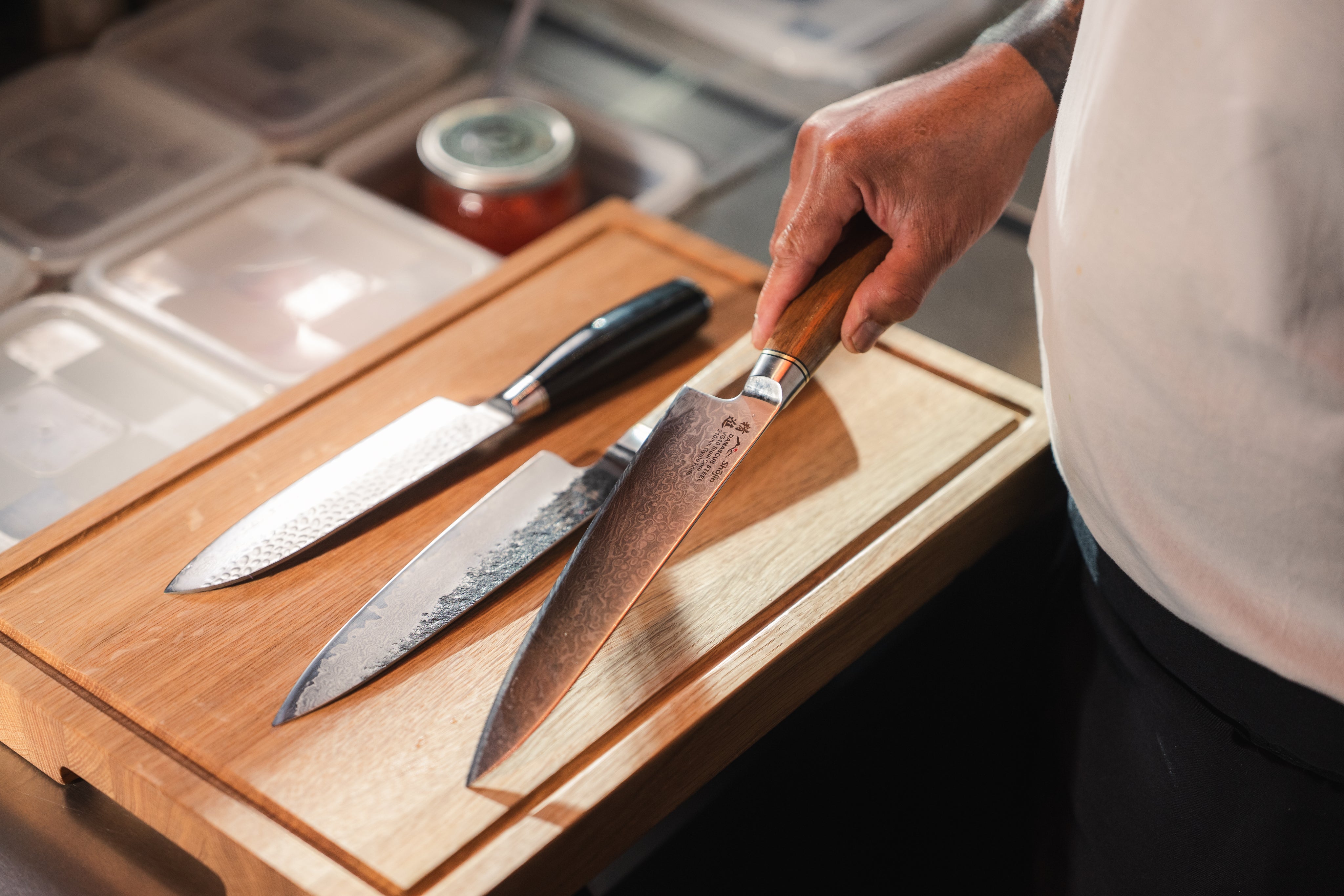
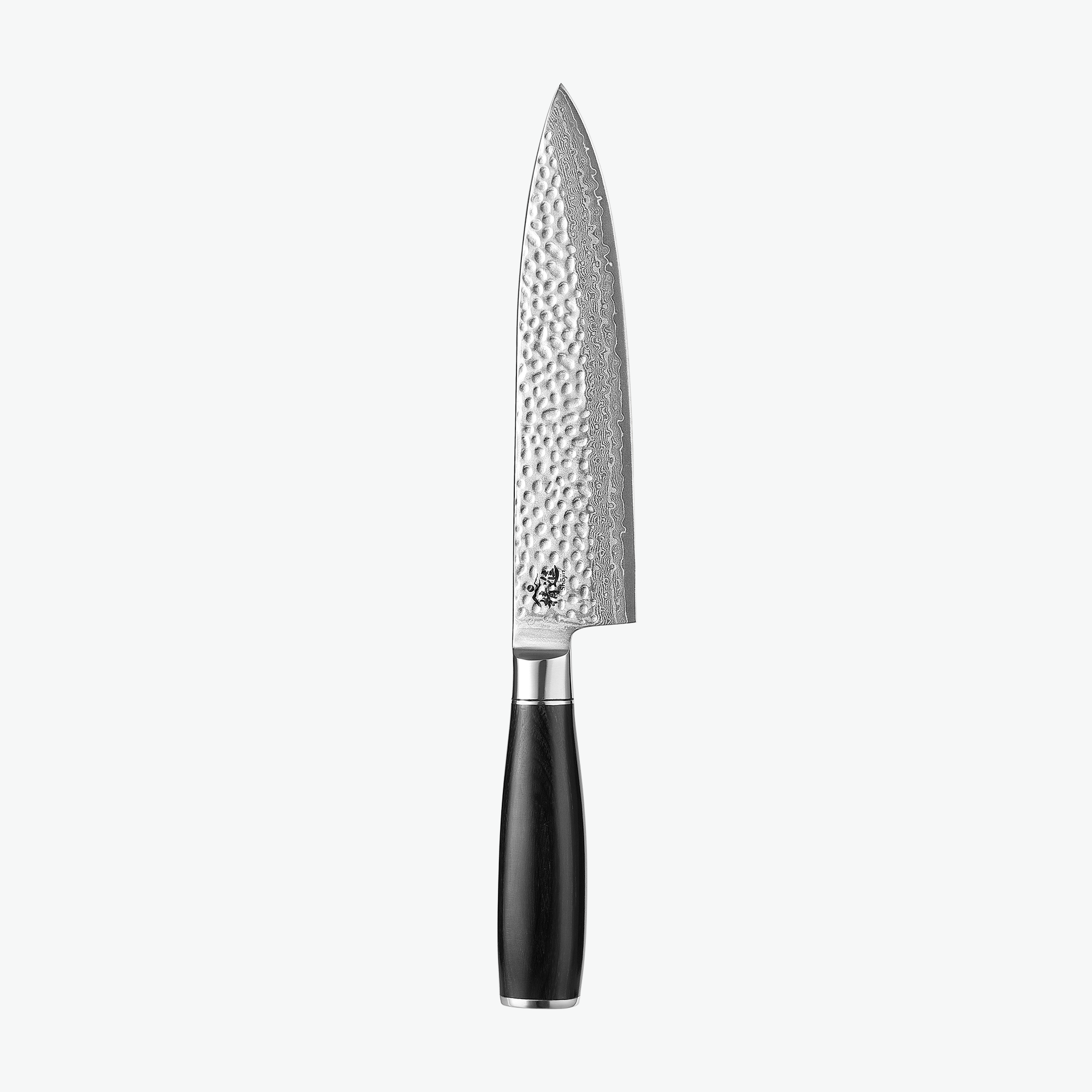
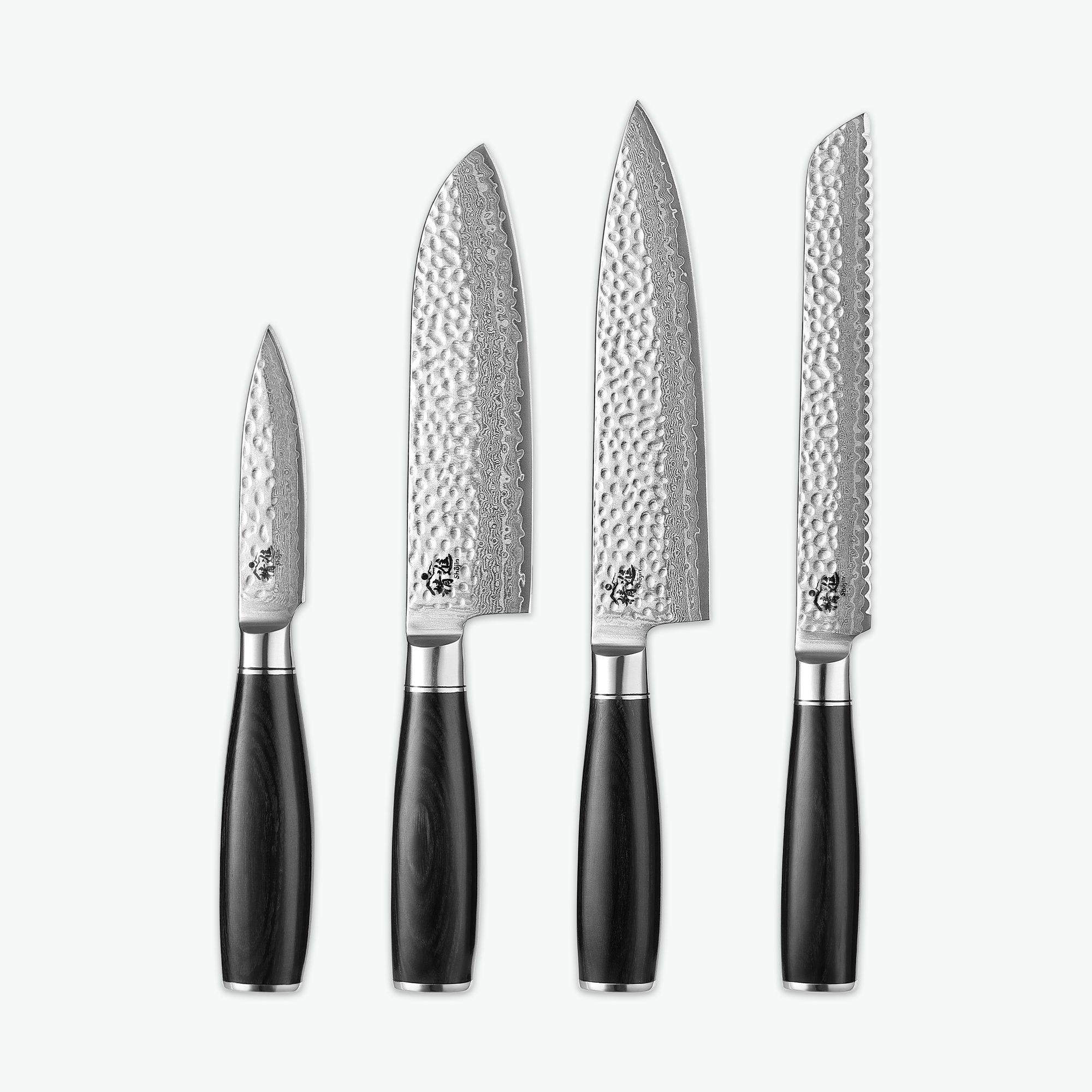
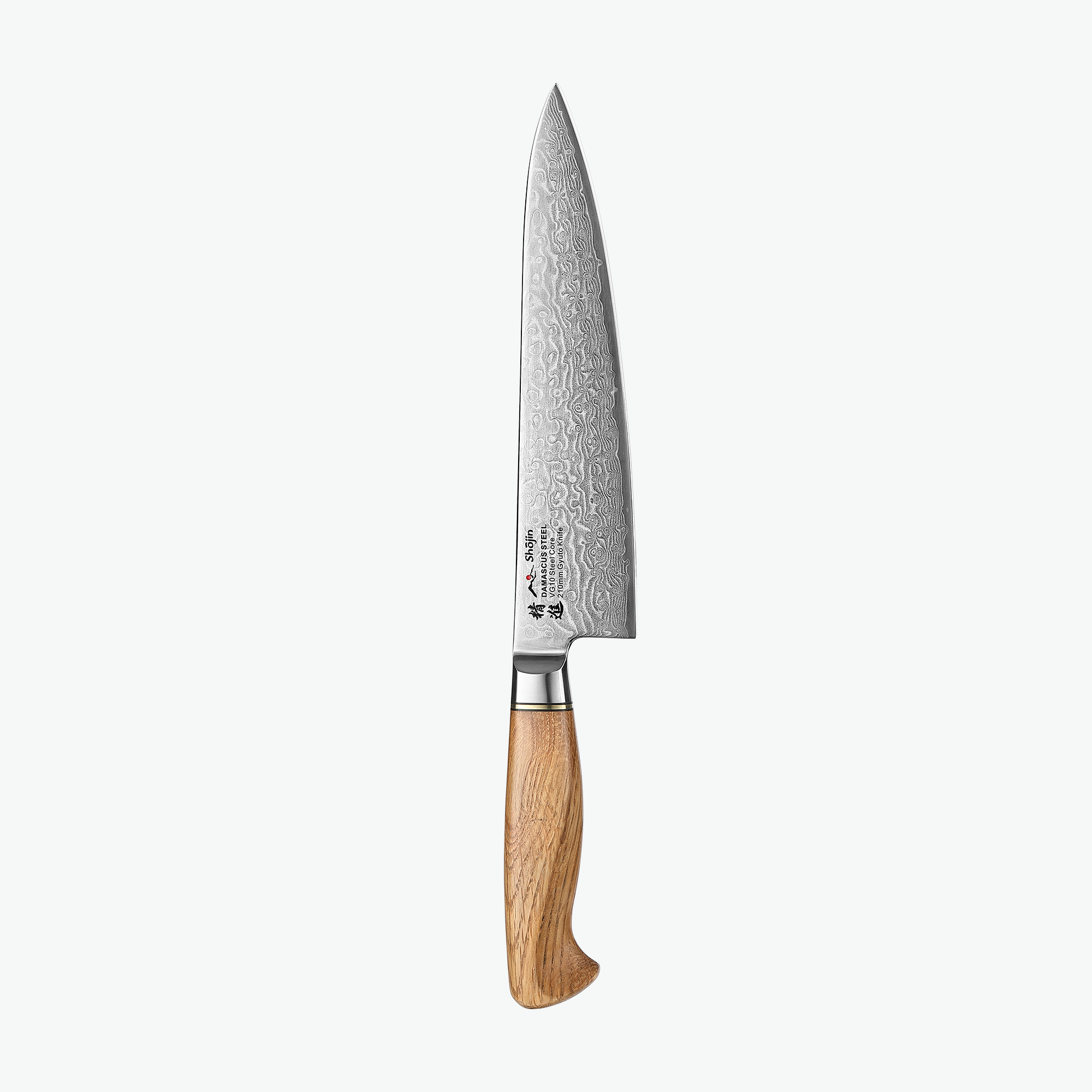
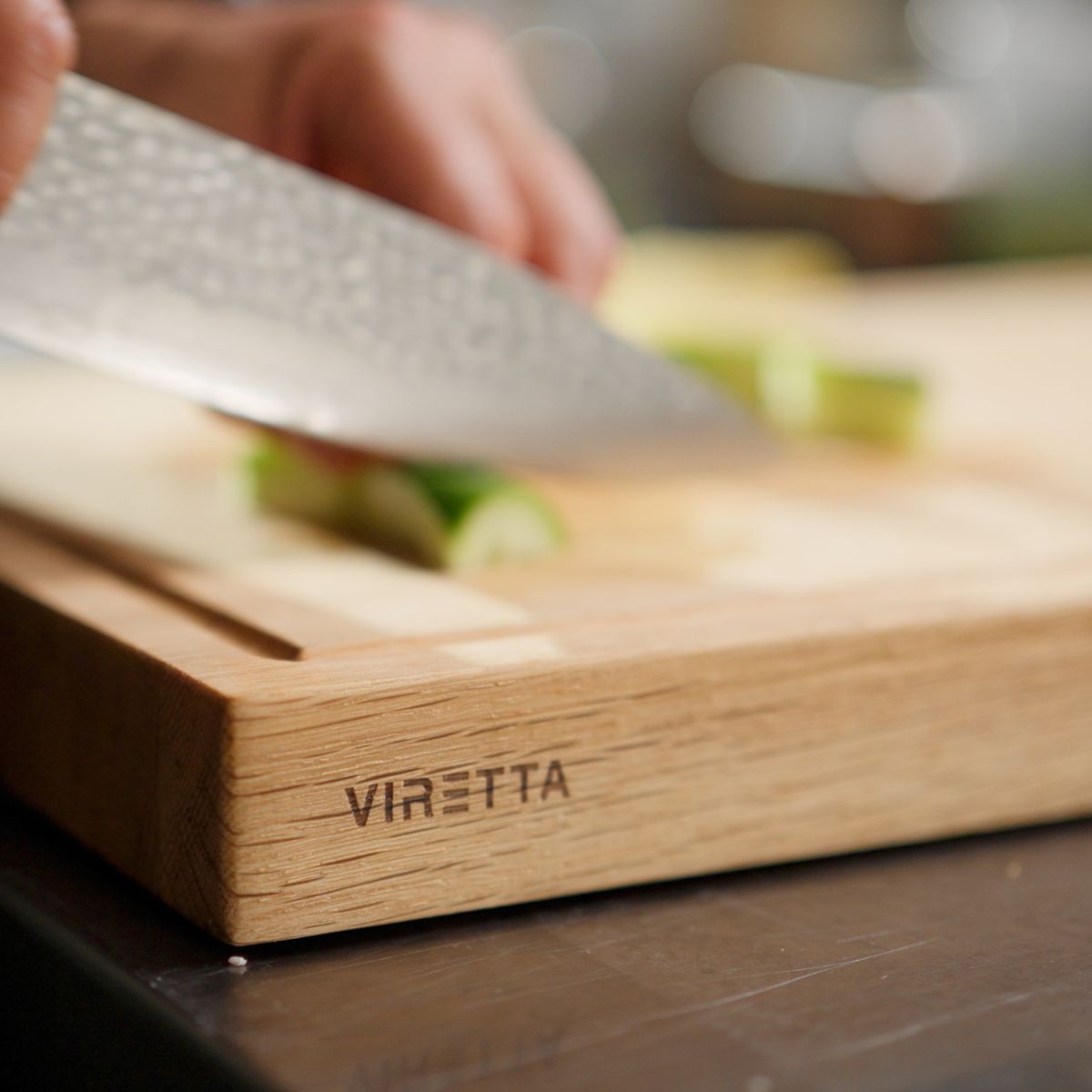
Japanese knives have a special allure. A sense of precision, history, and uncompromising dedication to the perfect cut, refined over centuries. This unique tradition, ranging from the Samurai's Katana to the chef's Gyuto, originated from a crucial element: steel. Japanese steel is not just a material, but a source of national pride and a philosophy that prioritizes extreme sharpness and long-lasting edge retention above all else.
At Viretta, we are deeply inspired by this philosophy. Our entire Shojin series is a tribute to Japanese craftsmanship, and at the heart of these knives are carefully selected, modern Japanese steel grades that represent the best of modern metallurgy. In this comprehensive guide, we take you on a journey into the fascinating world of Japanese steel – from legendary Samurai steel to the high-tech alloys that define the pinnacle of knife making today.
The Legendary Beginning: Tamahagane
No discussion about Japanese steel is complete without acknowledging its mythical origin: Tamahagane. This is the traditional steel used for over a thousand years to forge the legendary Katana swords. The manufacturing process is an ancient art form. In a large, specially constructed clay furnace, a "Tatara," layers of iron sand (Satetsu) and charcoal are stacked. For three days and nights, the furnace is constantly fired, while a master blacksmith, a Murage, oversees the intense process. The result is a large lump of steel, a "Kera," with varying carbon content. Only the finest, most carbon-rich pieces with a shimmering silver luster are selected and given the name Tamahagane – "jewel steel." This steel is not homogeneous, but its impurities and pure carbon structure are what, in the hands of a master, can be shaped and forged into a sword of unparalleled beauty and strength. Tamahagane is the historical legacy upon which all modern Japanese steel is based.
Modern Japanese Steel Grades: Tradition Meets Technology
After World War II, Japan experienced an industrial revolution. Steel manufacturers like Takefu Special Steel and Hitachi began to utilize modern science to innovate and create new alloys. The goal was to preserve the legendary sharpness of traditional carbon steel, but in a more uniform, reliable, and – above all – stainless form that met the demands of the global market. This led to a division into two main branches of modern Japanese steel.
Modern Stainless Steel – Viretta's Focus
These steel grades were developed to offer the famous Japanese sharpness, but with the decisive advantage of high corrosion resistance, making them ideal for the modern, busy kitchen. They combine the best of both worlds.
- VG-10 (V-Gold 10) – The Gold Standard for Balance:
For over 60 years, VG-10 has been the benchmark for high-quality kitchen knives. With a hardness of 60-62 HRC and a unique chemical composition that includes 1.5% cobalt, VG-10 offers an almost ethereal balance. The cobalt acts like a "glue" in the atomic matrix of the steel, ensuring an incredibly strong bond between the grains. The result is a steel that is extremely hard, yet at the same time exhibits remarkable toughness for its hardness class. It is this versatility that makes it the "workhorse of the premium class" and the obvious choice for our popular series such as Shojin Taru and Shojin Kaku.
- SG2 (Super Gold 2 / R2) – The Technological Spearhead:
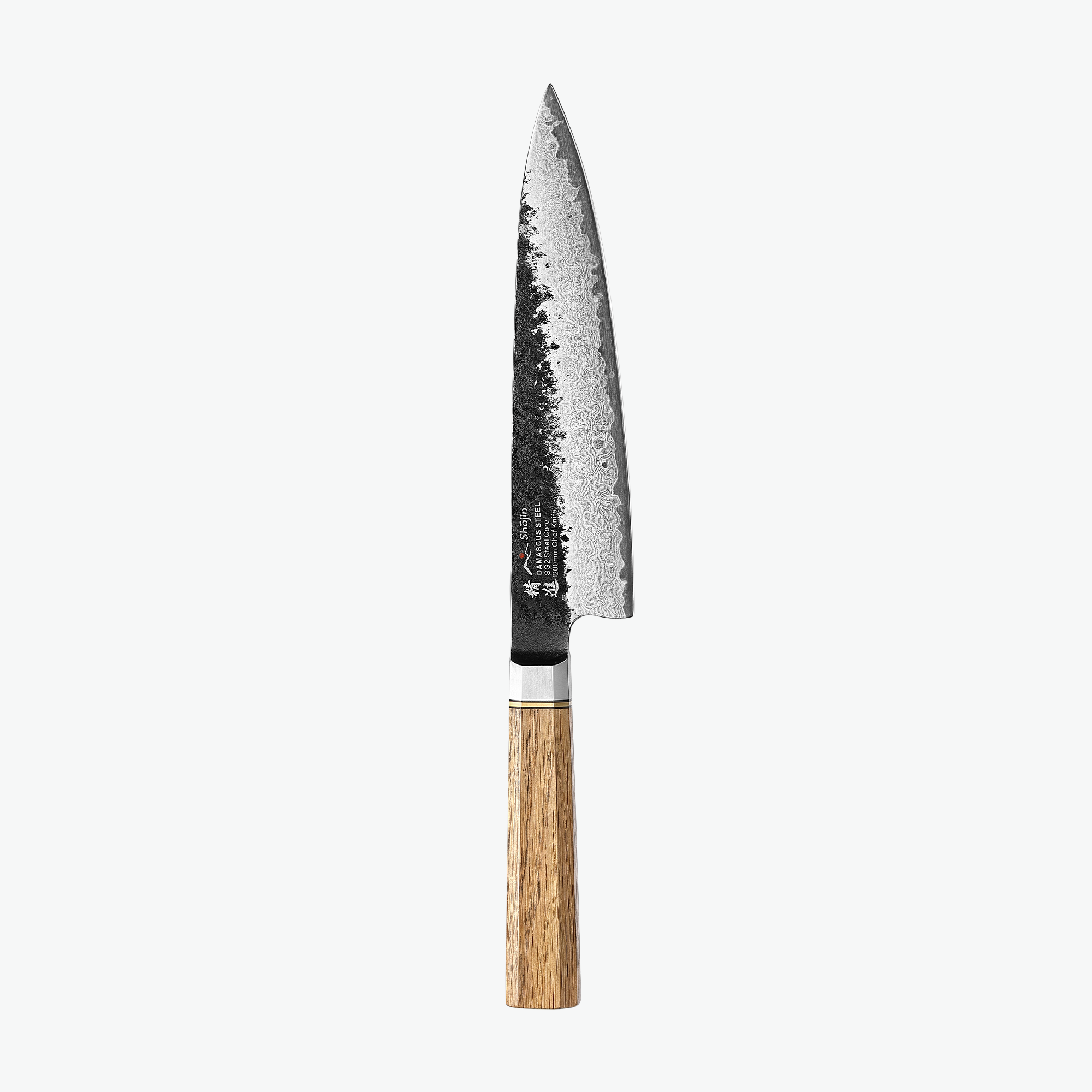
SG2 is a powdered steel, which places it among the absolute technological elite. Its manufacturing process ensures a 100% homogeneous and pure microstructure, allowing for a very high concentration of alloying elements such as vanadium. As a result, SG2 achieves a hardness of up to 64 HRC and phenomenal edge retention, significantly surpassing conventional steel grades. An SG2 blade simply stays laser-sharp for an incredibly long time. SG2 is for the uncompromising user and the obvious choice for our flagship series Shojin Kashi.
- AUS-8 & AUS-10 – The Reliable Workhorses:
The AUS series, manufactured by Aichi Steel, is known for its excellent value for money. For many years, AUS-8 was the standard for good, robust, and very stainless knives. AUS-10 is the significant evolution, where a higher content of carbon and vanadium elevates the hardness and edge retention to a performance level close to VG-10.
Traditional Carbon Steel – for Purists
These steels, manufactured by Hitachi, are the direct successors of Tamahagane. They are known for producing the absolute sharpest blades and being easy to sharpen. Their major drawback – and a decisive factor – is that they are not stainless. They are reactive and will tarnish and rust if not carefully maintained.
- Shirogami (White Paper Steel): Named after the white paper in which it is wrapped, this is the purest of the traditional steels. It consists essentially only of iron and carbon. There are three grades (#1, #2, #3), with #1 having the highest carbon content and capable of achieving legendary, almost surgical sharpness. However, it is also very brittle.
- Aogami (Blue Paper Steel): This is Shirogami alloyed with tungsten and chromium. These additions provide significantly better wear resistance and toughness. Aogami Super is the most advanced version with even more carbon, tungsten, and added vanadium, giving it the best edge retention of all traditional carbon steels.
At Viretta, we have made a conscious decision. The legendary cutting feel of Aogami Super requires maintenance that is unrealistic for most. For the modern European kitchen, we believe that the ultimate experience is found in a steel that offers first-class sharpness without the constant worry of rust. That's why we have focused on perfecting modern, stainless super steels like SG2 and VG-10.
The Great Philosophical Duel: German vs. Japanese Knife Design
The choice of steel reflects a deeper cultural philosophy regarding the form and function of the knife:
- Japanese Philosophy: Sharpness First. The Japanese approach is based on a "function-first" aesthetic. Knives like Yanagiba (for sushi) and Nakiri (for vegetables) are specialized tools designed for precise slicing or push-cutting. This requires an extremely hard (60+ HRC), thin blade with a very acute angle (often 12-15 degrees). The goal is to cut through food cells as cleanly as possible to preserve flavor and texture. Our entire Shojin series is an expression of this philosophy.
-
German Philosophy: Robustness Above All. The German tradition emphasizes a versatile "workhorse." The steel is tougher (typically 55-58 HRC), the blade is thicker, and the edge has a wider, more durable angle (approx. 20 degrees). The curved "belly" of the blade is designed for a rocking cutting technique. Our Classic series is strongly inspired by this mindset of reliability and durability.
Conclusion: The Art of Choosing the Right Japanese Steel Knife
The world of Japanese steel is a rich and complex universe, ranging from ancient traditions to groundbreaking technology. Choosing "Japanese steel" is not just a simple decision, but a choice between different philosophies – between the puristic but demanding experience of a traditional carbon steel and the modern, balanced performance of an advanced stainless alloy.
At Viretta, our mission is to curate the best of this proud tradition. We have carefully selected steels like VG-10 for its sublime balance and SG2 for its uncompromising technological superiority. We offer the essence of Japanese sharpness, packaged in a format designed for performance and durability in a modern kitchen. In our opinion, this is the best of both worlds – and the right choice for the modern, quality-conscious chef.

Leave a comment
This site is protected by hCaptcha and the hCaptcha Privacy Policy and Terms of Service apply.