



A sharp knife is a chef's most essential tool. It not only makes kitchen work faster and more enjoyable but is also significantly safer than a dull knife, as it cuts precisely instead of slipping. Fortunately, keeping your knives in top shape isn't complicated science. It relies on two simple disciplines: regular maintenance and periodic sharpening.
Before we begin, it's crucial to understand the difference:
Honing: This is daily maintenance. When you use your knife, the microscopic edge bends slightly. A honing steel realigns this edge. No metal is removed; instead, the sharpness is restored.
Sharpening: This is periodic "major maintenance." Over time, the edge becomes dull and rounded. A sharpening stone removes a small amount of steel to create a completely new, sharp edge.
Part 1: Daily Maintenance – The Art of Honing
Honing should be a regular routine – ideally every time or every other time you use your knife. It only takes about 20 seconds and significantly extends the period between actual sharpening sessions.
Choose the right honing steel
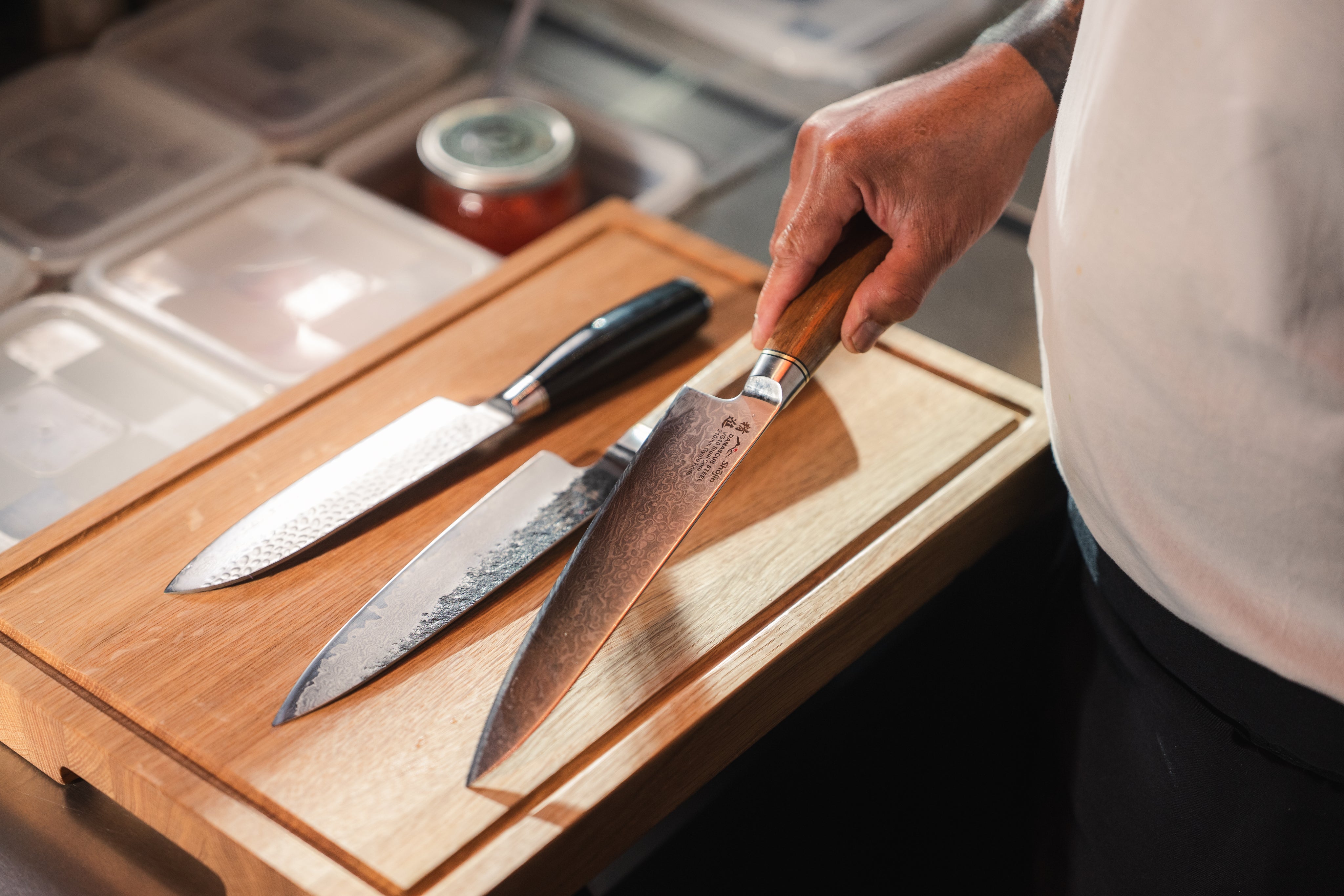
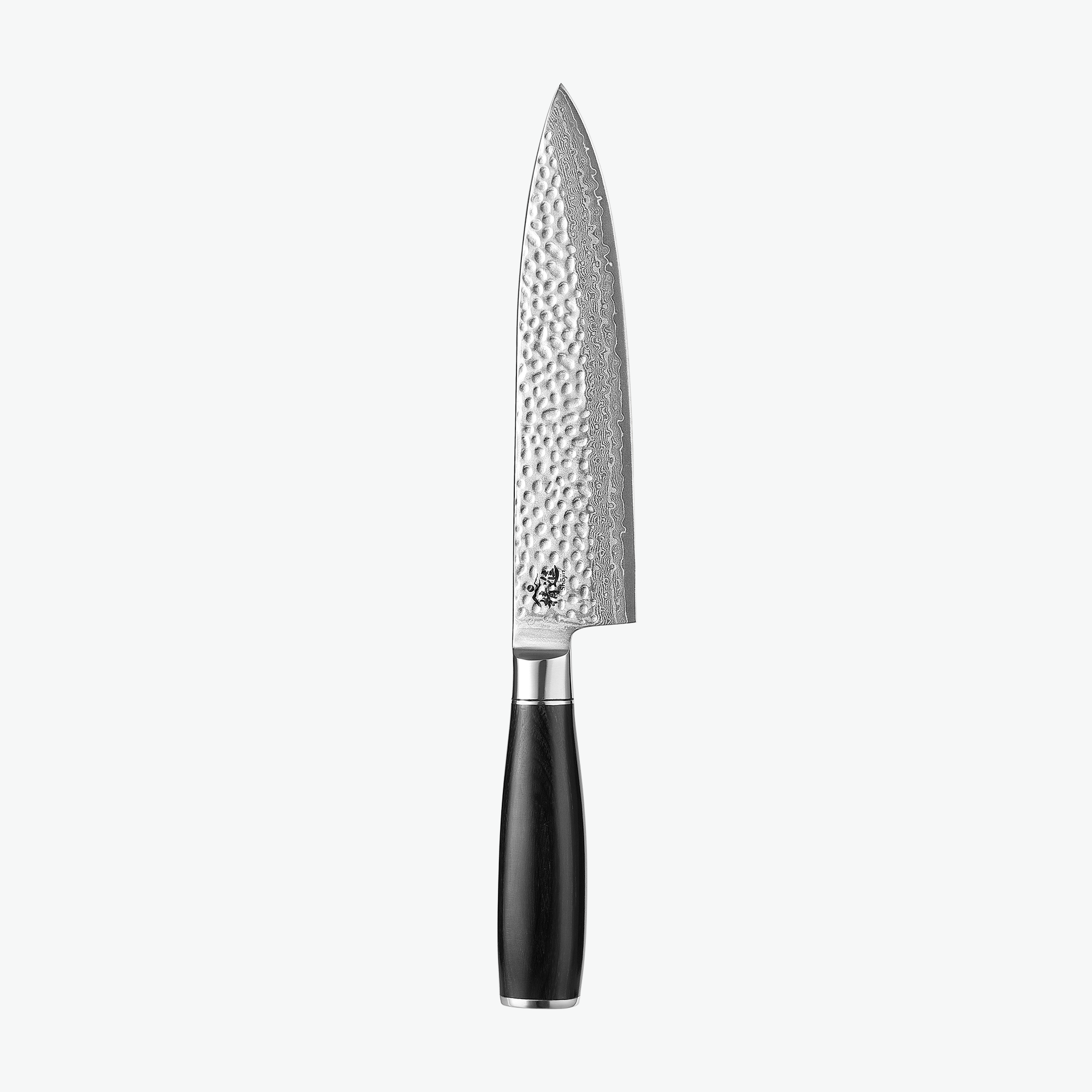
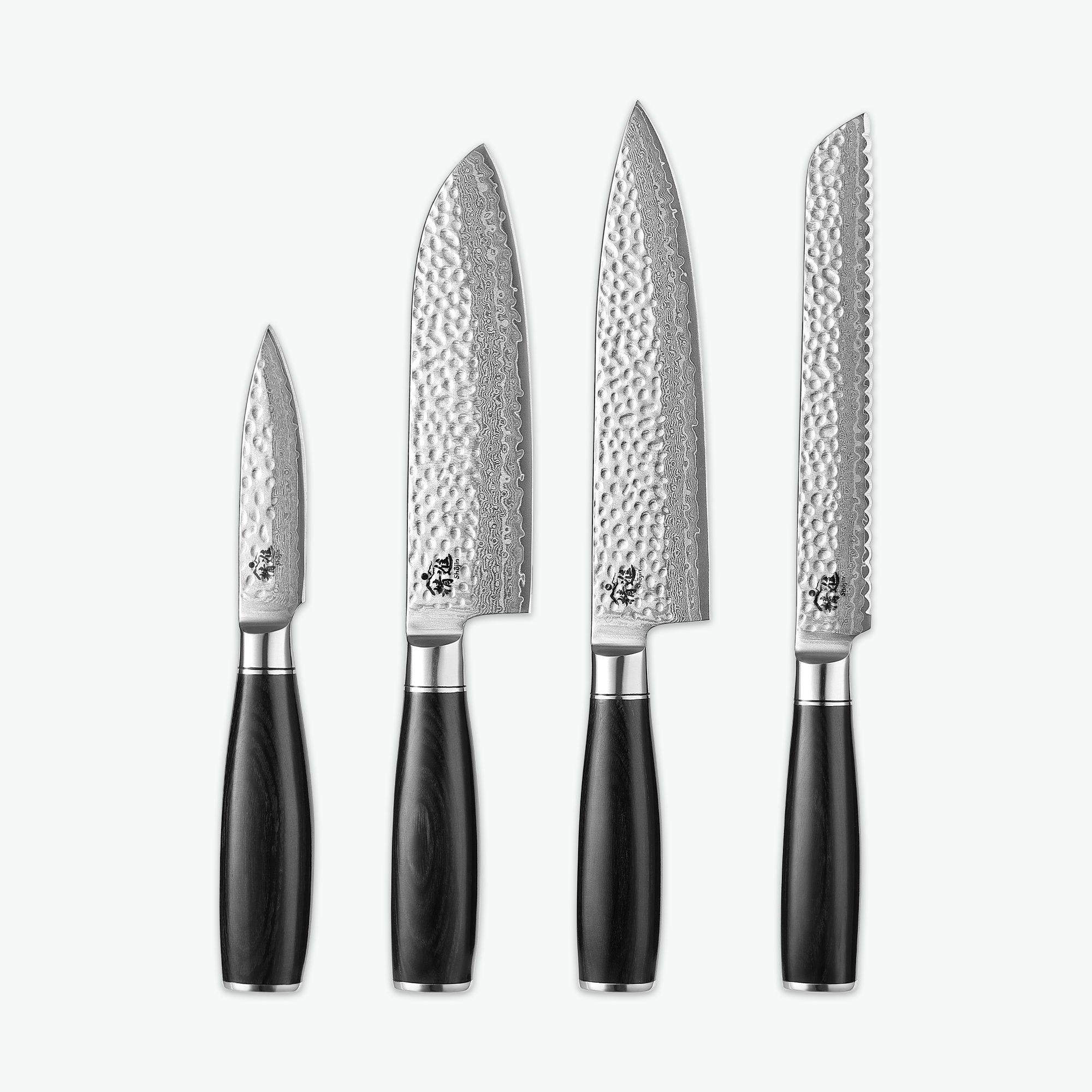
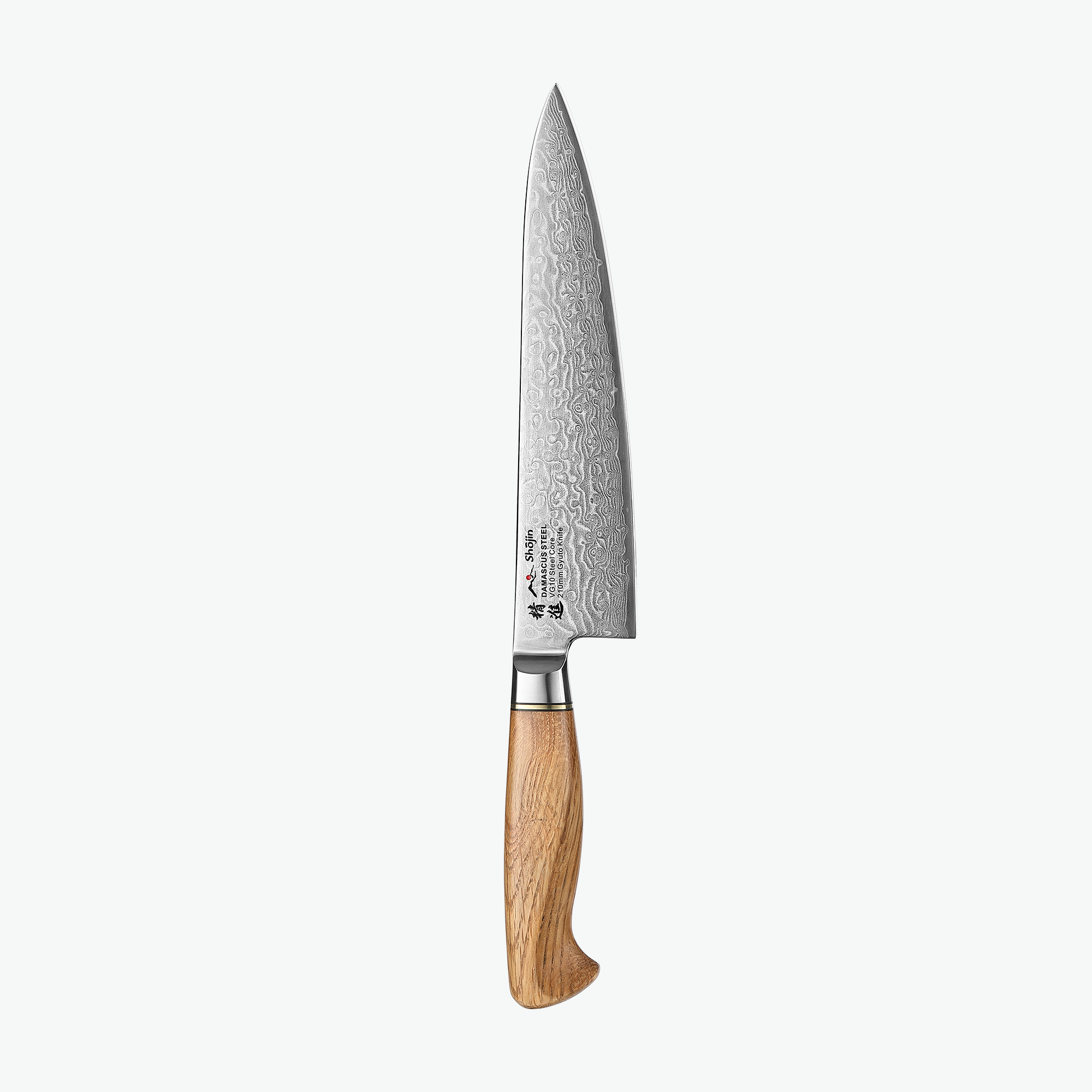
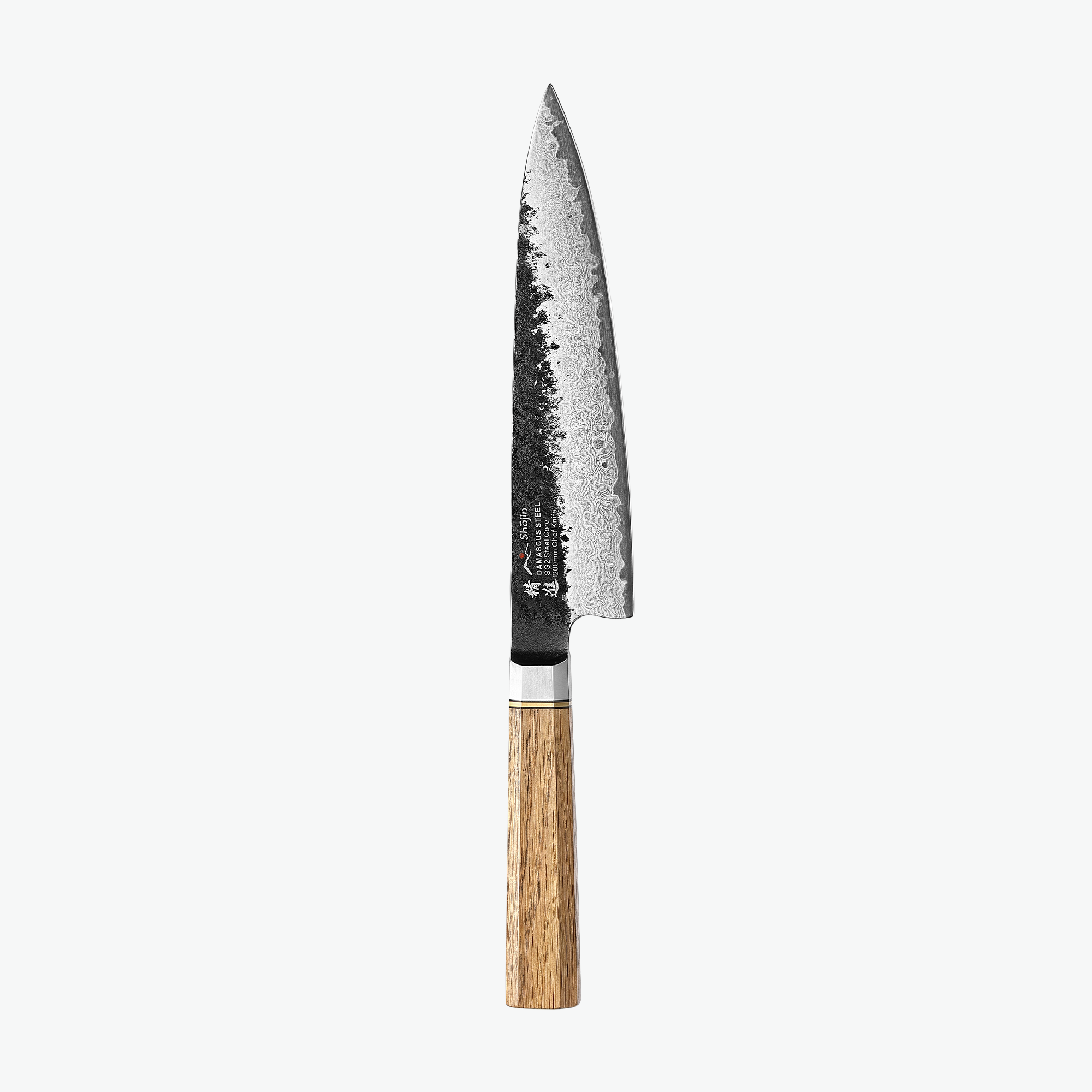
Not all honing steels are created equal. For extremely hard Japanese steels in our Shojin series (like VG-10 and SG2), a normal metal honing steel is not sufficient. Use here:
-
Ceramic Honing Steel: Removes a small amount of material and is excellent for very hard knives.
-
Diamond-coated Honing Steel: Even more efficient and ideal for quickly refreshing the edge. Our Viretta Diamond Honing Steel is an example of a professional tool.
How to use a honing steel:
-
Find the angle: The correct angle is crucial. Japanese knives (like our Shojin series) typically require 10–15°, European knives (like our Classic series) about 20°. A simple trick: Place the spine of the knife on the honing steel (90°), halve the angle to 45°, and then again to about 22°. From there, tilt the knife slightly more to achieve the desired angle.
-
Stable position: Hold the honing steel vertically, with its tip on a stable, non-slip surface (e.g., a cutting board with a cloth underneath).
-
Even strokes: Place the heel of the knife (the back part of the edge) at the top of the honing steel. Now, pull the knife down and towards you with light, even pressure, ensuring the entire edge from heel to tip makes contact.
-
Switch sides: Repeat the process on the other side.
-
Repeat: 5–10 strokes per side. It's not about force, but consistent angle and lightness.
Part 2: Restoring Sharpness – Sharpening with a Sharpening Stone
When the honing steel is no longer sufficient, it's time to sharpen. For the average home cook, this is enough a few times a year. The sharpening stone is the most effective method.
Understanding Grit:
Sharpening stones come in different grits. The lower the number, the coarser the stone.
-
Coarse (<1000 grit): For repairing nicks or extremely dull blades. Our Shojin 500/1000 stones are ideal for this phase.
-
Medium (1000–3000 grit): Main stone for primary sharpening and maintenance. A 1000 grit is perfect for setting a sharp edge.
-
Fine (>3000 grit): For polishing and refining the edge for a mirror-smooth, extremely sharp blade. Our Shojin 3000/8000 stones are designed for this final step.
How to sharpen with a sharpening stone:
-
Prepare the stone: Soak most stones in water for 5–15 minutes until no more bubbles rise. Secure in a non-slip holder.
-
Find the angle: As with the honing steel, the angle is crucial. Place the knife flat on the stone and lift the spine until the edge has the correct contact. A trick: Place 1–2 coins under the knife's spine to maintain a consistent angle.
-
Grind the first side (form the burr): With light, even pressure, move the knife back and forth along the entire length of the stone. Keep the angle constant. Feel for the burr on the opposite side – a rough metal edge that indicates the side is finished.
-
Grind the second side: Flip the knife and repeat until the burr is removed.
-
Refine the edge: Make several very light, alternating strokes on both sides to remove the final burr. For fine grit, now switch to polishing.
-
Test sharpness: Carefully cut into paper – a sharp knife glides through effortlessly.
Alternative methods for home:
For a simpler solution, Viretta offers electric or manual knife sharpeners with fixed angles. They are user-friendly and provide fast, reliable results, but offer less control than a sharpening stone.
The Final Touch: Proper Storage
A freshly sharpened knife is delicate. Never throw it in a drawer with other metal objects – that will ruin the edge immediately. Always store correctly:
-
Magnetic Knife Strip: Displays knives and keeps them separate and safe. Our Viretta magnetic knife strips made from FSC-certified wood are functional and elegant.
-
Knife Block: Classic and safe.
-
Sheath: Protects the knife when stored in a drawer.
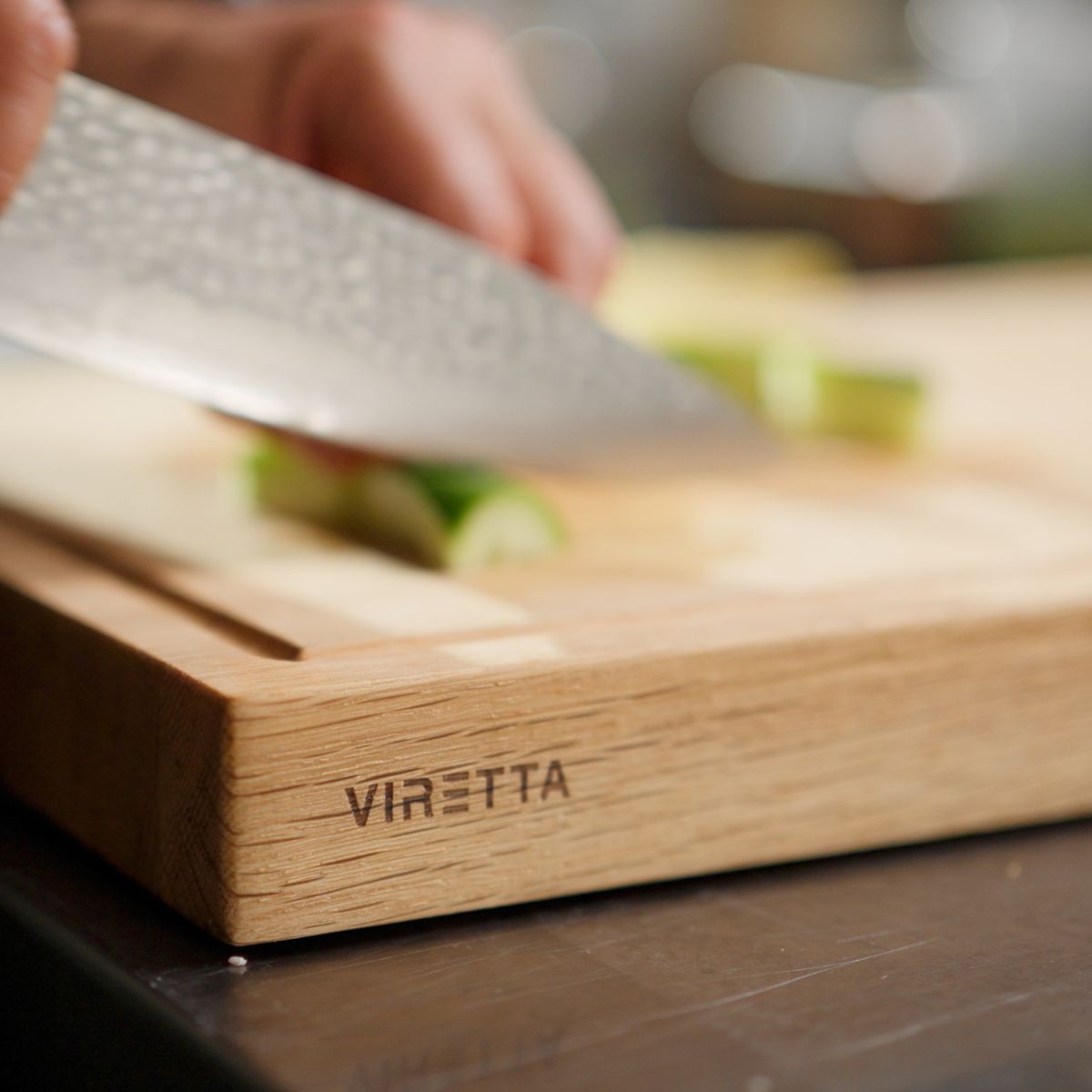
Always cut on wood or plastic cutting boards – never on glass, stone, or metal.
By combining regular maintenance (honing) and periodic sharpening with a whetstone, you ensure that your knives not only stay sharp but become lifelong partners in your kitchen.


