

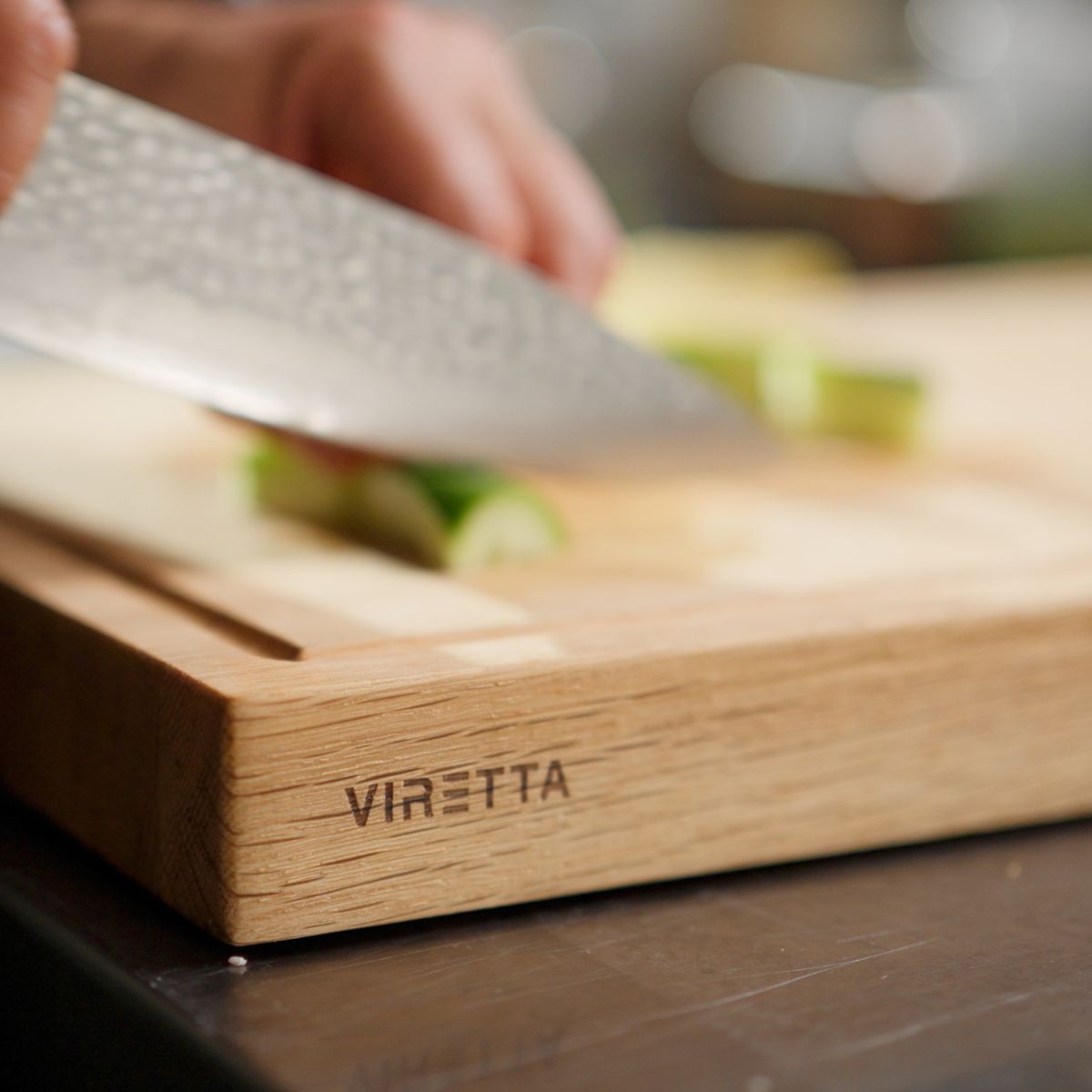



A cutting board is more than just a surface for chopping vegetables. It is the fundamental workstation of your kitchen, a direct partner for your most valuable knives, and an element that plays a significant role in both hygiene and aesthetics in the kitchen.
Choosing the right wooden cutting board requires conscious decisions regarding construction, material, and care. Should you choose an end-grain board to give your knives the best possible treatment? Which type of wood—classic oak, dark walnut, or sustainable bamboo—best suits your style? And how do you ensure that your board remains hygienic and beautiful for many years?
This guide provides you with the knowledge you need to make an informed decision.
Construction: End-grain vs. Long-grain
The way a cutting board is constructed directly impacts the sharpness of your knives and the lifespan of the board.
Long-grain / Edge-grain:
This is the traditional construction, where long planks of wood or bamboo are glued together side-by-side, so you cut along the wood fibers.
-
Knife-friendly: The blade hits the horizontal fibers, resulting in a robust and durable surface. However, over time, it wears on the knife edge a bit more than end-grain.
-
Care: The surface is less porous than end-grain and therefore usually requires less frequent oiling to stay saturated and protected.
End-grain:
The board consists of small wooden blocks glued together so that the wood fibers point upwards – meaning you cut directly into the "end" of the wood.
-
Knife-friendly: The blade glides between the vertical fibers, which then close back up. This "self-healing" effect maintains sharpness significantly longer and leaves fewer visible cut marks.
-
Care: Since the fibers are exposed, the board is more absorbent and requires regular oiling to keep the wood healthy, saturated, and moisture-resistant.
Materials: Aesthetics and Function
The type of wood not only determines the appearance but also the hardness, weight, and character of the board.
Classic Hardwoods: Oak & Walnut
-
Oak: Classic European hardwood, known for exceptional durability and strength. Light, golden color with visible grain – ideal for Nordic kitchens.
-
Walnut: Premium hardwood with a deep, rich hue and elegant grain. Slightly softer than oak, making it even gentler on knives.
High-Performance End-grain: Acacia & Rubberwood
-
Acacia: Rich, high-contrast colors and natural water resistance – very durable.
-
Rubberwood: Environmentally friendly hardwood with dense, stable grain, harvested from trees that have completed their latex production.
Sustainable Alternative: Bamboo
-
Aesthetics: Bright, modern, minimalist appearance with characteristic straight lines.
-
Properties: Fast-growing, renewable, strong, lightweight, and naturally moisture-resistant. Ideal for the family kitchen.
Our Sustainability Promise: Whether oak, walnut, acacia, rubberwood, or bamboo – the wood in Viretta's cutting boards is FSC-certified, guaranteeing that it comes from responsibly managed forests.
Hygiene and Care: How to Keep Your Board Healthy
Daily Cleaning:
-
Always wash by hand with warm water and a little mild soap.
-
Clean both sides, even if only one was used – ensures even drying and prevents warping.
-
Stand upright to dry, allowing air to circulate freely.
-
Never put in the dishwasher or soak – heat and moisture will cause wood to crack and deform permanently.
Monthly Oiling:
-
Cutting boards should be oiled to stay healthy. Oil saturates the wood and forms a protective barrier against drying out, cracks, moisture, and bacteria.
-
Apply a generous amount of food-grade mineral oil or special board conditioner.
-
Distribute evenly on the front, back, and edges.
-
Let it soak in for several hours or overnight, then wipe off excess oil. Repeat at least once a month or at the first signs of dryness.
A well-maintained wooden board is a beautiful, safe, and sustainable workstation that only gets better with time.
Relevant products
-

Cutting Board Set 3 Pieces
The Viretta cutting board set without a juice g...
The Viretta cutting board s...
€65,00 -

Cutting Board Set with Juice Groove - 3 Pieces
The Viretta cutting board set with a juice groo...
The Viretta cutting board s...
€104,00 -

End-Grain Cutting Board Set with Juice Groove – 3 pcs
The Viretta end-grain set is for you if you wan...
The Viretta end-grain set i...
€234,00


Relevant Articles

Explore More Recipes
Created for a balanced life
Cooking starts with peace of mind, good ingredients, and tools that feel right in your hands. At Viretta, we combine form and function in a modern Nordic design – created for all those who see the kitchen as a place of togetherness and inspiration.