










At Viretta, our design philosophy is based on a steady dialogue between Scandinavian form and Japanese function. This balance is at the heart of our identity and is most evident in our uncompromising choice of materials. Wood is the material that connects our tools to the natural world. It lends warmth and a human dimension that are crucial for Scandinavian design.
We believe that the integrity of a tool directly reflects its origin. That's why every piece of wood in our collection is selected not only for aesthetics, but for its specific performance, natural durability, and verifiable, sustainable origin. This is a detailed journey through the types of wood that lend soul to our tools – a story about material science, responsible craftsmanship, and deep respect for our planet.
Oak: The steadfast classic
Oak is the epitome of hardwood – a symbol of strength and durability. Our oak wood comes from the great forests of North America.
Material properties: Oak's exceptional durability is due to its dense cellular structure and high tannin content, which naturally protect the wood from moisture and decay. The grain is usually straight and pronounced, which not only offers a beautiful, classic look, but also ensures predictability in stability and strength during processing. This density lends a tangible and satisfying heaviness that is crucial for the balance of a high-quality knife handle or tool.
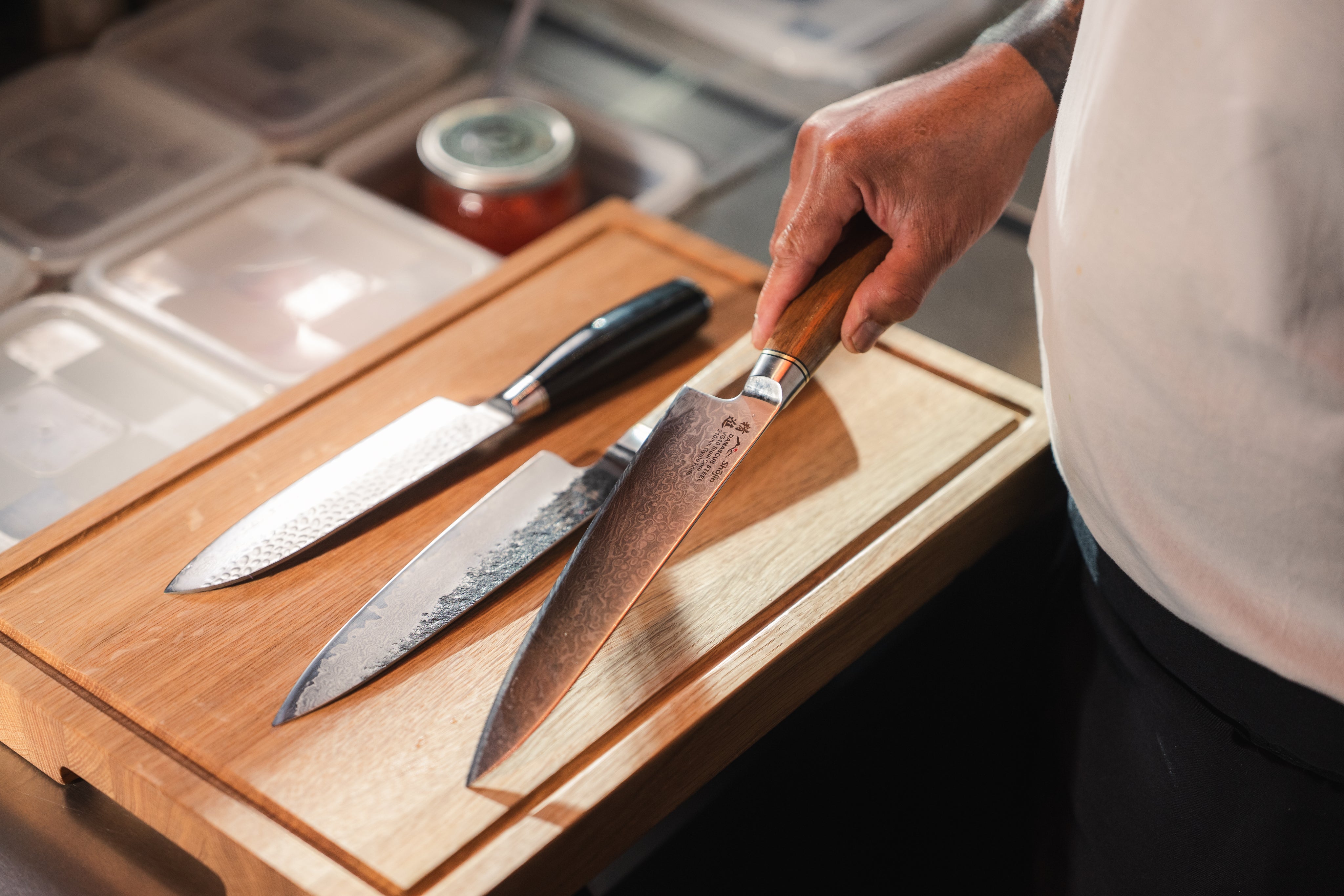
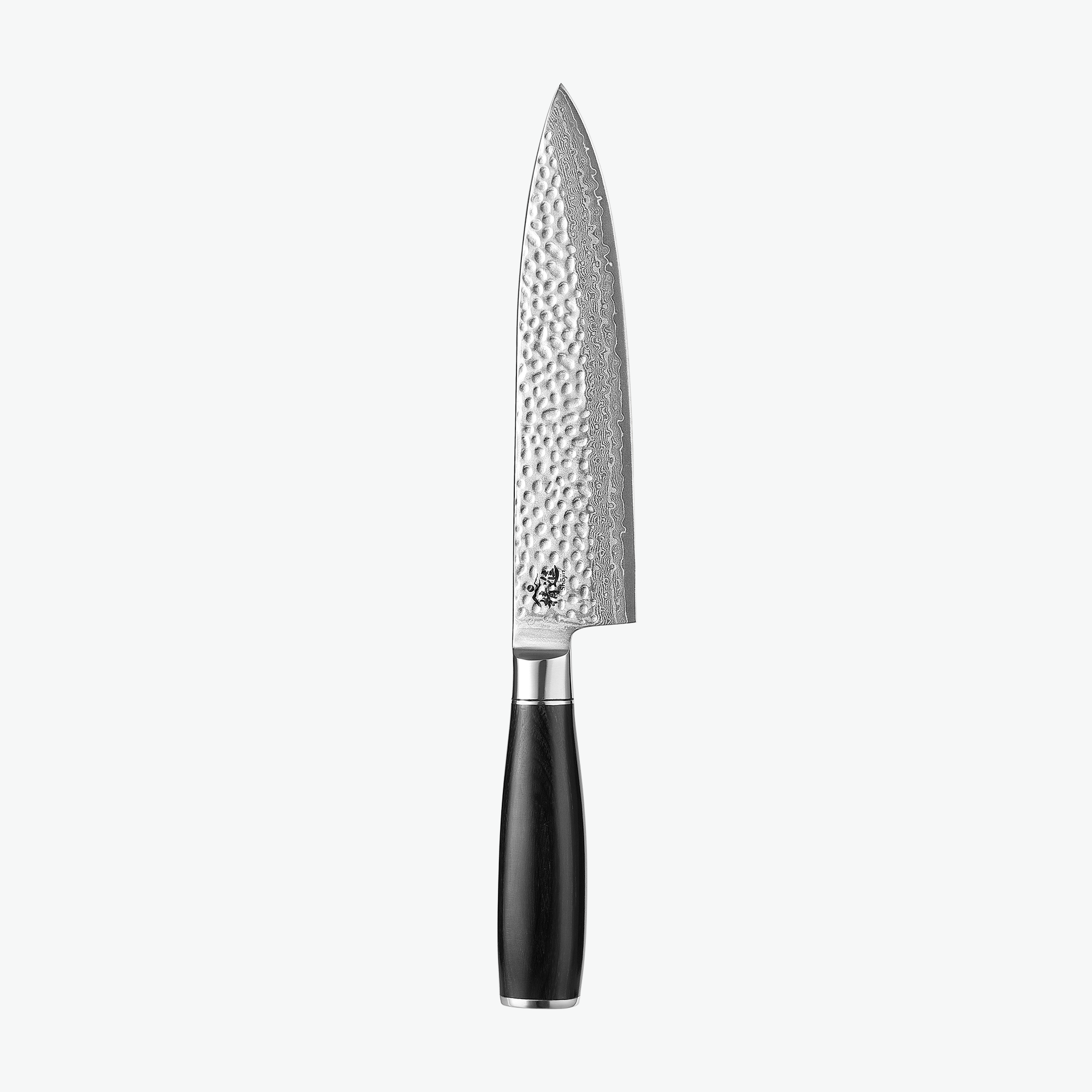
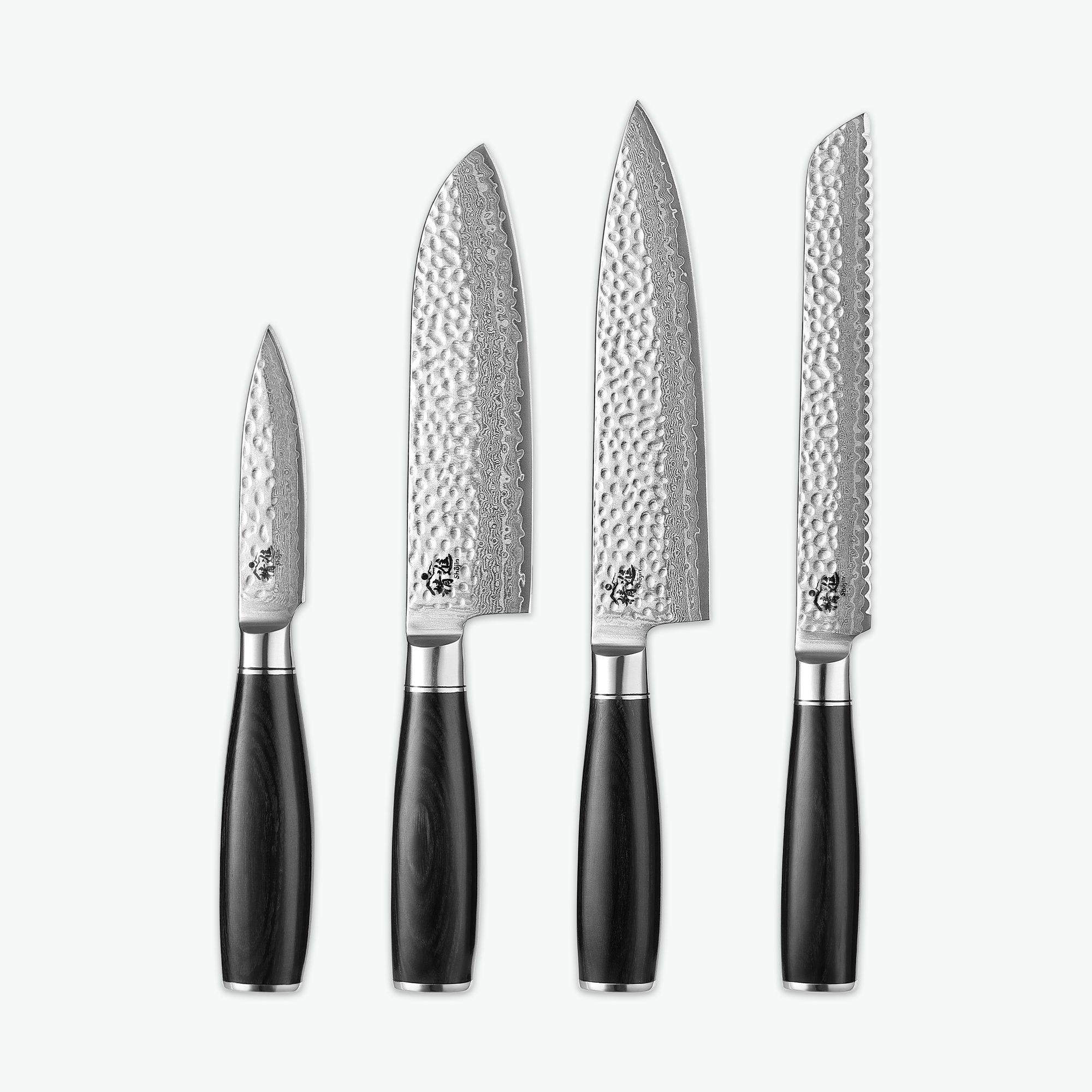
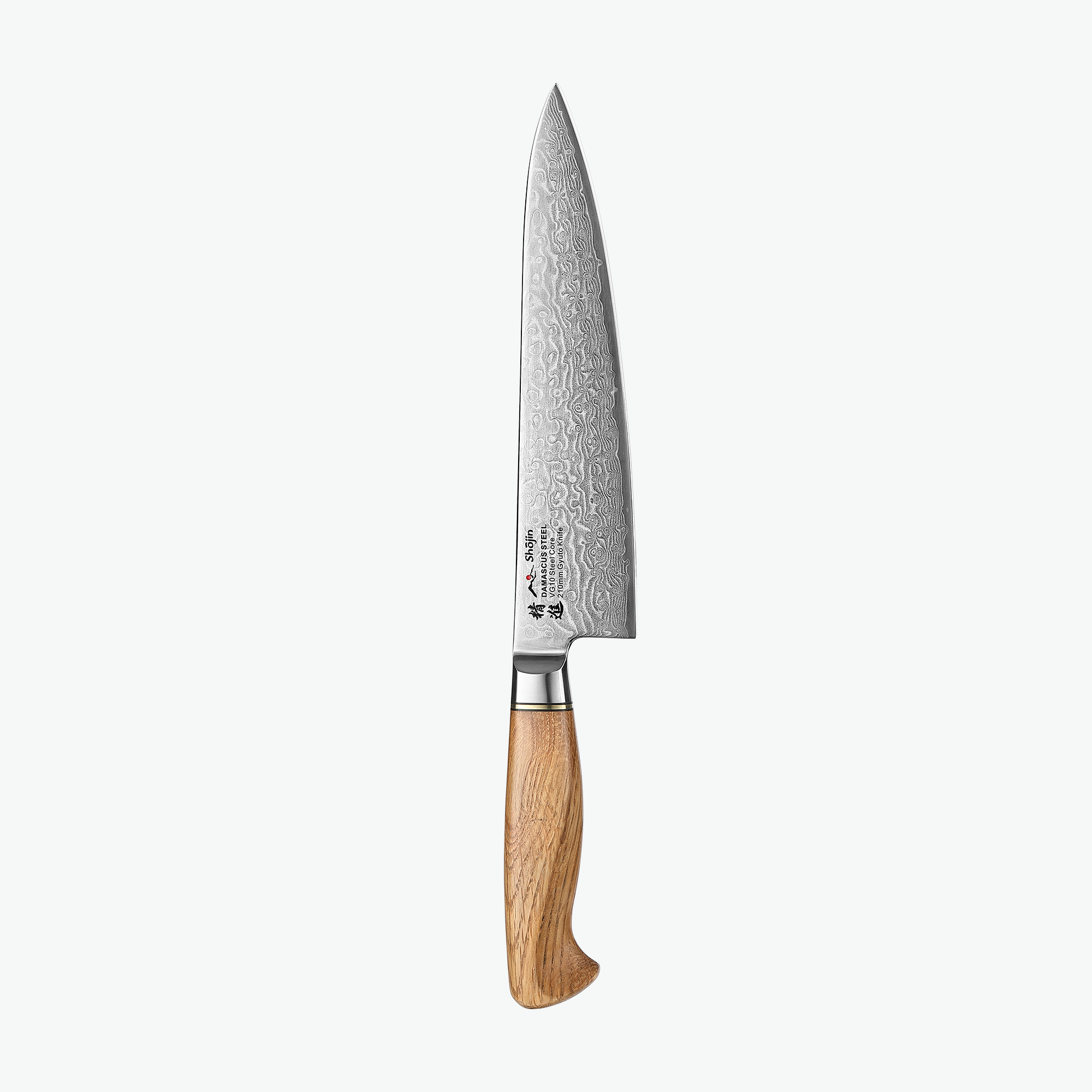
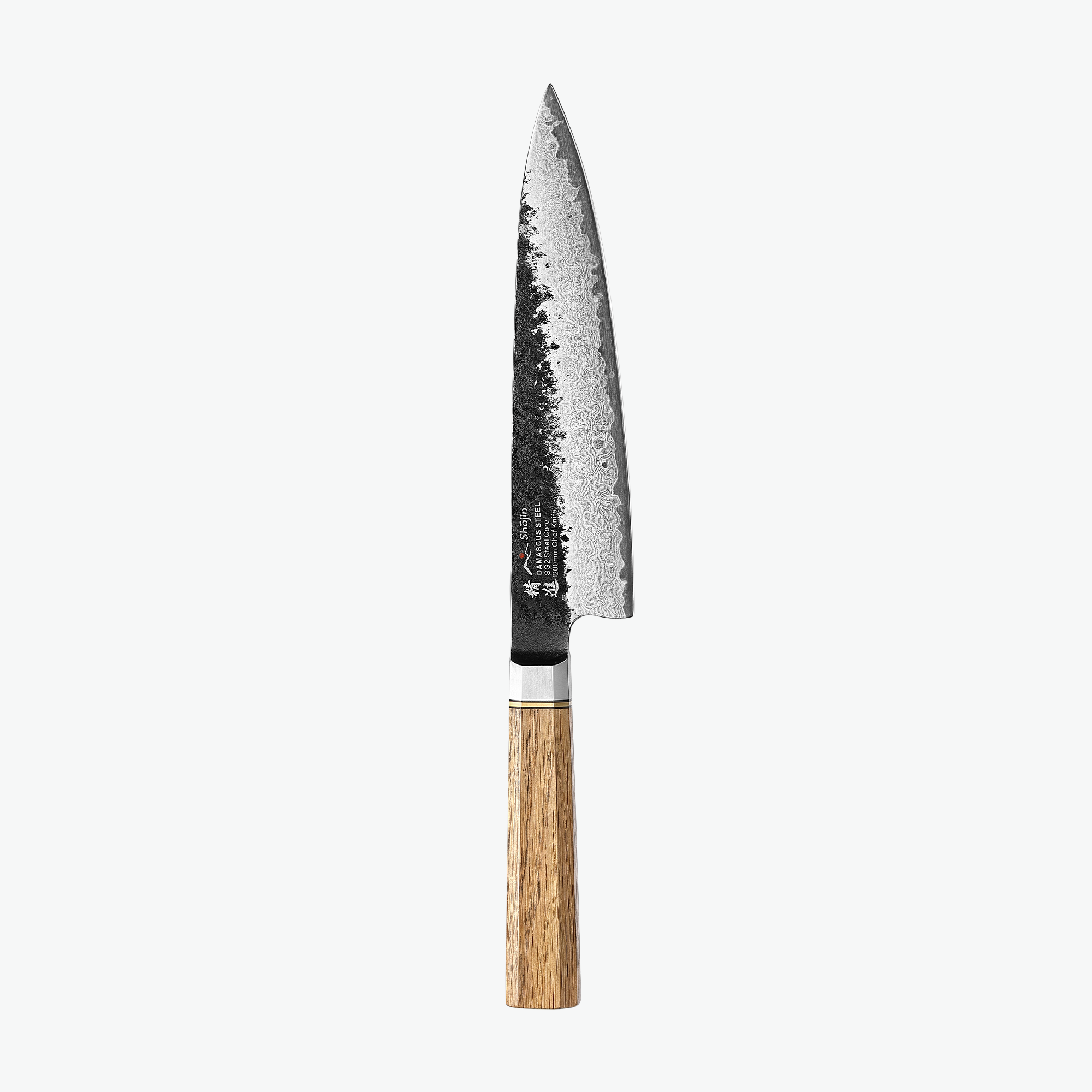
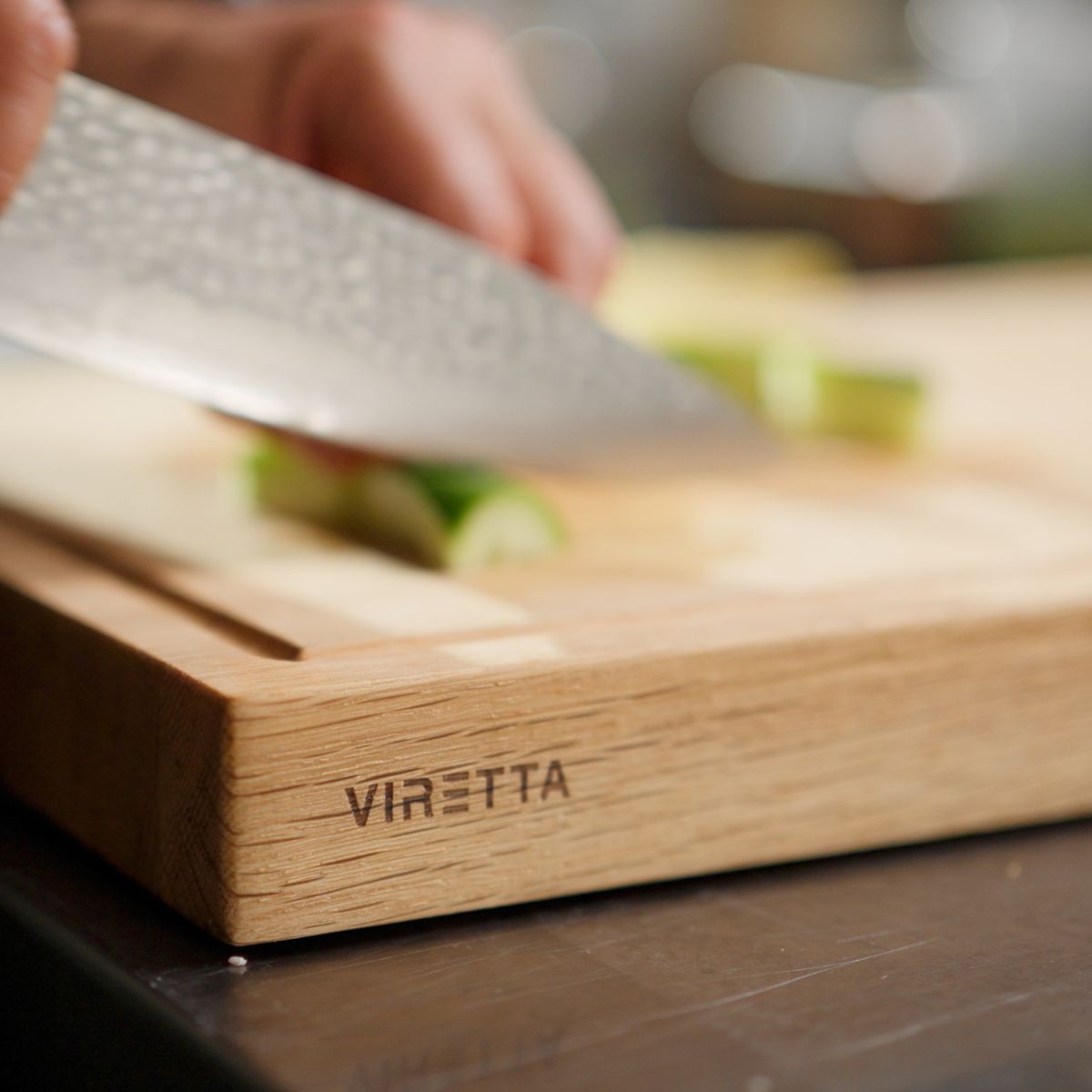
Craftsmanship & Use: We specifically choose oak for products where balance and durability are crucial. In our Shojin Kashi and Shojin Kaku knife series, the weight of the oak conveys a sense of control and precision. For our long cutting boards, the robust nature ensures that the surface withstands generations of use without losing its integrity.
Walnut: The elegant virtuoso
Walnut is a premium hardwood, valued for its deep, chocolate brown color and complex, often wavy grain patterns. Our walnut wood comes from South America.
Material properties: The rich color comes from chemical compounds that accumulate in the heartwood during maturation. The wood is strong, but relatively light compared to oak. This combination of strength and lightness allows for robust tools that do not feel clunky, but rather act as a natural extension of the hand.
Craftsmanship & Use: Walnut is used to add an extra degree of sophistication and warmth to our products. Ideal for the handles of our Shojin Kashi and Kaku knives, where the deep color of the wood complements the precision of the steel. It is also suitable for our magnetic knife strips, which make storage an aesthetic highlight.
Bamboo: The sustainable sprinter
Although botanically a grass, bamboo possesses properties that can rival the strongest hardwoods. Our bamboo comes from China.
Material properties: The secret of bamboo lies in its fiber structure. It grows extremely fast and develops a dense, parallel fiber alignment that offers an impressive strength-to-weight ratio. This dense structure also makes the surface naturally moisture-resistant – a crucial advantage in the kitchen.
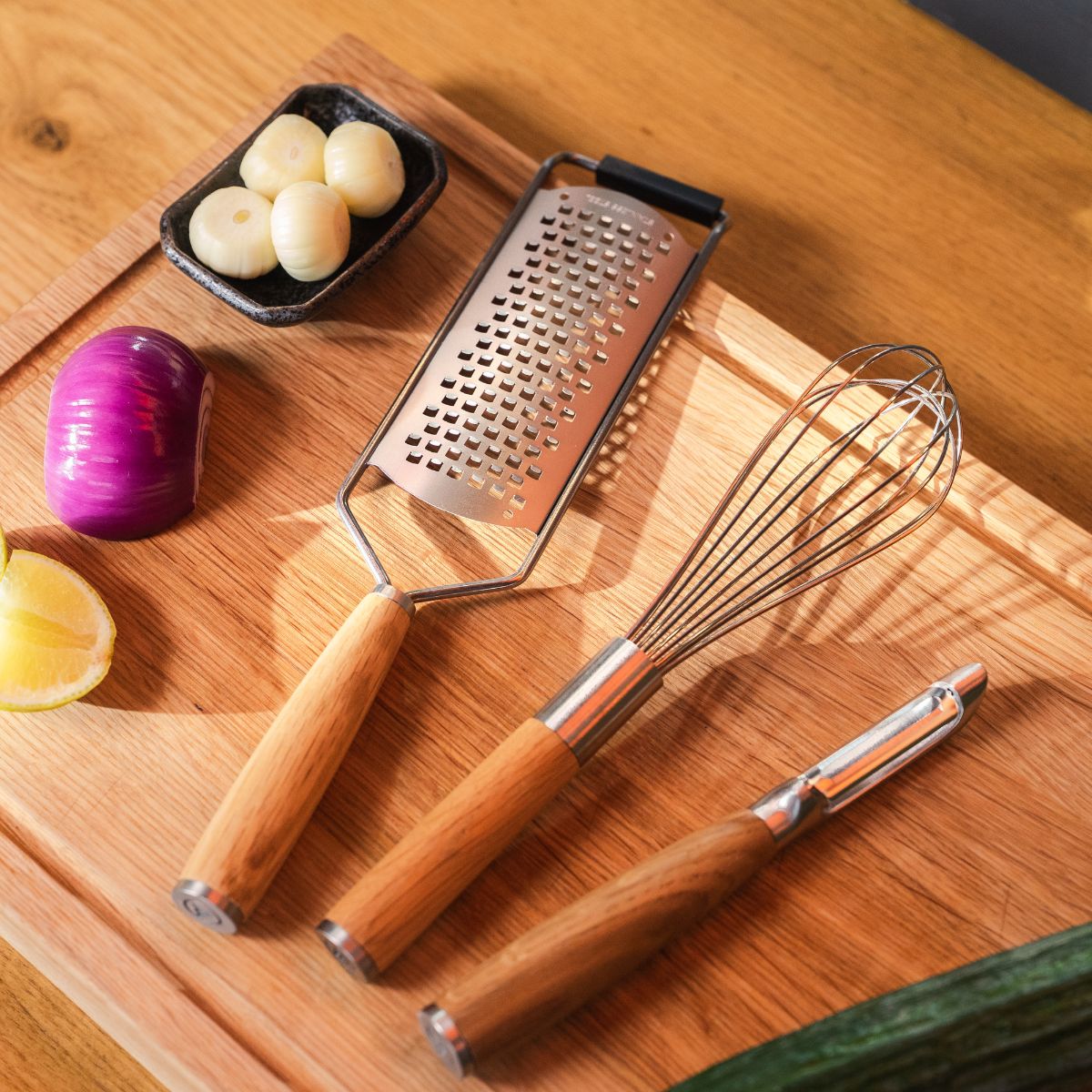
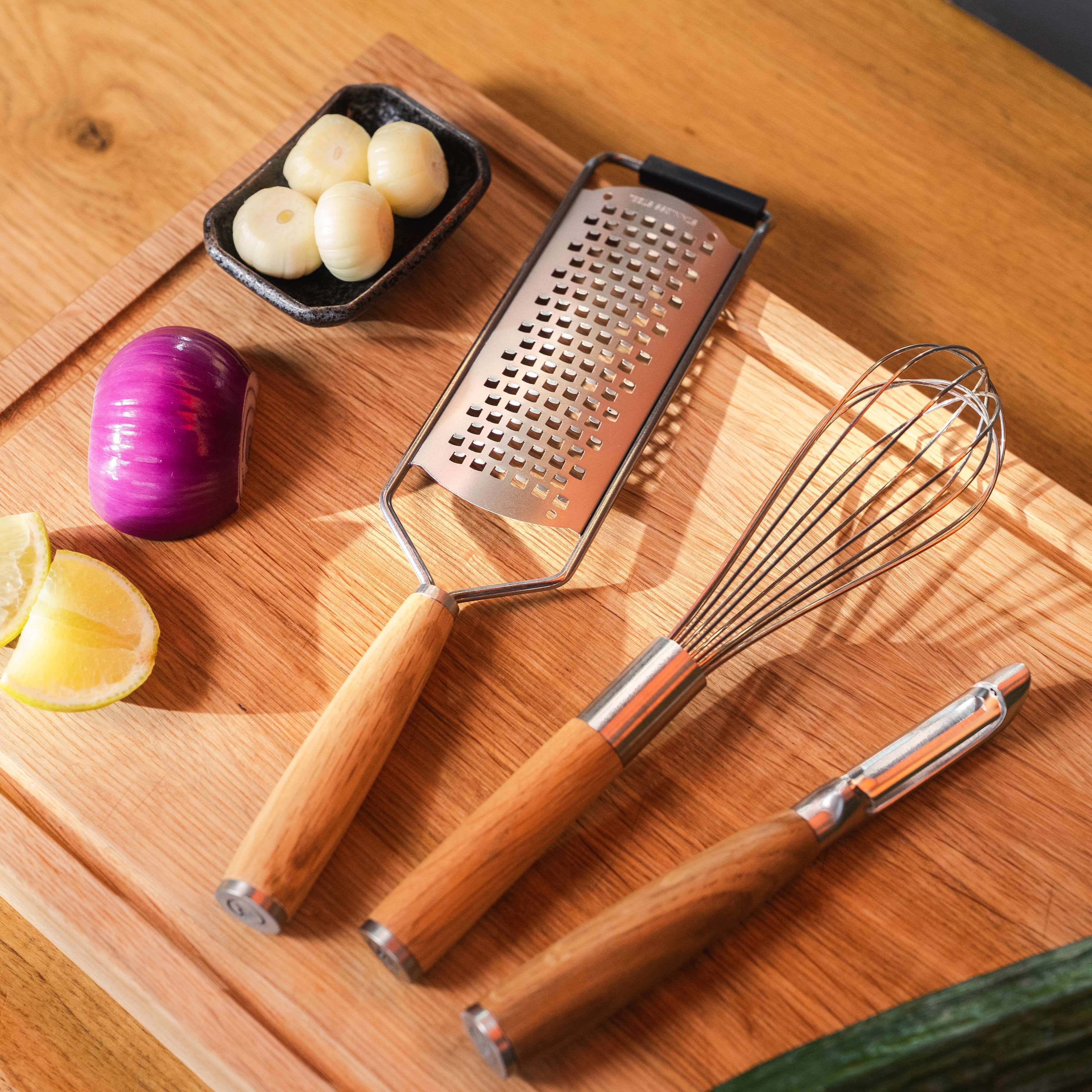
Craftsmanship & Use: The light weight and durability make bamboo ideal for our 6-piece tool set and as a base for our whetstones, where stability is required. For cutting boards, bamboo offers a hard surface that withstands cuts and nicks, yet is relatively gentle on the knife edge.
Endgrain Duo: Acacia & Rubberwood
Our endgrain cutting boards show how two types of wood work together to create a superior product.
Material properties:
-
Acacia: Known for dramatic, contrasting hues and a dense, intertwined grain that makes the wood naturally water-resistant and extremely durable.
-
Rubberwood: Lighter, uniform wood with a dense, fine grain that offers great stability and resistance to warping. Sustainable bonus: the wood is only harvested when the tree no longer produces latex.
Craftsmanship & Use: The combination in an endgrain pattern, where the fibers stand vertically, creates a "self-healing" surface. The knife edge glides between the fibers instead of cutting through them, which preserves the sharpness of the knives and significantly extends the life of both knife and board. The pattern is not only beautiful, but a functional consequence of combining these two complementary materials.
Our Foundation: Why We Exclusively Use FSC®-Certified Wood
In a world full of vague "green" and "eco-friendly" claims, we rely on transparency and verifiability. Our standard is uncompromising: all wood in Viretta products is 100% FSC®-certified.
FSC® stands for the Forest Stewardship Council®, an international non-profit organization that has established the world's most respected standard for responsible forest management. A product with the FSC® logo guarantees that the wood comes from forests managed according to strict ecological and social standards.
Three central pillars of FSC® certification:
-
Environmental Responsibility: Protection of biodiversity, preservation of ecological processes, and prevention of deforestation.
-
Social Responsibility: Protection of the rights of indigenous peoples and local communities, fair working conditions and wages.
-
Economic Sustainability: Economically viable forest management without compromising environmental or social standards.
FSC uses a Chain-of-Custody system that traces wood from the forest through sawmill and production to the final product. This guarantees that every Viretta product comes from a verifiable, responsible source.
For us, FSC® certification is more than a label – it's a promise. It stands for our holistic quality perspective, where the integrity of materials is just as important as performance and aesthetics. Your Viretta tool is a responsible companion – from origin to hand.


