



Damascus steel is more popular than ever, and for good reason. The beautiful, organic patterns are visible proof of advanced craftsmanship and a rich history. However, with its popularity, unfortunately, comes a growing market for imitations. Many cheap knives are marketed with a "Damascus look" that in reality has nothing to do with genuine, multi-layered steel.
At Viretta, we place great value on honest materials. We believe that knowledge is the best protection against a bad purchase. That's why we've created this guide to give you the tools you need to distinguish genuine pattern-welded Damascus steel from fake, superficial copies.
What is "fake" Damascus steel?
When a knife is marketed as "Damascus" but isn't, it's almost always a simple surface treatment. The most common method is laser engraving.
Here, the manufacturer takes a perfectly ordinary, cheap mono-steel blade (a single piece of steel) and burns a pattern into the surface with a laser. The pattern is therefore not part of the steel structure itself, but rather like a tattoo that is only on the outside. It has no functional advantages and serves purely a cosmetic effect, intended to imitate real craftsmanship.
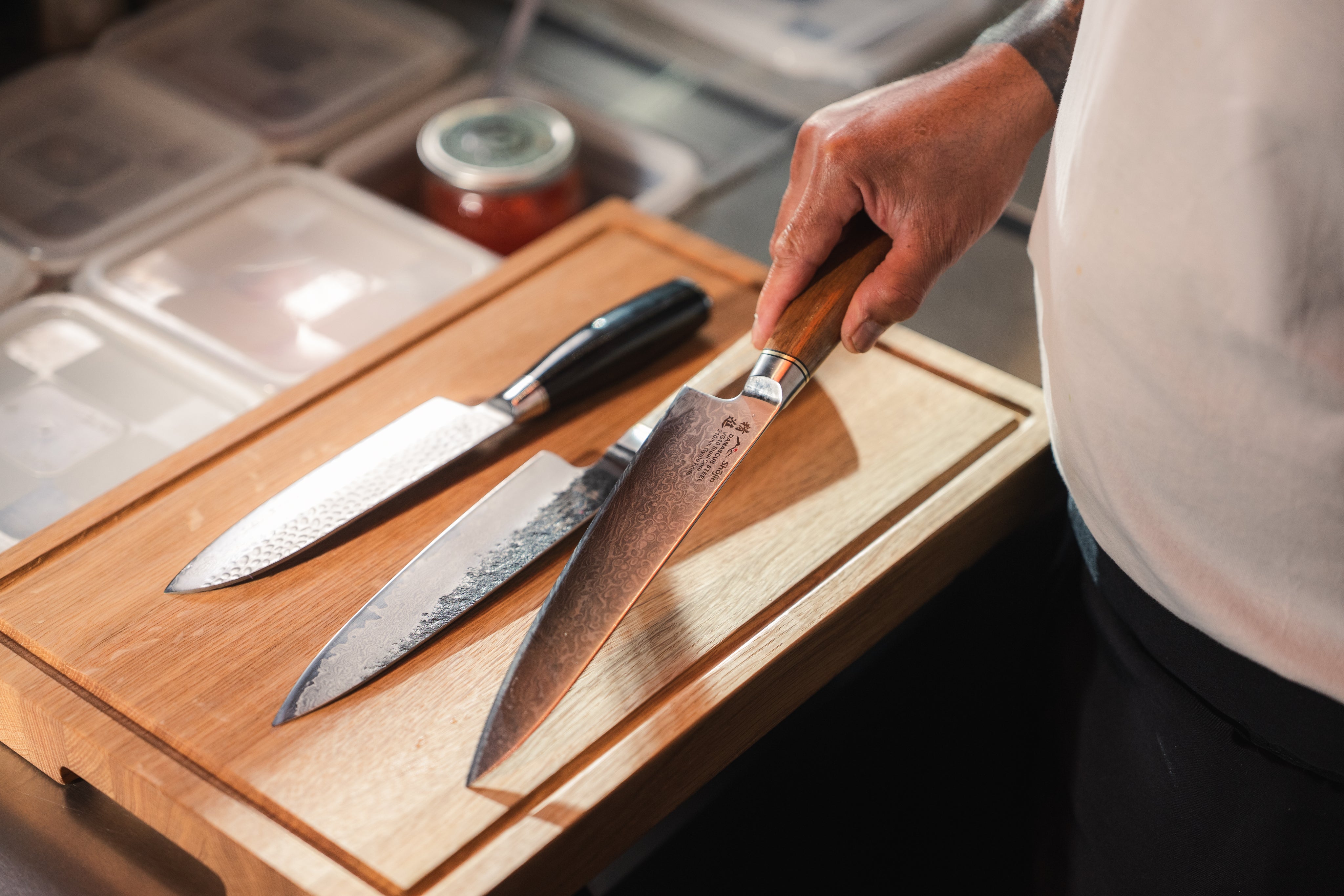
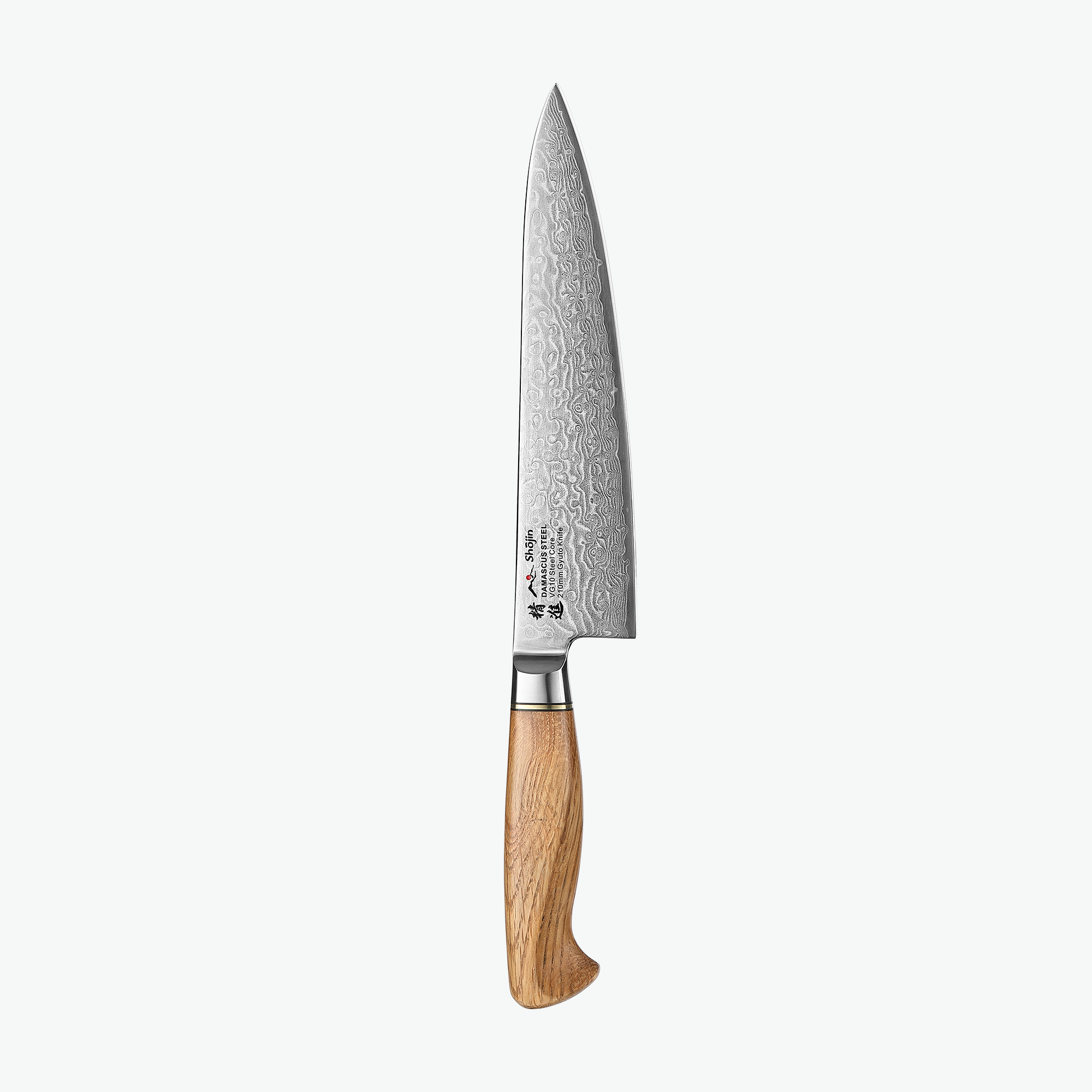
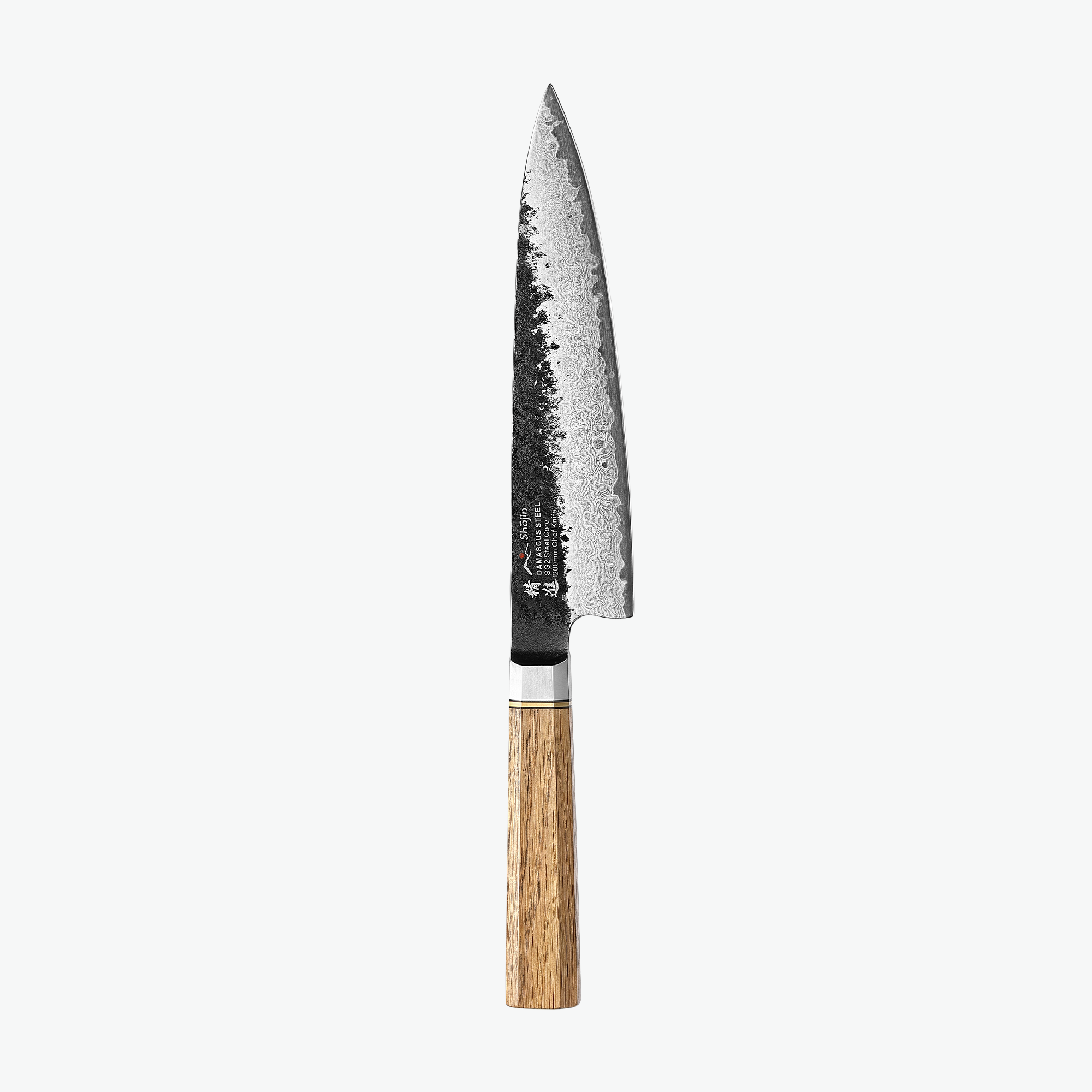
This stands in stark contrast to genuine Damascus steel, where the pattern is an integral part of the steel structure itself, created through a long process of folding and forge-welding, which we apply to our Shojin knives.
5 Methods for Identifying Genuine Damascus Steel
Fortunately, there are several reliable methods for spotting a fake. Here are the five most important things to look for:
1. Inspect the entire blade: The spine and tang reveal the truth
This is by far the safest and easiest test. On a fake, laser-engraved knife, the pattern is usually only on the flat sides of the blade. The manufacturer saves time and money by not processing the less visible areas. On a genuine Damascus blade, however, the pattern is the result of hundreds of layers running through the entire steel.
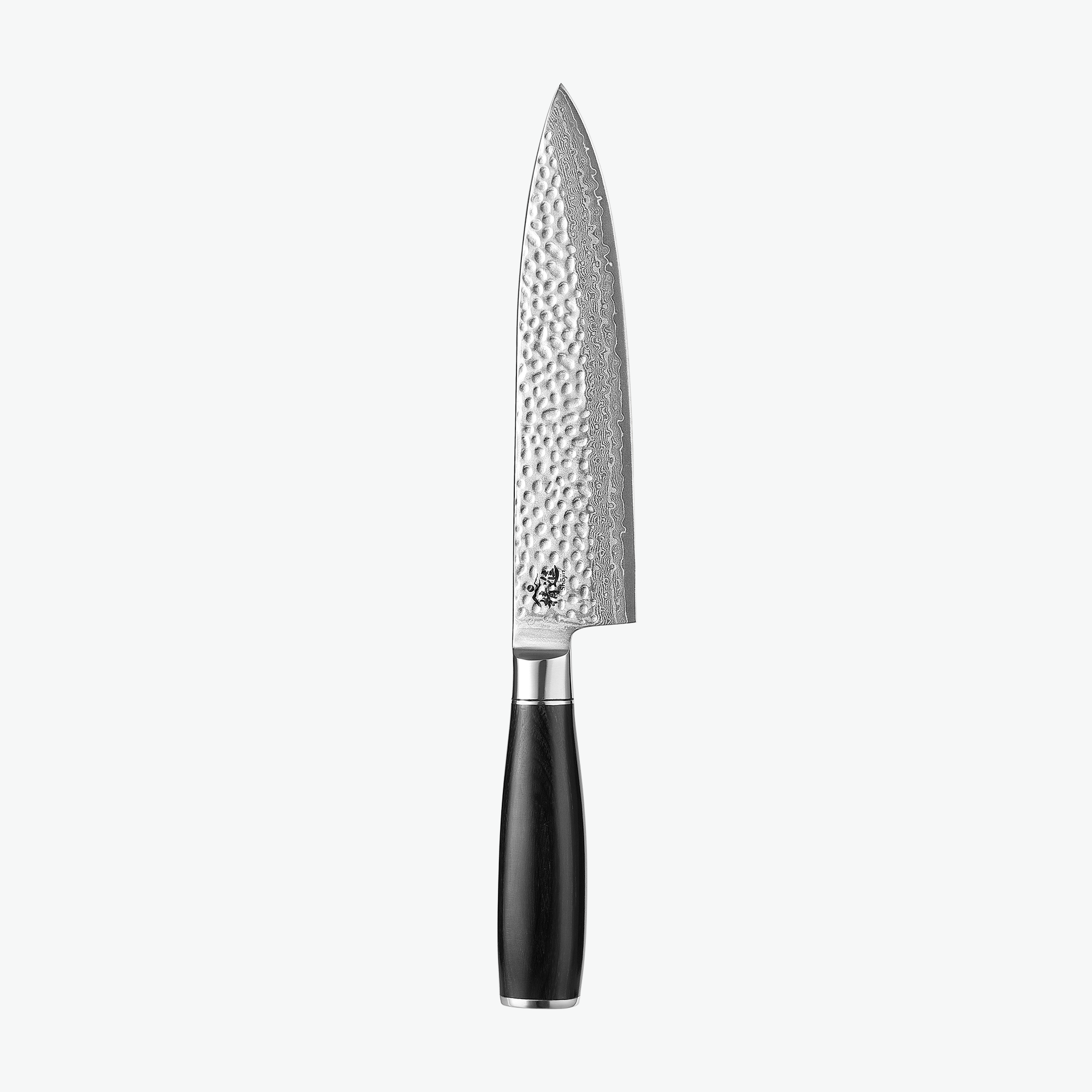
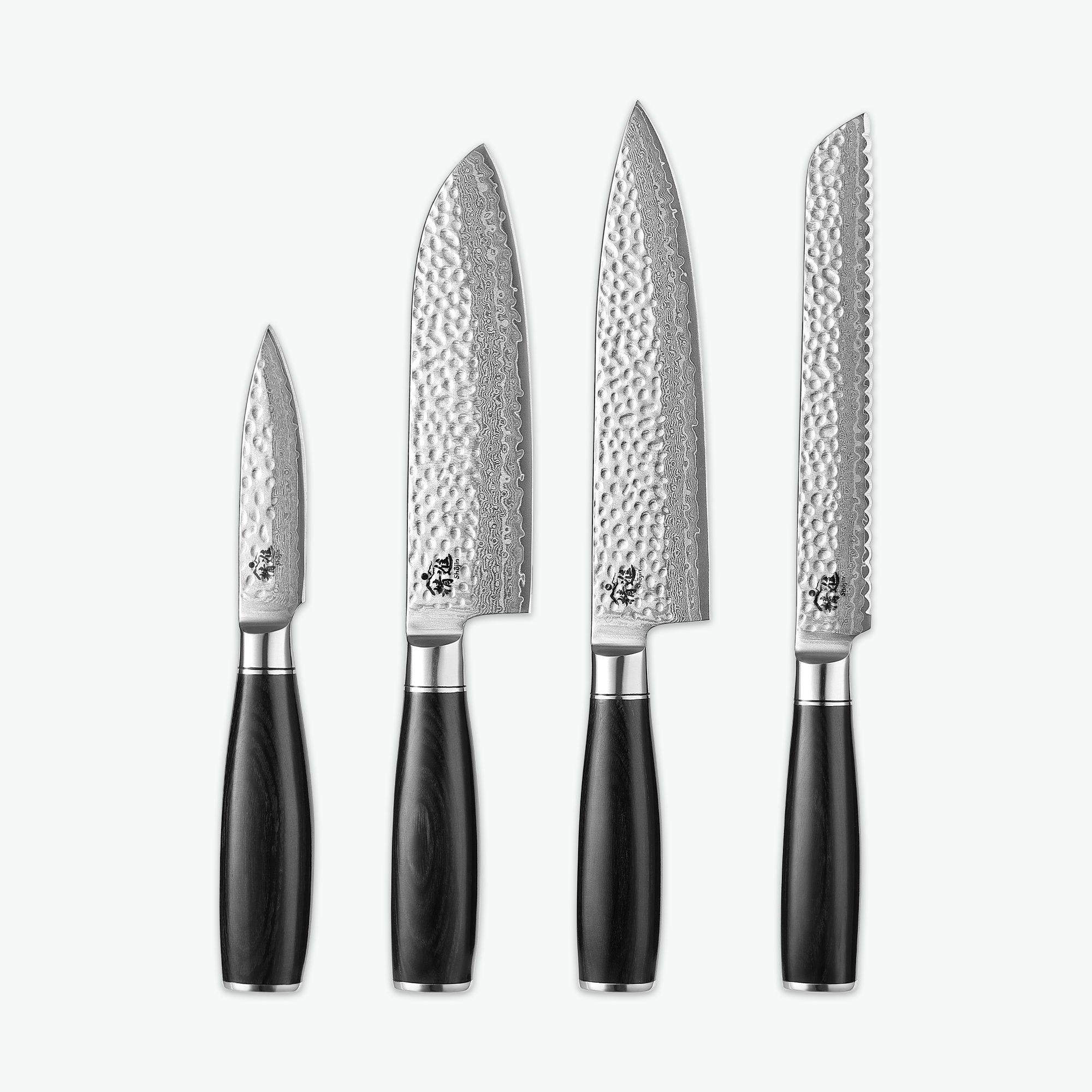
- How to do it: Hold the knife up and examine the spine (the upper, non-sharp edge). On a genuine Damascus blade, such as those from our Shojin Suna or Shojin Taru series, you will see the fine lines of the steel layers continuing across the entire spine. On a fake knife, the spine will be blank and without a pattern.
2. Examine the depth and texture of the pattern
Genuine Damascus patterns are organic and convey a sense of depth due to the manual forging process. Fake patterns often appear "printed" and lifeless.
- How to do it: Examine the pattern closely in good light. Does it appear deep or flat and uniform? Laser-etched patterns can sometimes look slightly "pixelated" or unnaturally perfect. A genuine pattern will always have small, unique imperfections that are part of the charm of craftsmanship.
3. The Polishing Test (for the adventurous)
This test is the most conclusive, but it requires you to physically alter the surface of the knife. We therefore only recommend it if you are almost certain you have an imitation, or if you don't mind a small mark.
- How to do it: Take a piece of very fine sandpaper (1000+ grit) or polishing compound and gently polish a small, inconspicuous area of the blade. If the pattern disappears and bare steel appears underneath, it's a fake, superficial etch. If the pattern remains – perhaps just slightly fainter in contrast – it's genuine, as the pattern extends through all layers.
4. The price rarely lies
As we have already described, the production of genuine Damascus steel is incredibly time-consuming, requires great expertise, and expensive premium materials. A genuine, well-crafted Damascus knife therefore always comes with a certain price tag. If you see a "Damascus knife" at a price that seems too good to be true, then it most likely is.
5. Buy from a trusted source
The absolute safest way to ensure you are buying genuine Damascus steel is to purchase from a reputable brand or retailer that is transparent about its materials and processes. At Viretta, we pride ourselves on our craftsmanship. We always specify the types of steel – such as VG-10 and 10Cr15CoMoV – that form the core and layers of our Damascus blades. This transparency is your guarantee of quality.
Conclusion: Don't be fooled by the pattern
The pattern on a Damascus blade should be an honest symbol of quality and advanced craftsmanship – not a marketing trick. By taking a few minutes to examine the spine of the knife, assess the texture of the pattern, and consider the price and credibility of the seller, you can easily protect yourself from fakes.
When you choose a Damascus knife from Viretta, you are choosing a guarantee of authenticity. You are choosing a blade whose external beauty is a direct and honest result of the internal strength and complex, multi-layered structure that characterizes genuine Damascus steel.
Relevant products
Relevant Articles

Explore More Recipes
Created for a balanced life
Cooking starts with peace of mind, good ingredients, and tools that feel right in your hands. At Viretta, we combine form and function in a modern Nordic design – created for all those who see the kitchen as a place of togetherness and inspiration.