


On our journey through the world of knife steel, it's important not only to focus on the steels we select but also to understand the other significant players in the market. One of the names that frequently comes up in discussions about quality Japanese knives is AUS-10. As steel experts at Viretta, we consider it crucial to have a deep understanding of the entire material landscape, and AUS-10 is an important and recognized alloy.
This article is our in-depth analysis of AUS-10. We will examine its origin, decipher its chemical composition, and assess its precise place in the hierarchy of modern knife steels—comparing it with the choices we have made for our own series.
Origin and Purpose: Aichi Steel Corporation
AUS-10 is a high-carbon stainless steel from the renowned Japanese manufacturer Aichi Steel Corporation. The steel belongs to the well-known "AUS" series, with AUS-10 representing the highest-performing variant and designed as a significant advancement over its predecessors AUS-6 and the very popular AUS-8.
The goal for AUS-10 was to develop a steel competitive in the upper-mid-range segment—a steel with higher hardness and better edge retention than AUS-8, yet still relatively cost-effective to produce and easy to maintain.
Origin and Purpose: Aichi Steel Corporation
AUS-10 is a high-carbon stainless steel originating from the renowned Japanese manufacturer Aichi Steel Corporation. The steel is part of the well-known "AUS" series, with AUS-10 representing the highest-performing variant, developed as a significant improvement over its predecessors AUS-6 and the very popular AUS-8.
The aim of AUS-10 was to develop a steel that could compete in the upper-mid-range segment—a steel with higher hardness and better edge retention than AUS-8, yet still relatively cost-effective to produce and easy for the user to maintain.
The Chemical Composition: A Formula for Versatility
The strength of AUS-10 lies in a balanced chemistry aimed at strong all-round performance:
Carbon (approx. 0.95% – 1.10%): With a carbon content of about 1.0%, AUS-10 clearly falls into the category of high-carbon steels. This gives it the potential to achieve high hardness and, consequently, very good edge retention.
Chromium (approx. 13.0% – 14.5%): A high chromium content ensures that the steel is fully stainless and highly resistant to corrosion and stains from daily kitchen use.
Vanadium (approx. 0.10% – 0.25%): The addition of vanadium is one of the keys to AUS-10's improved performance compared to AUS-8. Vanadium forms hard carbides that significantly enhance the steel's wear resistance.
Molybdenum (approx. 0.10% – 0.30%): Improves the overall strength and toughness of the steel, making it more resistant to fracture.
Nickel (approx. 0.49%): Nickel further contributes to the steel's toughness and also improves corrosion resistance.
Heat Treatment and Hardness: Finding the Right Balance
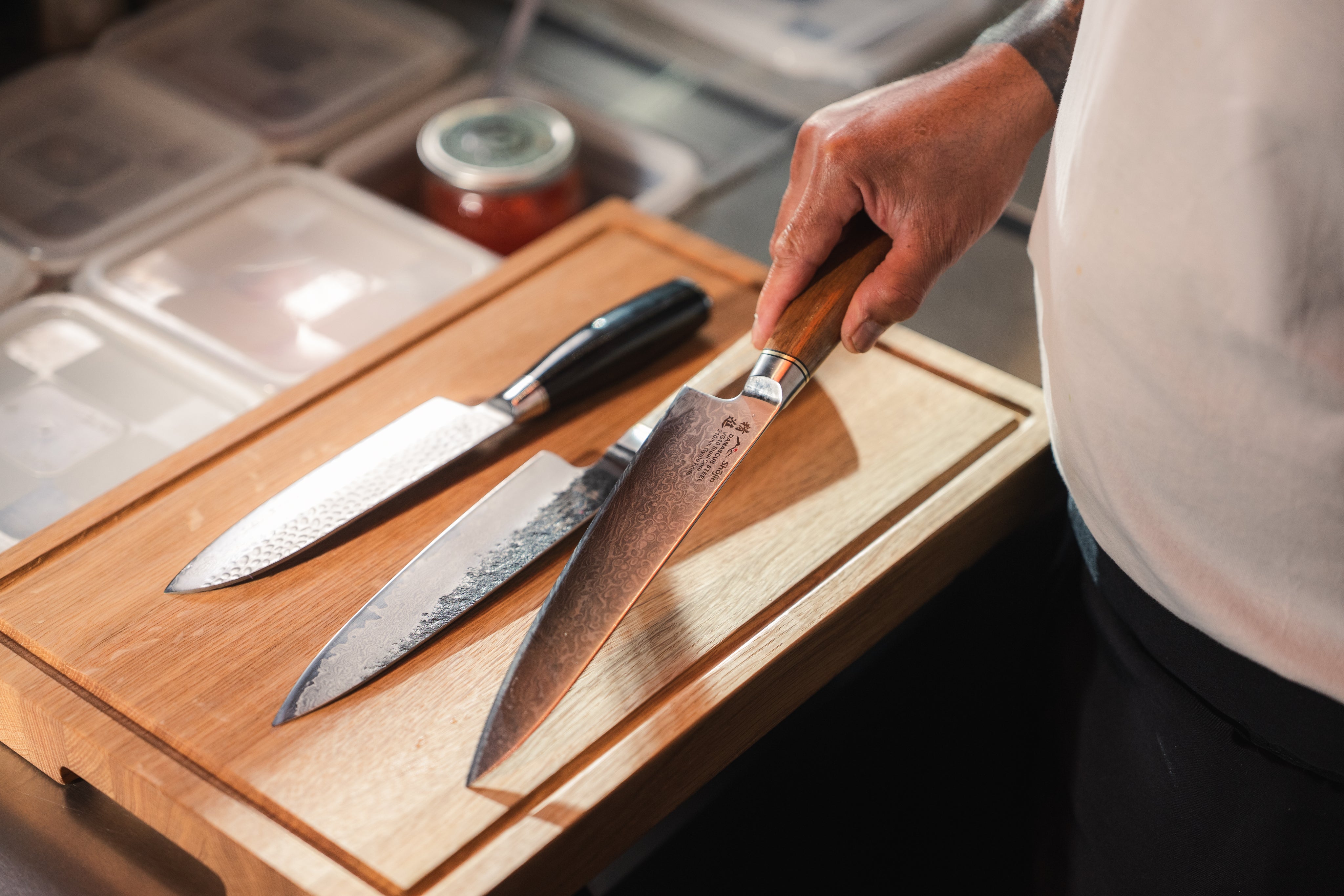
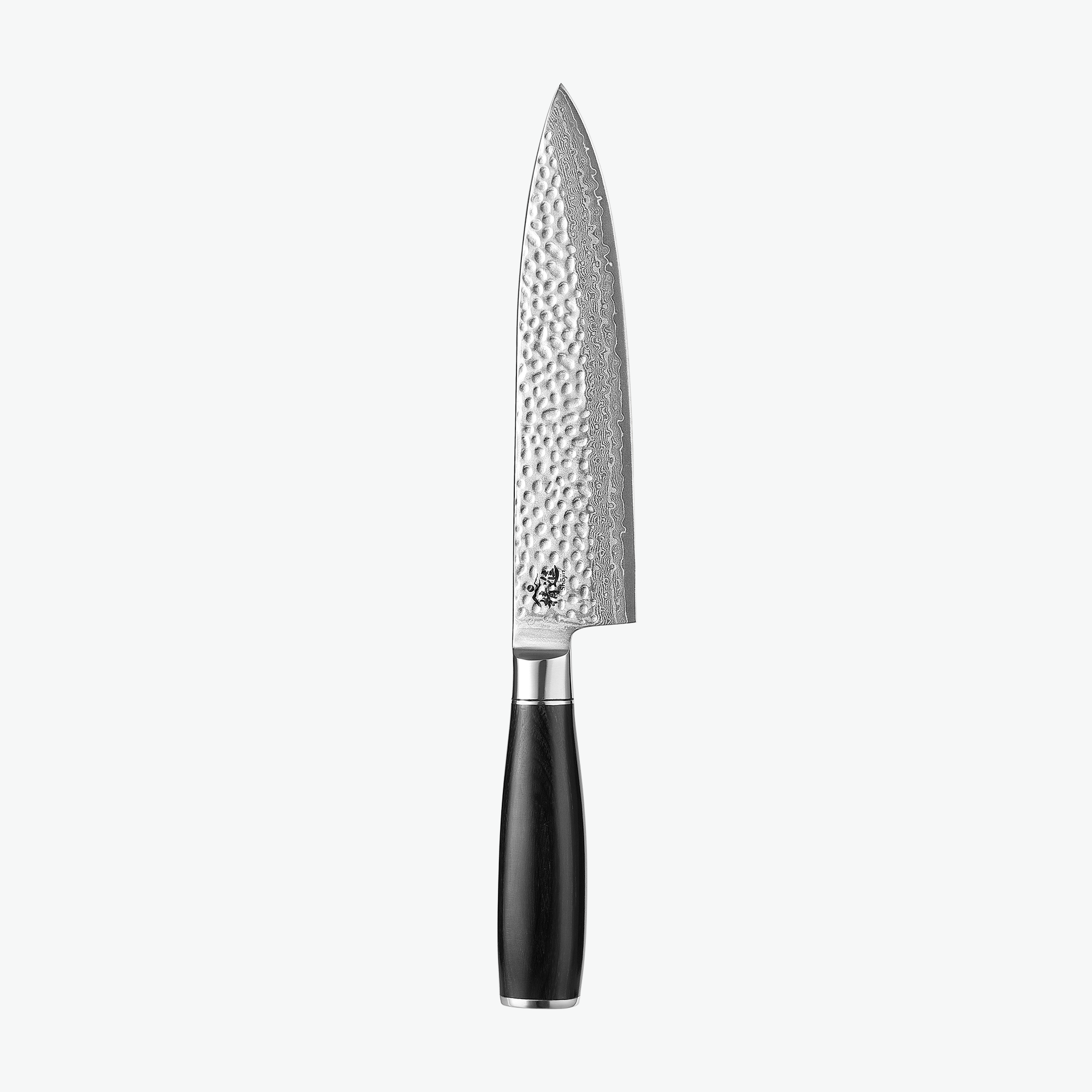
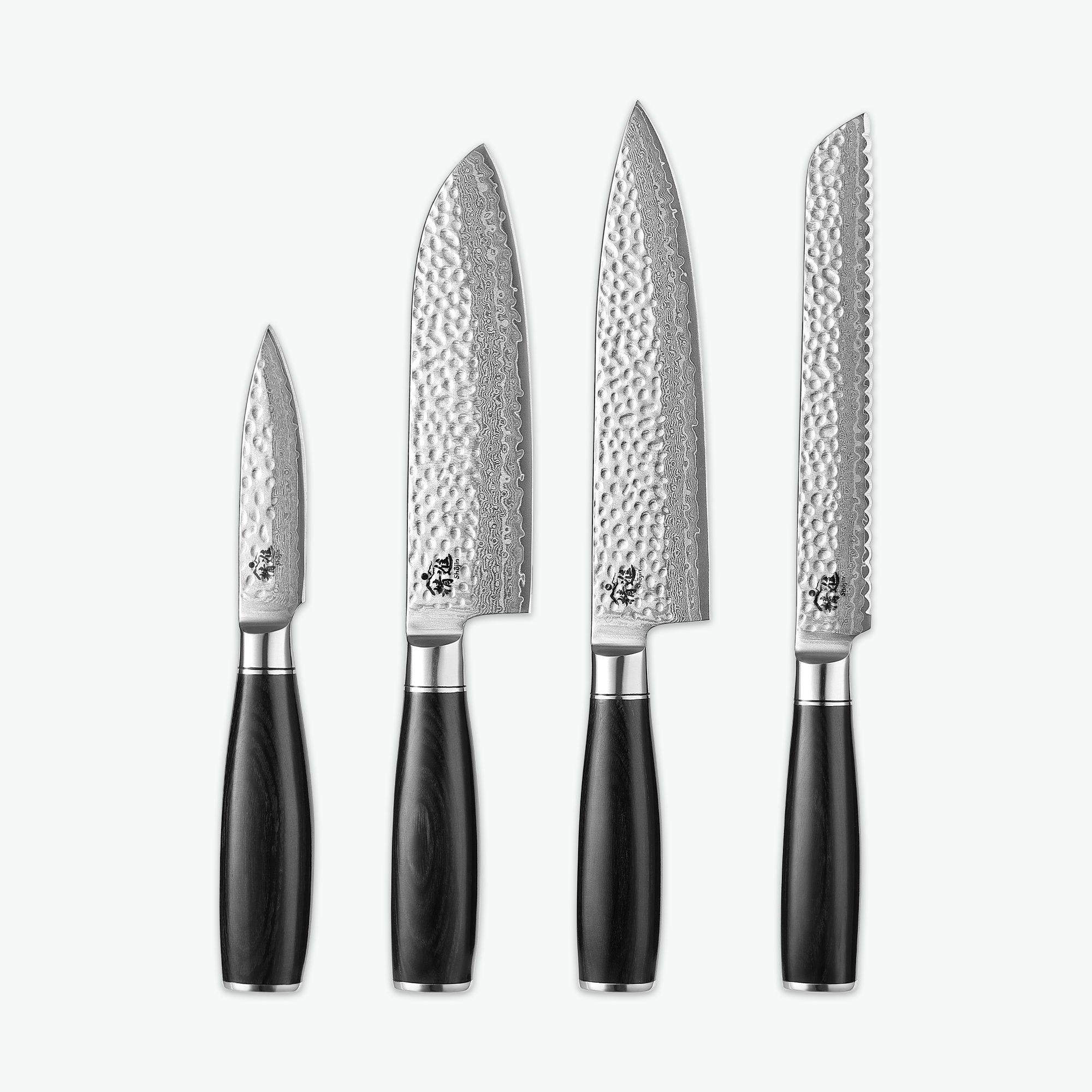
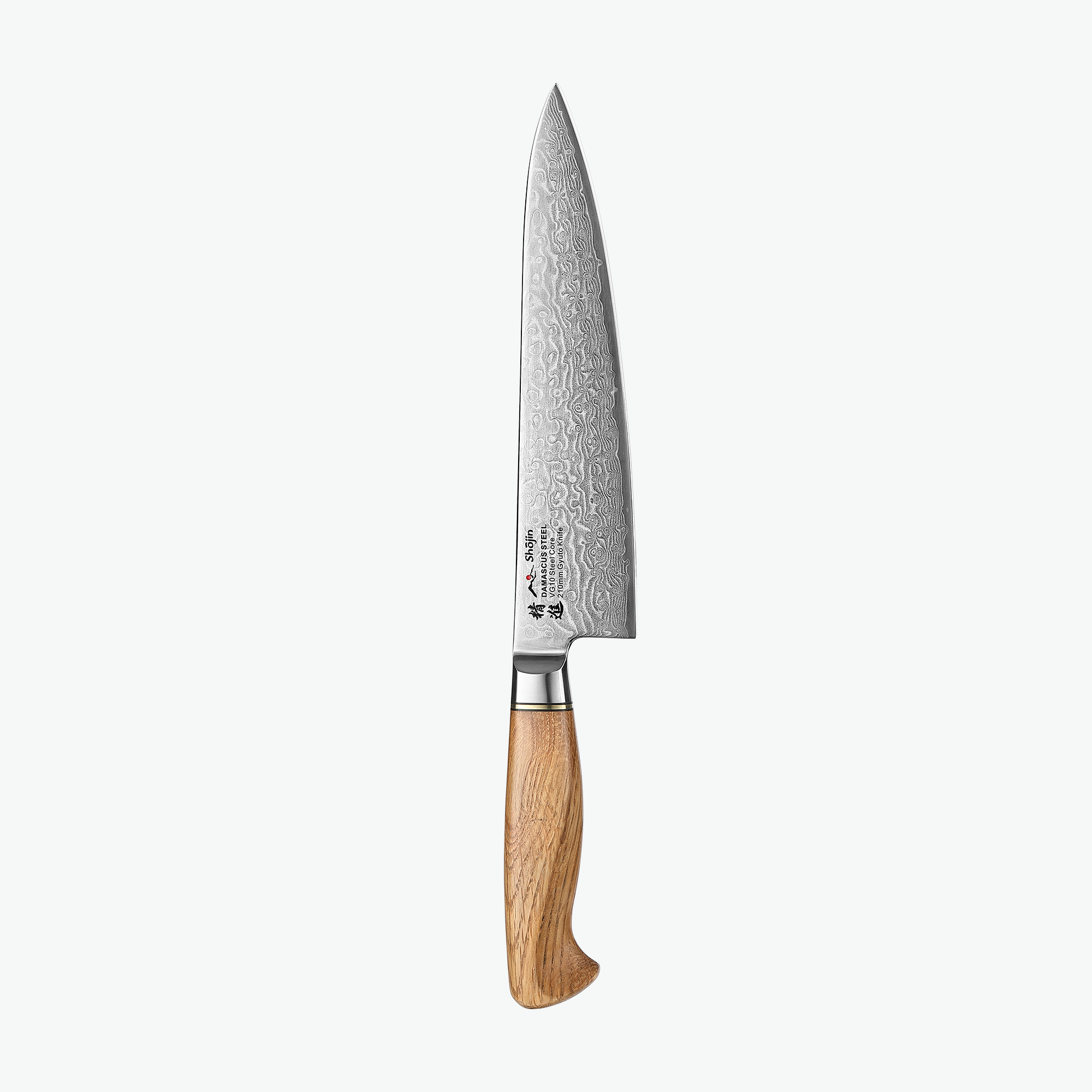
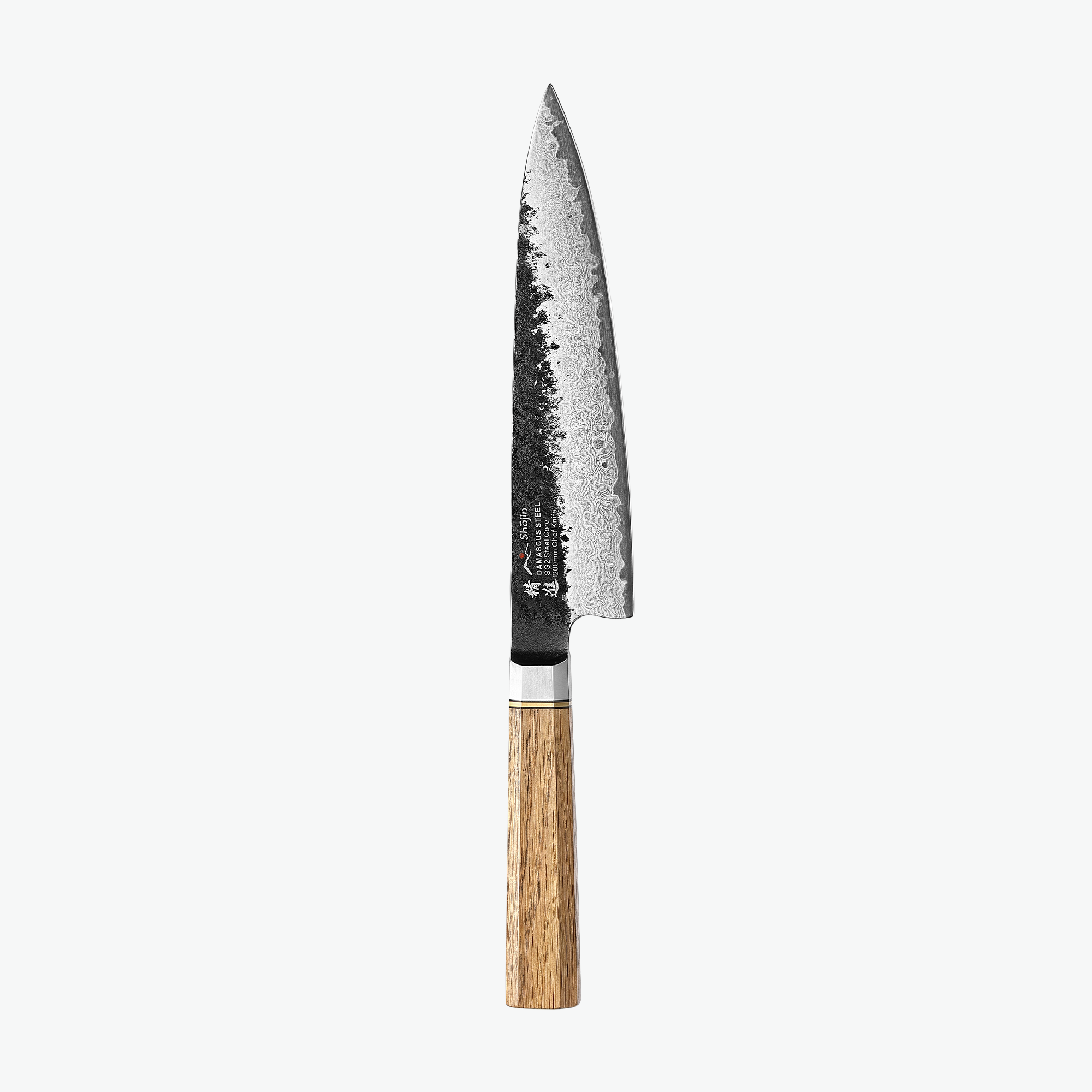
As with all quality steels, precise heat treatment is crucial to unlock the full potential of AUS-10. Typically, the steel is hardened to around 58-61 HRC. This hardness places AUS-10 in the same class as recognized steel types like 10Cr15CoMoV and VG-10, which we use in our Shojin series, although the chemical composition and the resulting subtleties in performance differ.
AUS-10 in Practice: An Analysis of Properties
For the user, AUS-10's technical profile means the following:
- Edge Retention: Good and reliable. Thanks to its high carbon content and the addition of vanadium, AUS-10 retains its sharpness significantly longer than its younger sibling AUS-8. However, it does not reach the level of elite steels like SG2, which have a much higher content of carbide-forming elements.
- Toughness: One of the great advantages of this steel is that it maintains good toughness despite its high hardness. It is less prone to chipping than many other steels in the 60+ HRC class, making it a robust choice for versatile tasks.
- Corrosion Resistance: With up to 14.5% chromium, AUS-10 is a very reliable stainless steel. It requires minimal care to prevent rust, which is a great advantage in a busy kitchen.
- Sharpenability: Surprisingly, AUS-10 is relatively easy to sharpen for a steel of its hardness. It responds well to standard sharpening stones and does not require the same effort as more resistant super steels. This makes it a user-friendly choice for those who want to maintain their knives themselves.
Conclusion: A Strong All-Rounder in a Competitive Market
AUS-10 is undoubtedly an excellent and very competent knife steel. It represents a successful balance between key properties and offers high performance that will satisfy most chefs. It is a strong all-rounder that has rightly carved out a firm place in the market.
At Viretta, our mission is to curate. We analyze, test, and select the steels that we believe offer the optimal combination of properties for the specific purpose for which a knife series is designed. And while AUS-10 is an excellent steel, we are convinced that the unique chemistry of alloys like 10Cr15CoMoV and VG-10 provides the additional finesse in performance that we strive for in our Shojin series.
Relevant products
Relevant Articles

Explore More Recipes
Created for a balanced life
Cooking starts with peace of mind, good ingredients, and tools that feel right in your hands. At Viretta, we combine form and function in a modern Nordic design – created for all those who see the kitchen as a place of togetherness and inspiration.