




In the world of premium kitchen knives, you constantly encounter a technical specification: "62 HRC", "57 HRC". This small code is one of the most important numbers in the knife universe – but what does it actually mean? The number is a measurement on the Rockwell scale – a universal language for determining the hardness of steel.
Understanding the Rockwell scale is key to unlocking a knife's true potential. It indicates whether a blade is designed as a robust workhorse or as an ultra-sharp specialist. In this guide, we'll take you into the lab and explain exactly how the test works, what the numbers mean in practice, and how you can use this knowledge to choose the perfect knife for you.
What is Rockwell Hardness?
The Rockwell hardness test, developed by Stanley P. Rockwell at the beginning of the 20th century, is a simple but ingenious method for measuring a material's resistance to permanent indentation. At its core, it measures how deep a standardized indenter can be pressed into the steel surface with a specified force. The shallower the indentation depth, the harder the material.
For knife steel, almost exclusively the Rockwell C scale is used, abbreviated as HRC (Hardness Rockwell C). This scale is specifically designed for hard materials such as hardened steel.
How the Test Works: A Look Inside the Lab
The HRC test is a precise three-stage process that ensures reliable and reproducible measurement:
Step 1: Pre-Load
First, a light initial force (10 kg) is applied to a diamond cone, which is pressed against the steel surface. This step removes surface irregularities and defines an exact zero point for the measurement.
Step 2: Main Load
Now the main force is applied (an additional 140 kg, totaling 150 kg). The diamond cone penetrates deeper into the steel and creates a permanent indentation.
Step 3: Measurement
The main load is removed, and the machine measures the exact depth of the resulting indentation. This depth is directly converted into an HRC value.
The principle is simple: the shallower the indentation depth, the higher the HRC value.
The HRC Scale in Practice: What Do the Numbers Mean for Your Knife?
An HRC value is not just a number – it is a direct indication of a knife's philosophy and performance. At Viretta, we deliberately use different hardness levels for our series to optimally tailor them to their intended use.
55–58 HRC (Robust and forgiving)
Characteristics:
In this range, the steel is primarily designed for toughness. It is significantly more resistant to chipping and breaking and is ideal as a versatile workhorse in a busy kitchen. Another great advantage: it is very easy to sharpen and maintain.
Viretta example:
This is the philosophy of our Classic series. With 5Cr15MoV steel at approx. 57 HRC, you get a knife that is built for durability and can easily withstand the challenges of everyday use.
59–62 HRC (Powerful and balanced)
Characteristics:
This is the "sweet spot" for most premium and Japanese-inspired kitchen knives. The hardness is high enough for excellent and long-lasting sharpness, without sacrificing too much toughness. The steel demands a little more precision from the user but rewards with a superior cut.
Viretta example:
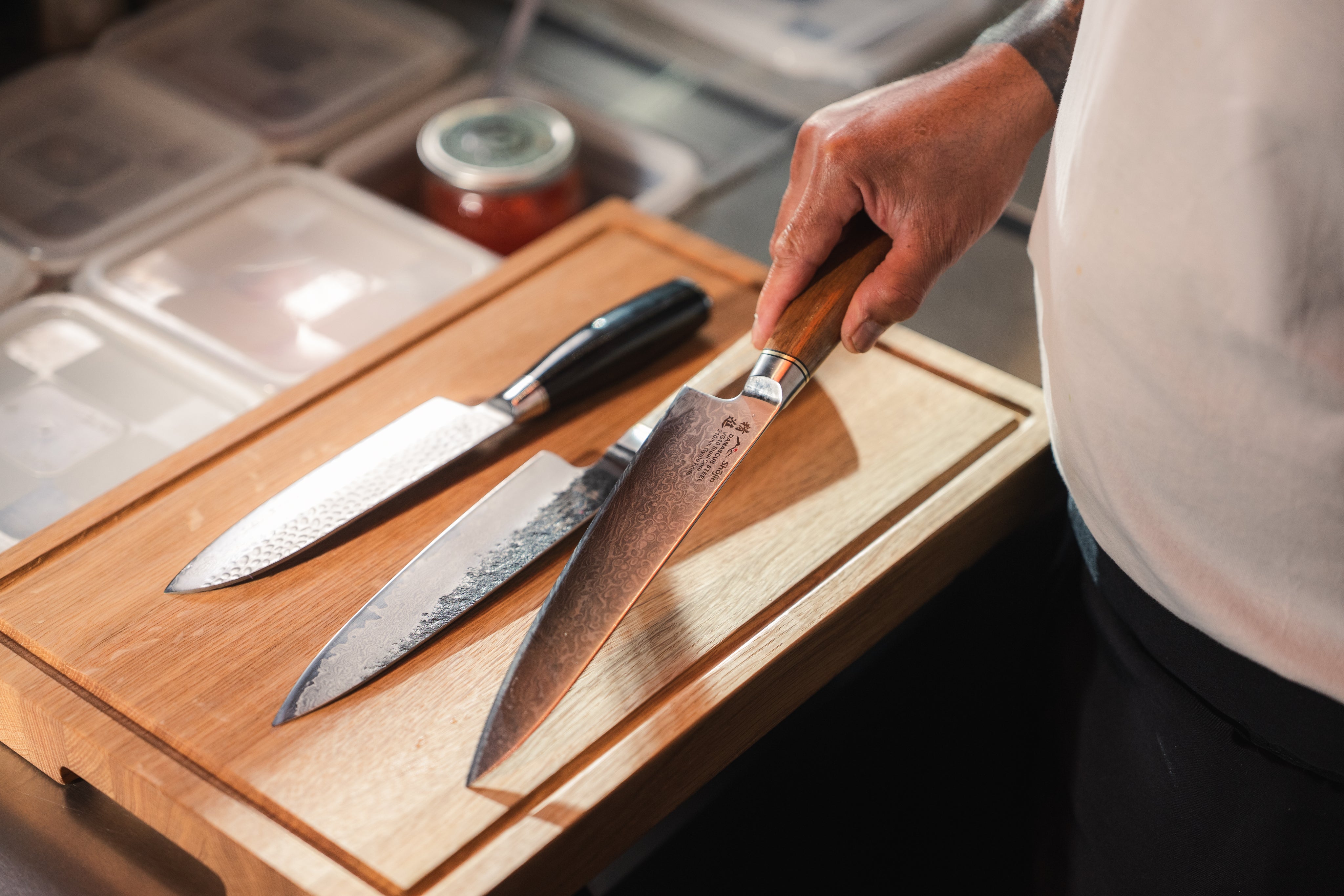
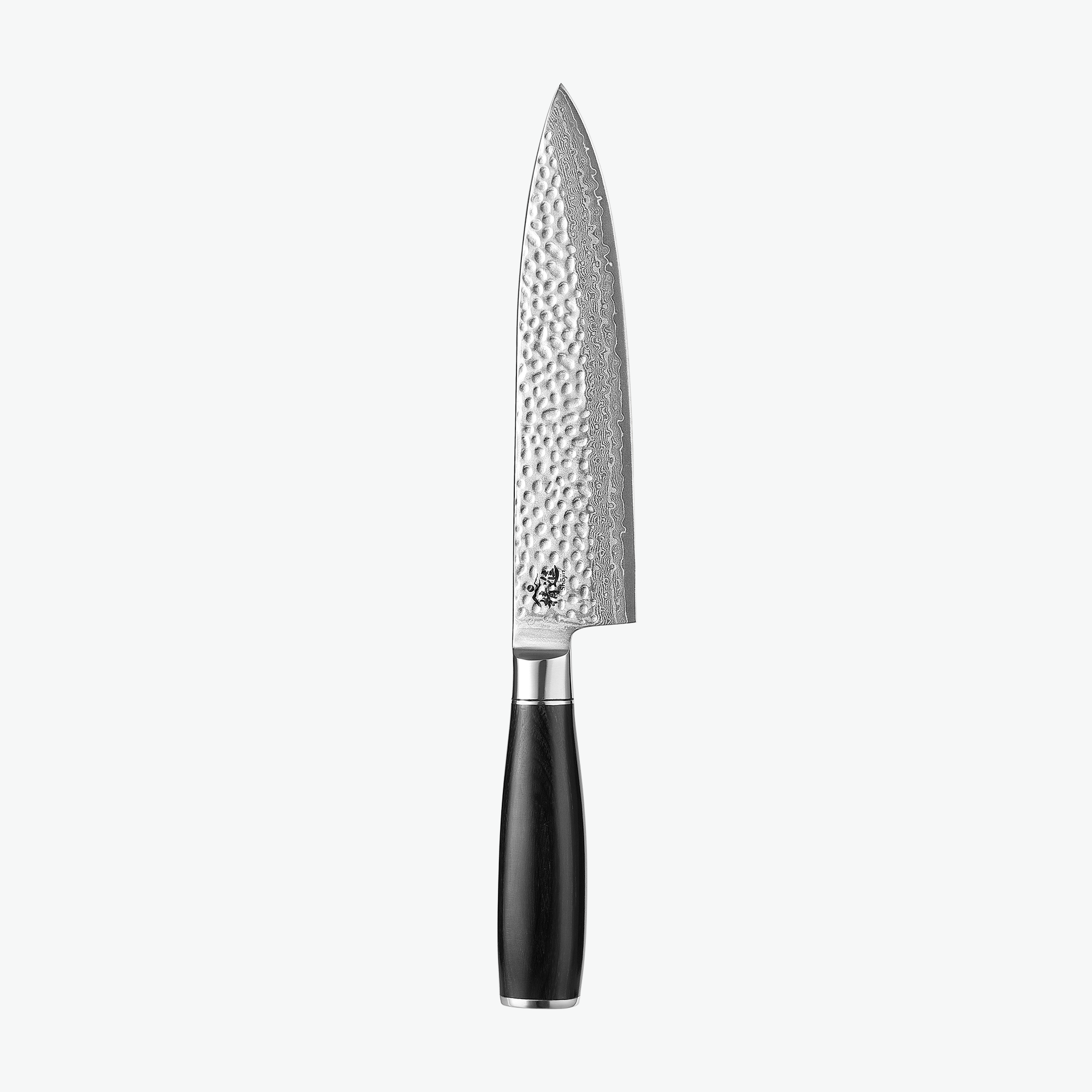
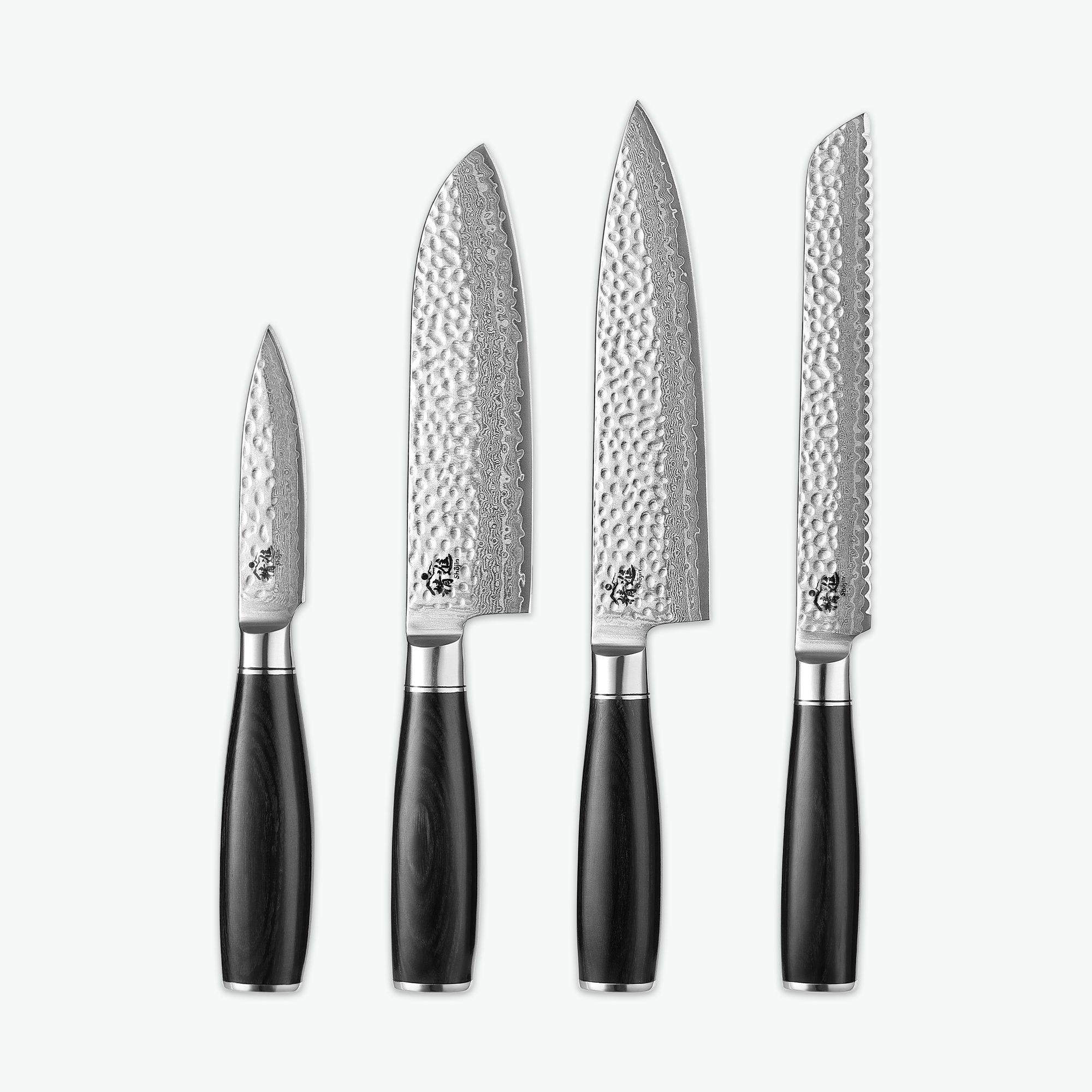
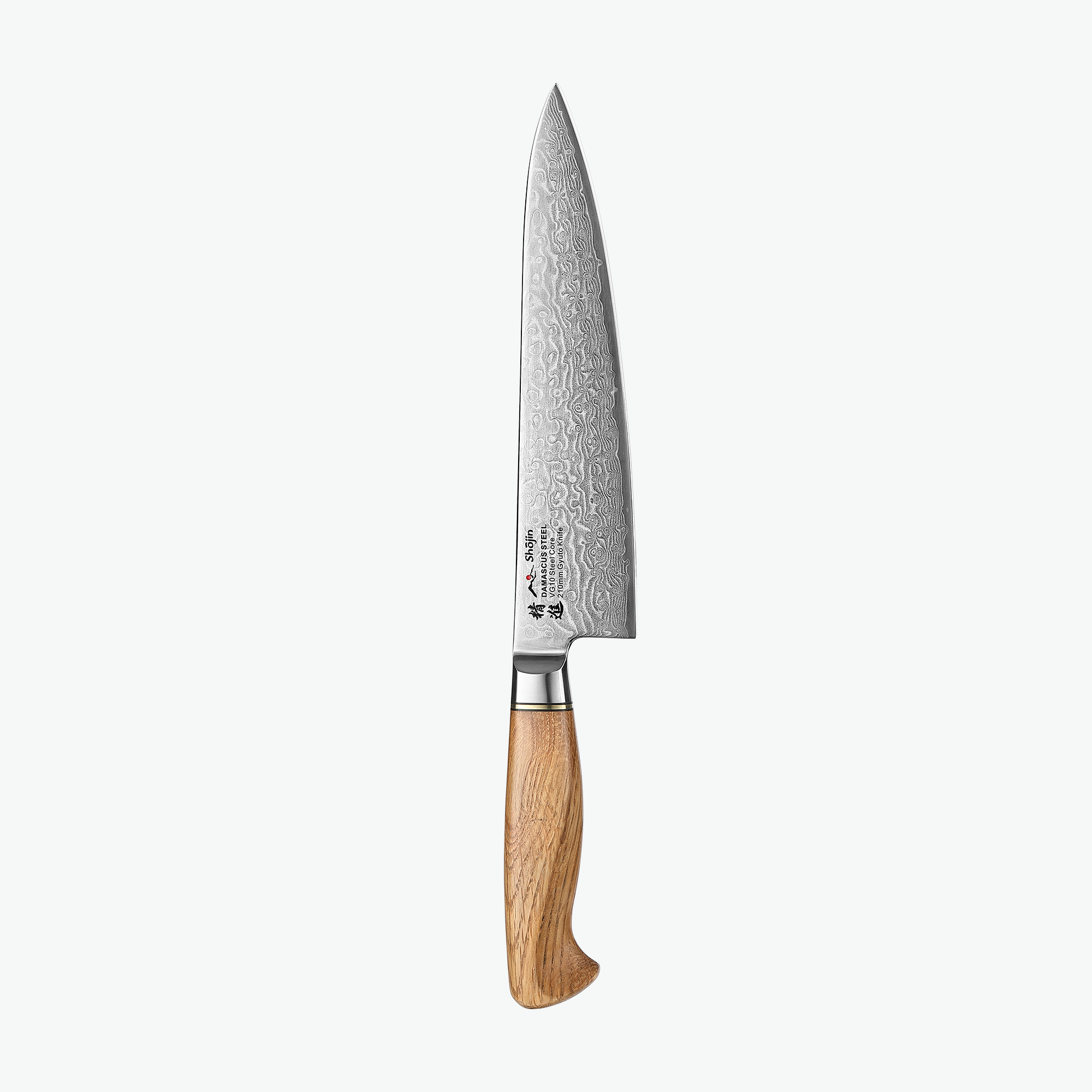
This is where most of our Shojin series operate. Both VG-10 and 10Cr15CoMoV in series like Taru and Suna are hardened to approx. 62 HRC to deliver the sublime, long-lasting sharpness that enthusiasts and professionals expect.
63+ HRC (Extreme and specialized)
Characteristics:
This is where the world of super steels begins. Absolute priority is given to maximum, uncompromising edge retention. The steel is extremely hard and wear-resistant, but the price for this is lower toughness (more brittleness) and a significantly more demanding sharpening process, often requiring special tools.
Viretta example:
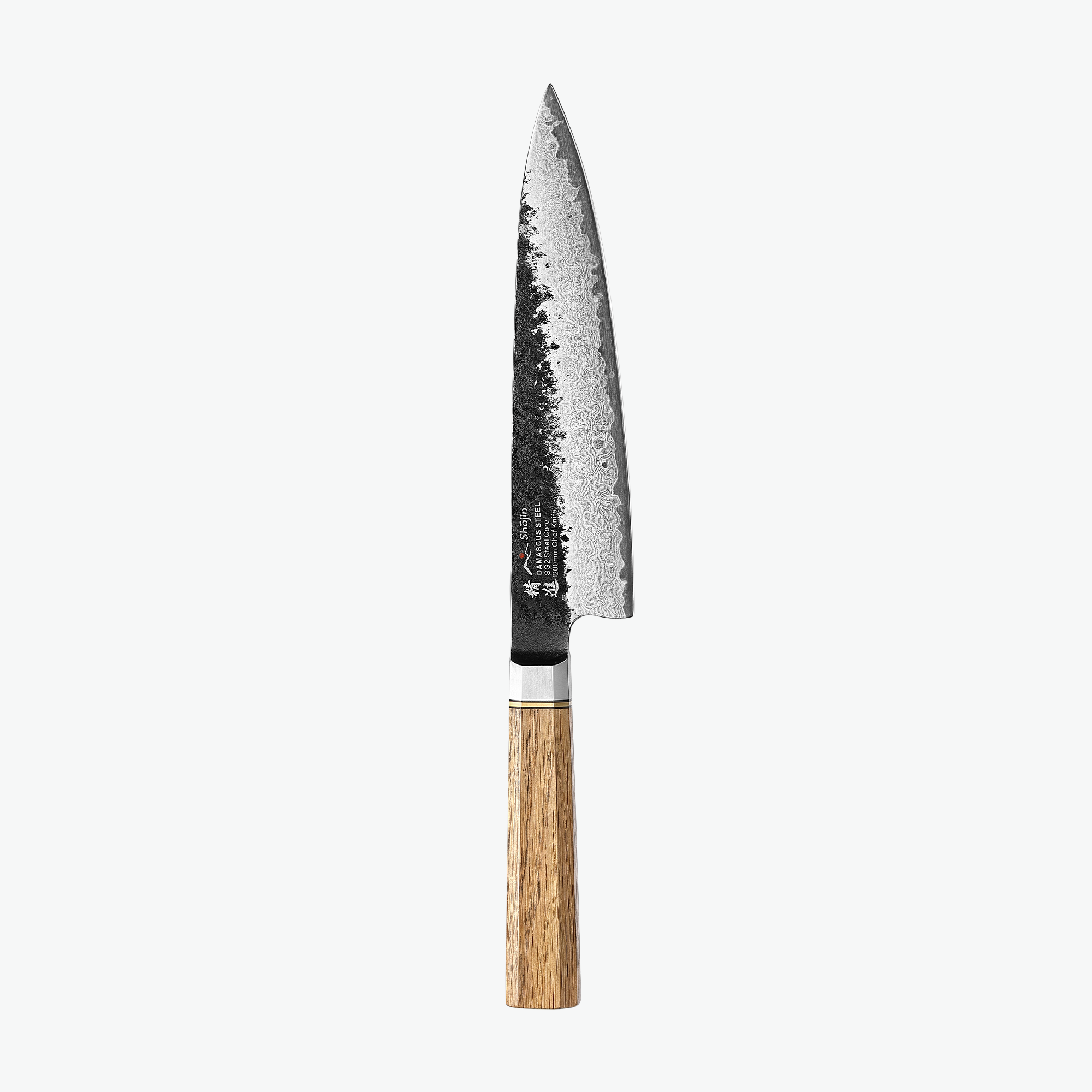
This is the domain of elite steels like SG2 powder steel, which we use in our flagship series Shojin Kashi. With a hardness of up to approx. 64 HRC, this is a steel for users who accept only the absolute longest sharpness.
More Than Just a Number: Hardness Is Only Part of the Story
It is crucial to understand that the HRC value does not tell the whole truth about a knife's performance. Two different steels can have exactly the same HRC value and still behave completely differently. Why?
Steel composition:
A steel with many hard vanadium carbides (like SG2) has significantly better wear resistance and edge retention than a steel with softer chromium carbides – even at the same HRC value.
Heat treatment:
This is the most important factor of all. A knife from a reputable manufacturer with perfect, computer-controlled heat treatment at 60 HRC will always perform better than a poorly hardened knife at 62 HRC.
At Viretta, the HRC value is a promise of quality. It is only achieved through precisely controlled heat treatment that ensures we unlock the full potential of every steel.
Conclusion: Use HRC as Your Guide
Even though the HRC value is not the only factor, it remains the best single indicator of a knife's intended performance and character. It tells you the philosophy behind the knife's creation.
Use it as a guide: Are you looking for a robust workhorse, a balanced all-rounder, or an ultra-sharp specialist? By understanding the Rockwell scale, you can easily determine which knife is not only sharp – but precisely the kind of sharp that suits you.


