

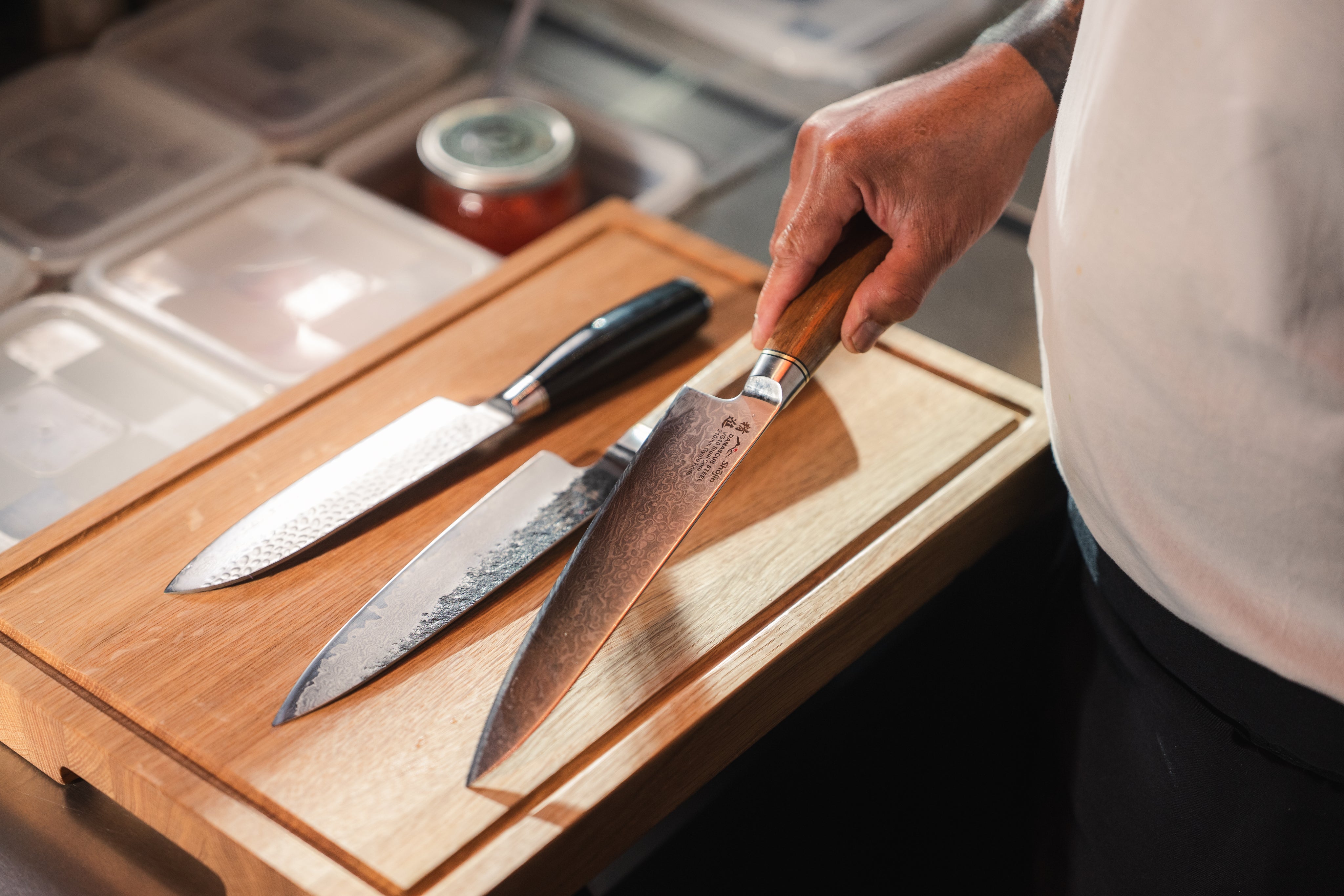




It's a visual fingerprint that tells a story of fire, steel, and time-honored craftsmanship. But how are these complex designs created? Are they random – or the result of a deliberate and controlled process?
The truth is: Every pattern is a direct result of the blacksmith's technique and artistic vision. In this article, we delve into the fascinating methods used to create the various Damascus patterns and take a closer look at the unique designs that characterize Viretta's own Shojin series.
The Basic Principle: Pattern Welding
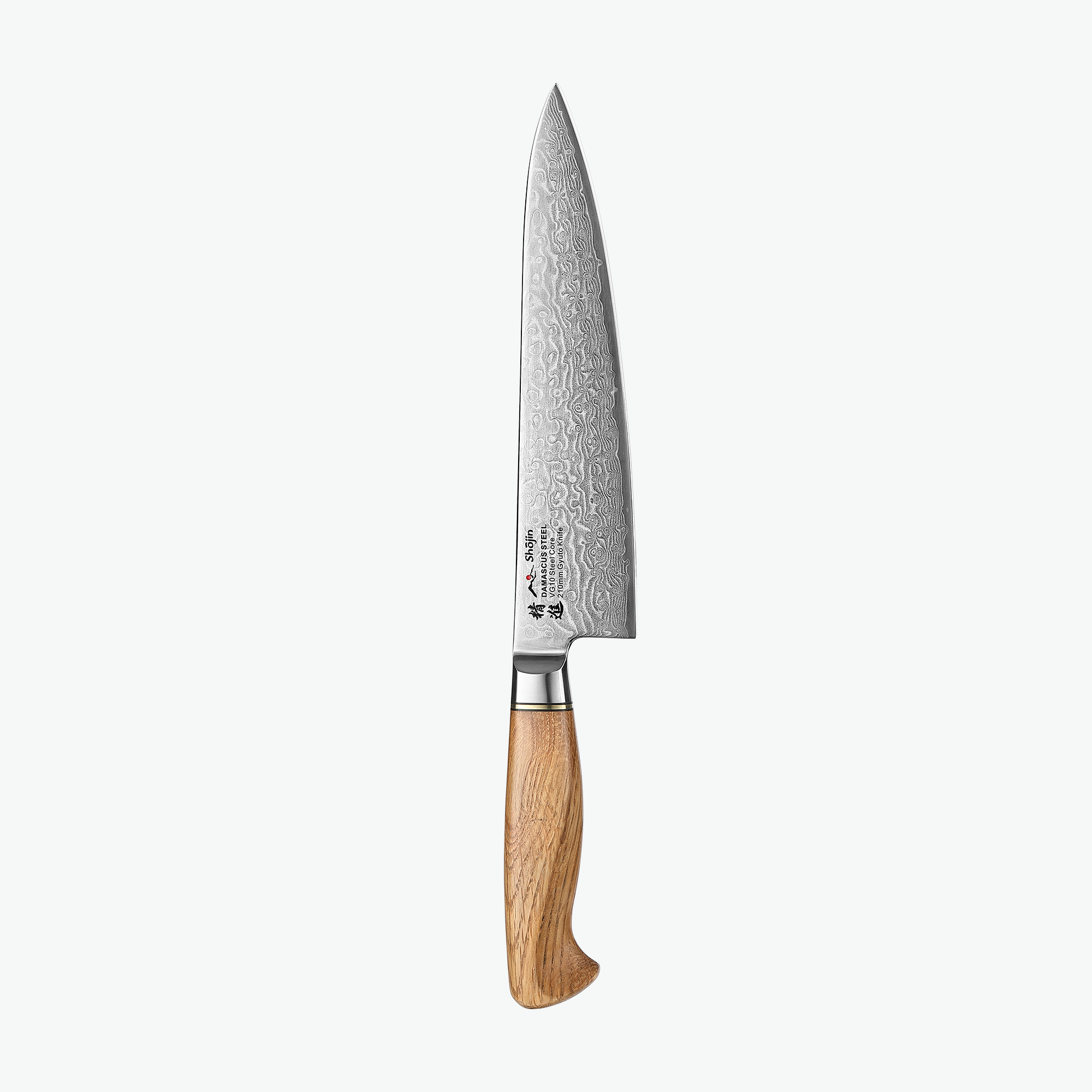
Before we can talk about patterns, we need to understand the foundation. Modern Damascus steel is created by pattern welding, where layers of different steel types (usually with varying carbon or nickel content) are forge-welded into a solid block of steel. This block is stretched, folded, and re-welded repeatedly, multiplying the number of layers. The way the blacksmith manipulates these layers during the process determines the final pattern.
The Classic Patterns: The Blacksmith's Vocabulary
Although the possibilities are almost limitless, there are a number of classic patterns that form the foundation of modern Damascus smithing.
-
Random/Wave Pattern:
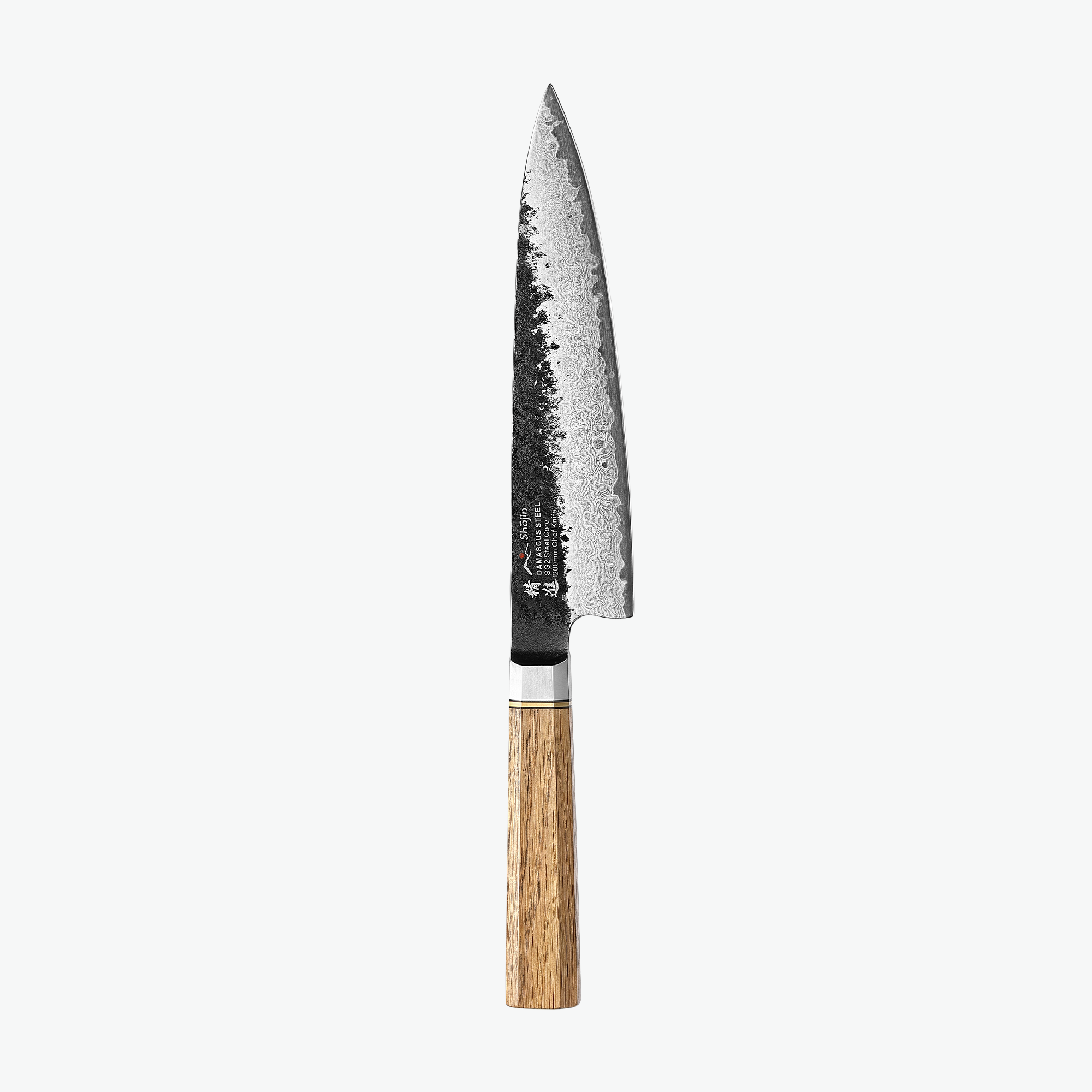
This is the most organic and basic pattern. It occurs naturally when the layered steel block is stretched and forged into shape. Small irregularities and hammer blows create a flowing, almost wood-like pattern. This natural aesthetic forms the basis for the design of our Shojin Suna series. -
Twist Pattern:
For this pattern, the finished welded, square steel block is heated and twisted around its own axis – similar to a wrung-out cloth. If the block is then stretched and forged flat again, a star- or explosion-like pattern is created, where the layers twist towards the center. -
Ladder Pattern:
Here, the blacksmith first forges a classic, layered block. Then, transverse grooves are milled or pressed into the steel, making it resemble a ladder. If the surface is then ground flat again, the layers are cut in a wavy pattern. The result resembles rungs running along the blade. -
Raindrop Pattern:
This pattern is based on a similar technique to the ladder pattern. However, instead of transverse grooves, small indentations are pressed into the steel over the entire surface. After grinding flat, concentric circles appear, reminiscent of ripples in water – hence the name "Raindrop."
More than just a pattern: Viretta's unique finishes
At Viretta, we build on classic traditions to create knives with a unique Nordic design language. Our patterns are therefore often combined with special techniques that offer both aesthetic and functional advantages.
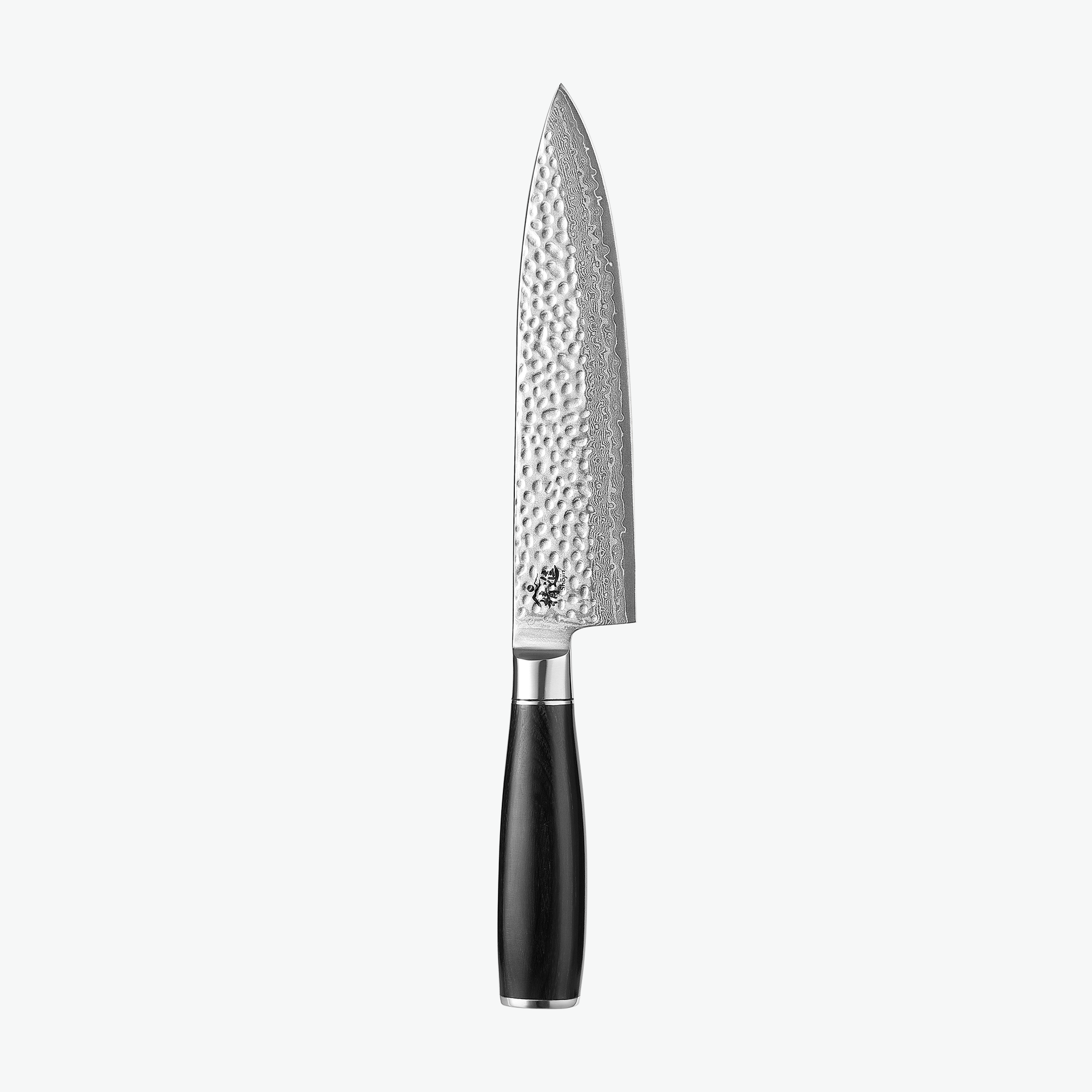
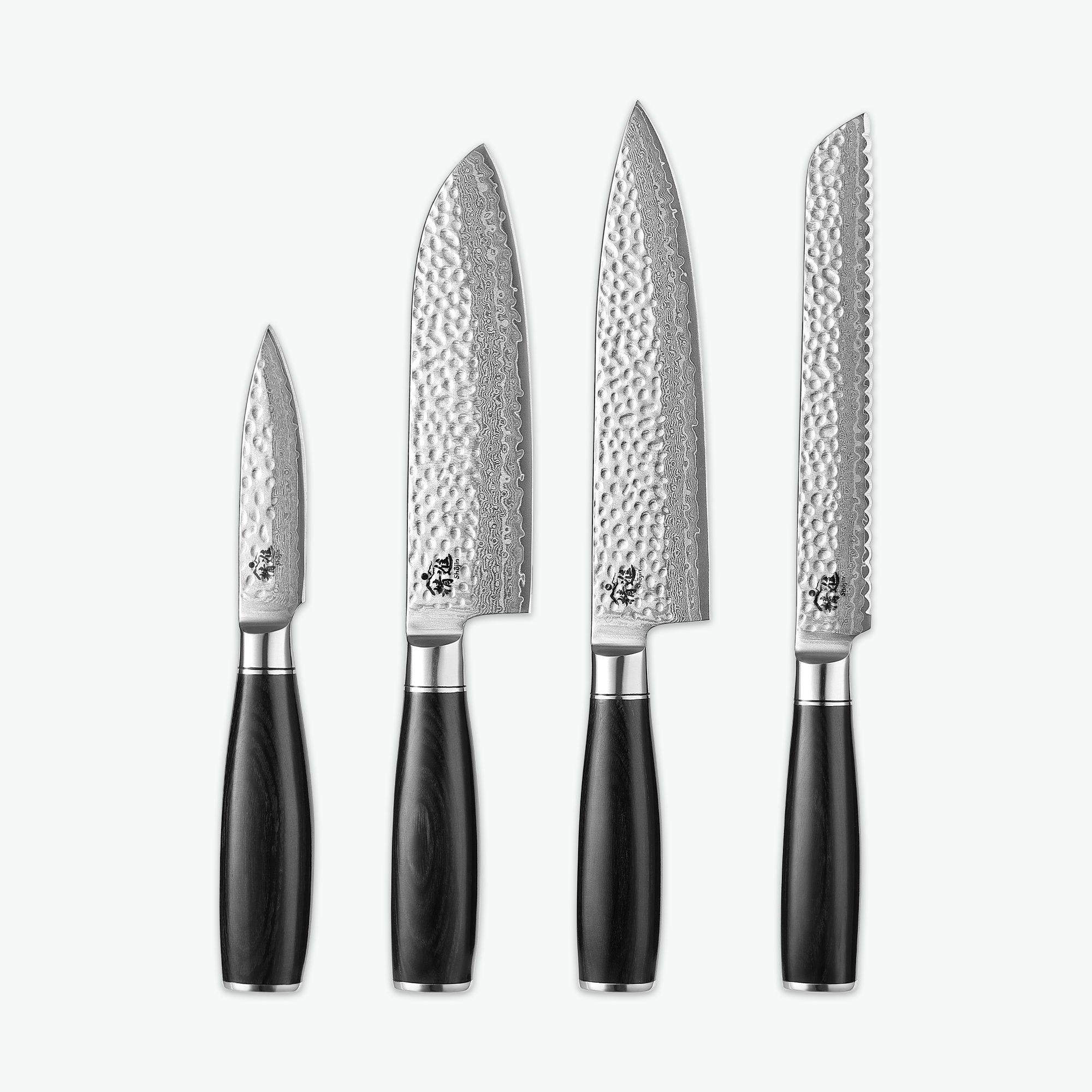
- Tsuchime Finish (Shojin Taru):In our Shojin Taru series, the underlying Damascus pattern is combined with a traditional Japanese hammered surface, known as Tsuchime. The small indentations are not only visually appealing – they also create air pockets between the blade and the food being cut, reducing friction and preventing foods like potatoes or cucumbers from sticking.
- Copper-infused Damascus (Shojin Akari):With our exclusive Shojin Akari knife, we have taken the process to a new level. Here, a third metal – copper – is introduced into the steel layers during forging. This creates a unique interplay of colors in the blade, which develops a beautiful patina over time and makes each knife a living work of art.
- 3-layer San Mai Construction (Shojin Aira):Our Shojin Aira series uses a minimalist, yet equally elegant technique called San Mai (Japanese for "three layers"). Here, an extremely hard core steel is protected by two outer layers of steel. After grinding and etching, a clear, wavy line appears along the cutting edge, elegantly revealing the honest and functional construction.
The Final Step: The Acid Bath Reveals the Art
Regardless of the technique used, the pattern is initially invisible after fine grinding and polishing. Only in the very last step does the magic happen: the blade is immersed in a mild acid bath (usually ferric chloride). The acid reacts differently with the individual steel types. High-carbon steel darkens, while nickel-rich steel remains lighter. Slowly, the pattern emerges – and the hidden fingerprint of the steel becomes visible.
Conclusion: A Steel Fingerprint
A Damascus pattern is much more than just decoration. It is a map of the journey the steel has taken in the hands of the blacksmith. Every fold, every twist, and every hammer blow leaves a permanent trace, resulting in a unique, non-reproducible design.
The patterns of a Viretta Shojin blade are therefore a conscious design decision – a visual representation of the complex construction and deep craftsmanship that goes into every blade. They are the promise that the beauty you see is an honest result of the strength and performance forged deep into the blade's DNA.
Relevant products
-

Shojin Kaku Gyuto Chef's Knife – Eg
Shojin Kaku Gyuto chef's knife with a 210 mm bl...
Shojin Kaku Gyuto chef's kn...
€130,00 -

Shojin Kashi Chef's Knife – Eg
The Shojin Kashi Chef's Knife, 200 mm, is desig...
The Shojin Kashi Chef's Kni...
€169,00 -

Shojin Akari Chef's Knife
The Shojin Akari 200mm chef's knife is an exqui...
The Shojin Akari 200mm chef...
€234,00


Relevant Articles

Explore More Recipes
Created for a balanced life
Cooking starts with peace of mind, good ingredients, and tools that feel right in your hands. At Viretta, we combine form and function in a modern Nordic design – created for all those who see the kitchen as a place of togetherness and inspiration.