




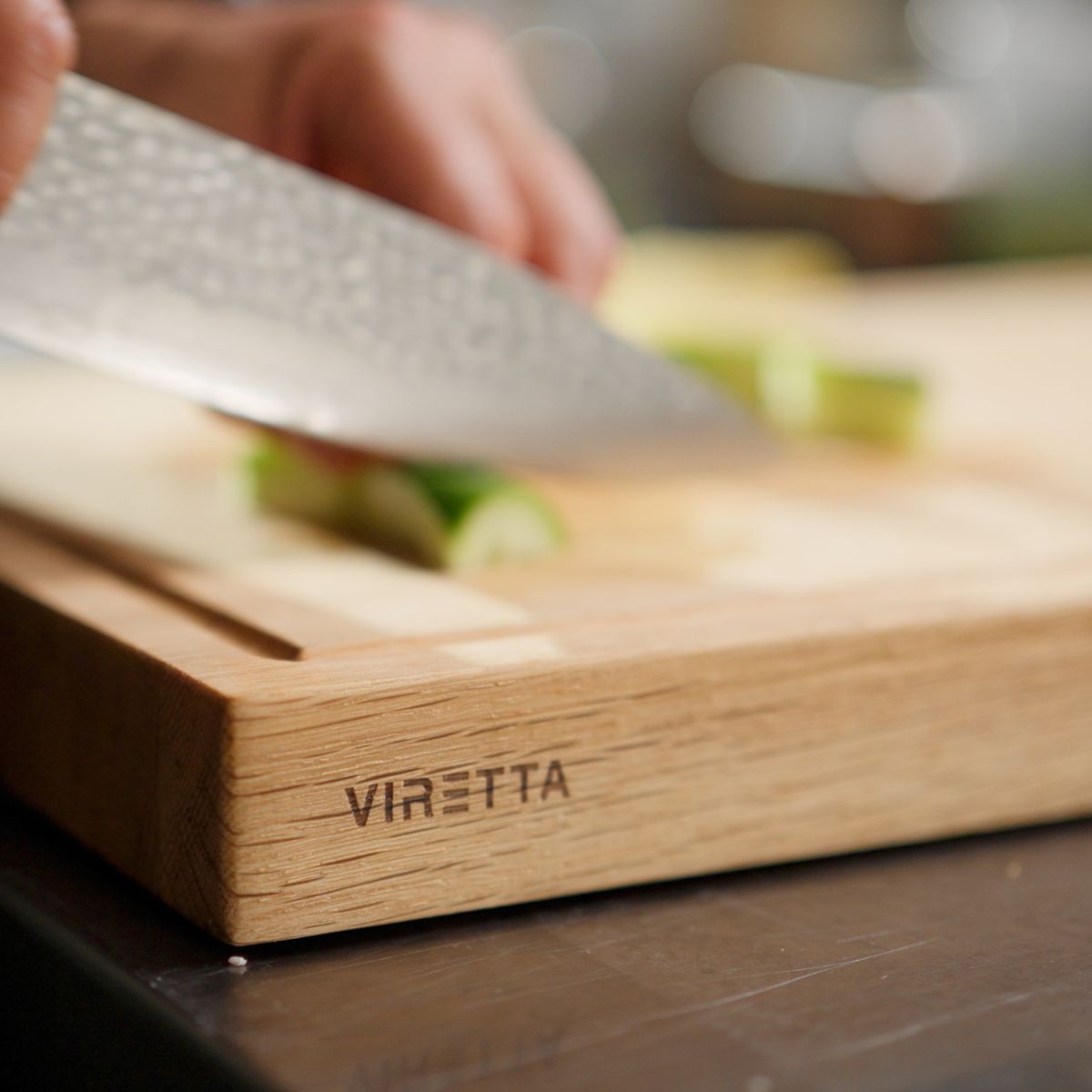

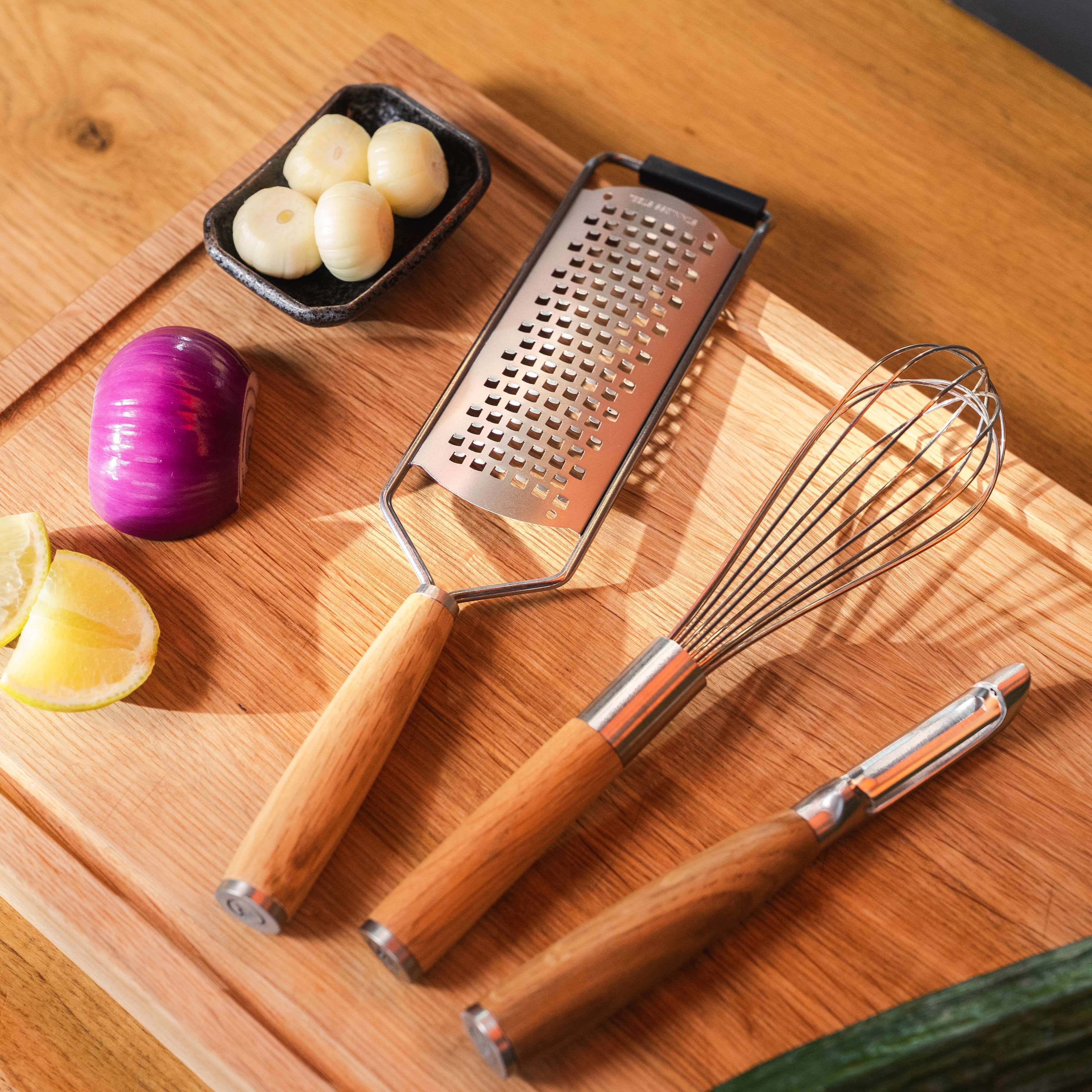
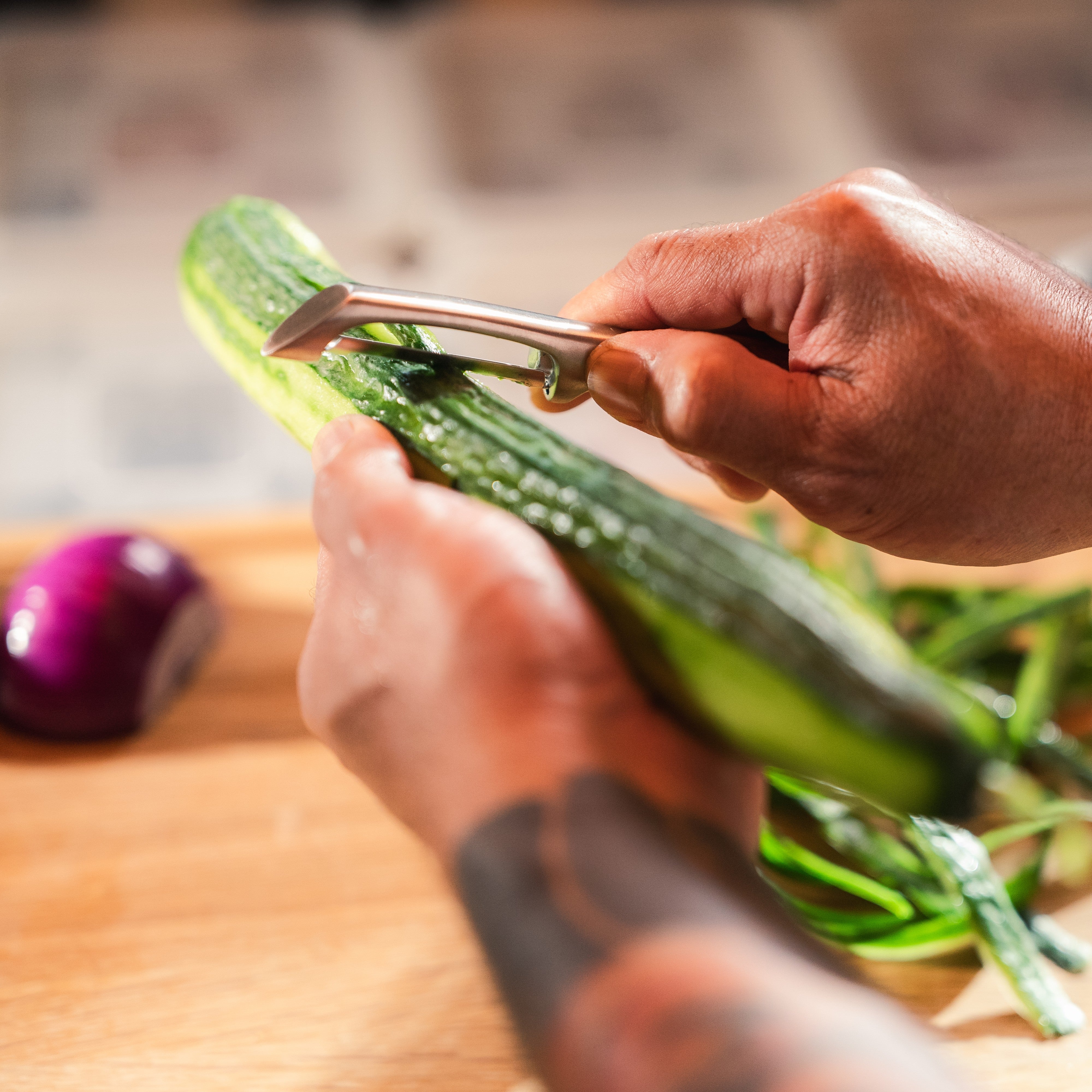








At Viretta, our design philosophy is a continuous dialogue between Scandinavian form and Japanese function. This balance is at the core of our identity and is most clearly expressed in our uncompromising choice of materials. Wood, in particular, is the material that connects our tools to nature. It is the tactile warmth and human dimension that are crucial to Nordic design.
We believe that the integrity of a tool reflects its origin. That's why every piece of wood in our collection is chosen not only for its aesthetics but also for its specific performance, inherent durability, and verifiable, sustainable origin. This is a nerdy and thorough journey into the forests that give our tools their soul – a story of material science, responsible craftsmanship, and deep respect for the planet.
Oak: The Enduring Classic
Oak is the epitome of hardwood – a symbol of strength and endurance. Our oak comes from the great forests of North America.
-
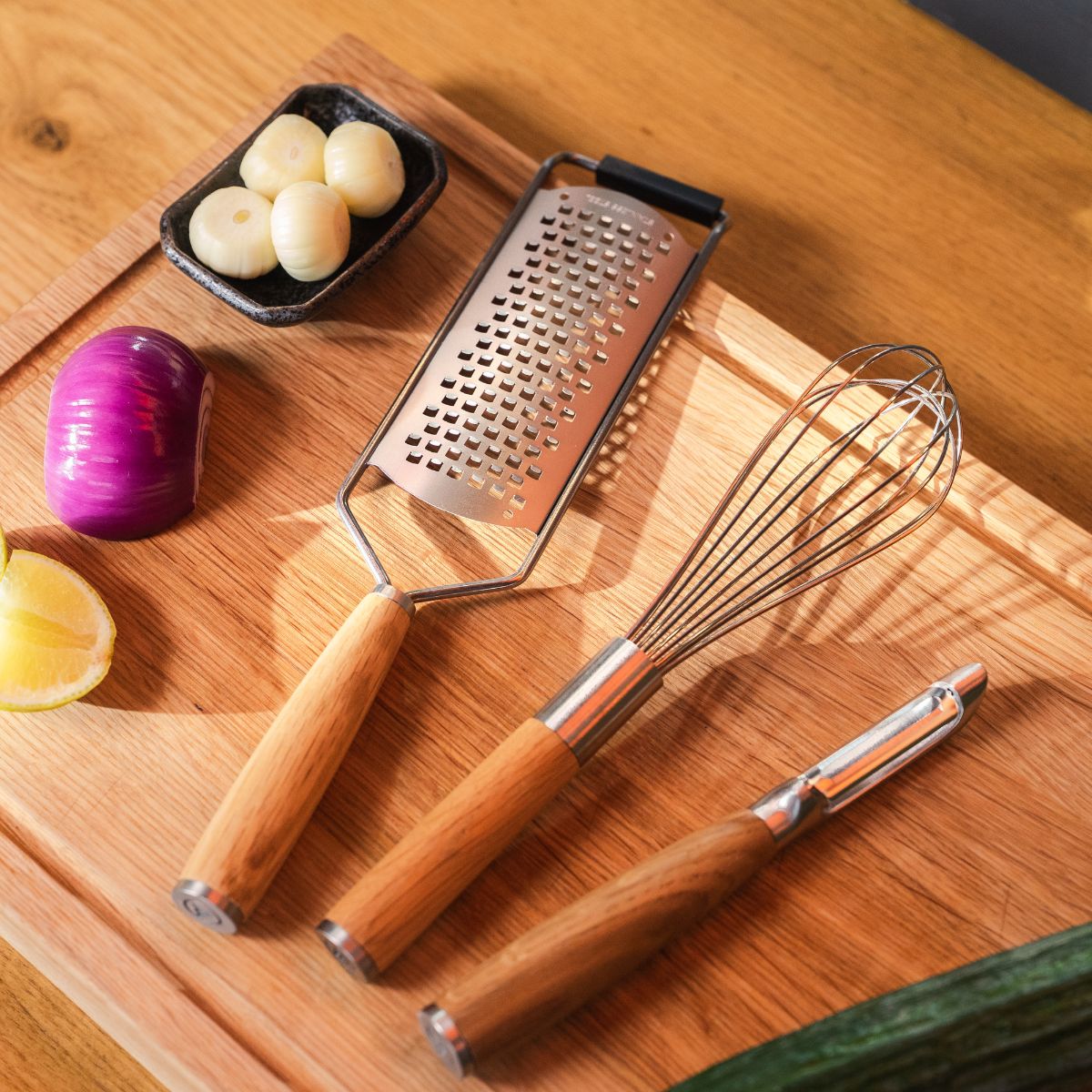
The Anatomy of the Material: Oak's exceptional durability is due to its dense cellular structure and high tannin content, which naturally protects the wood from moisture and decay. The typically straight and pronounced grain not only gives the wood a beautiful, classic appearance but also ensures predictable strength and stability during processing. This density provides a noticeable and pleasant weight, which is essential for the balance of a well-crafted knife handle or tool.
-
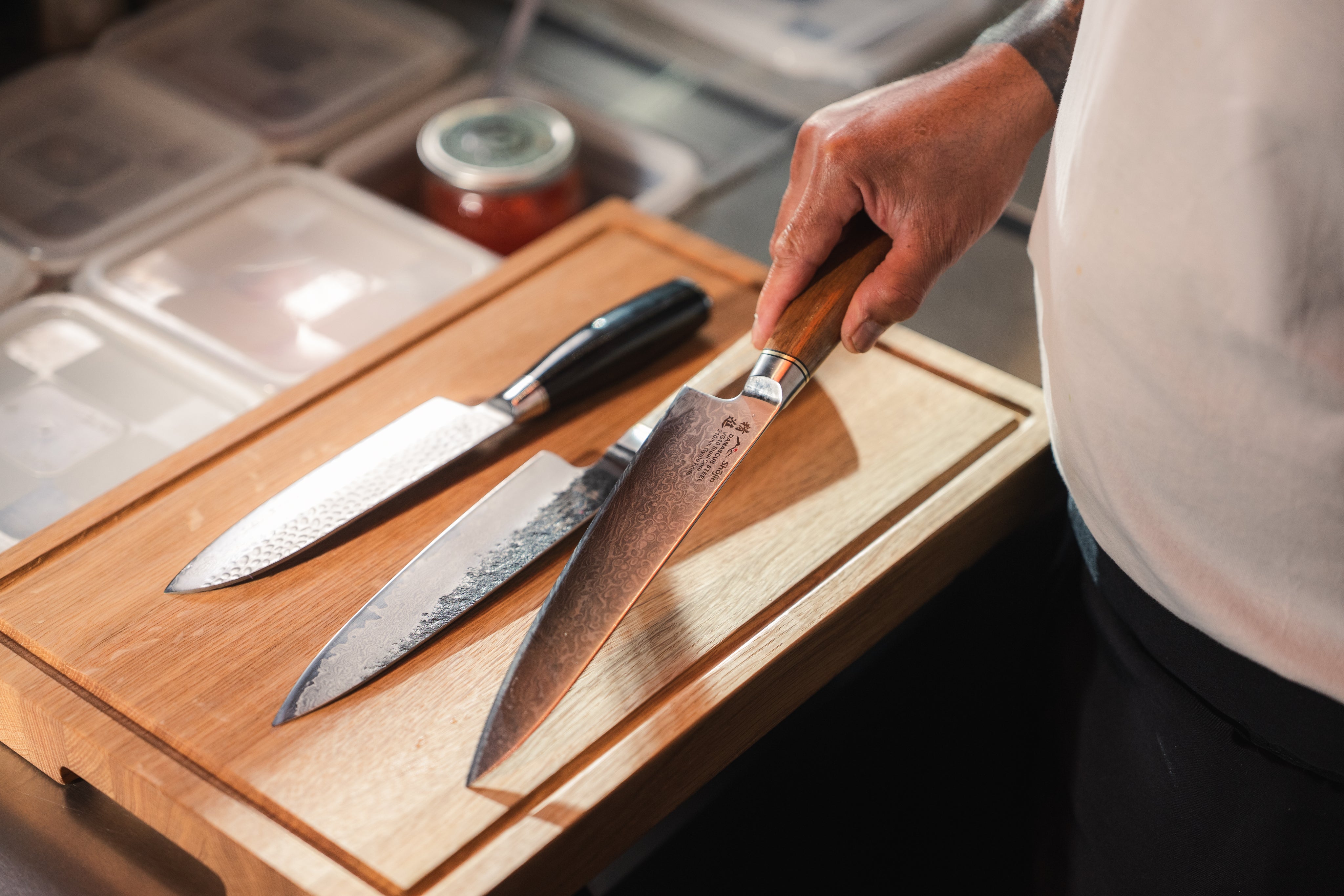
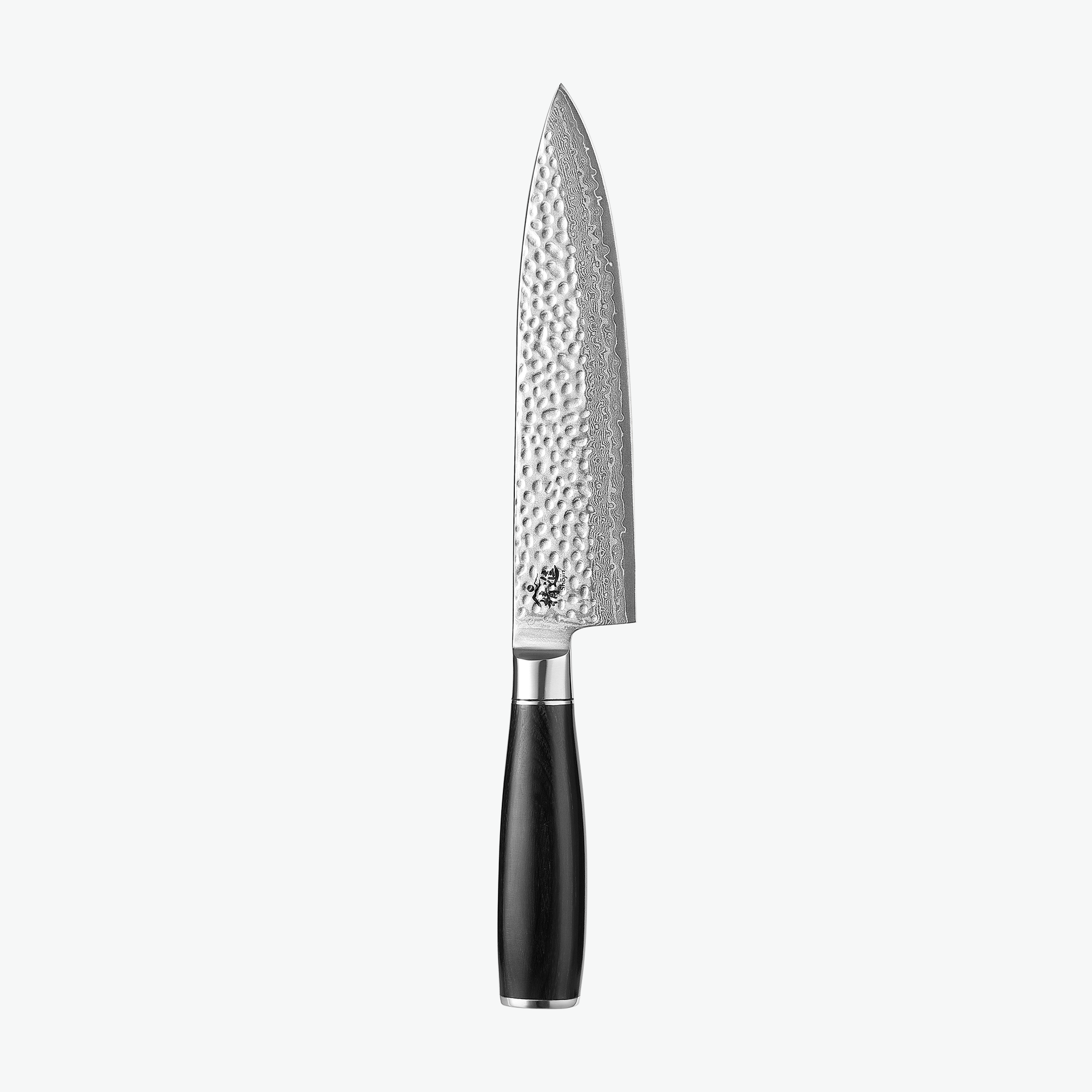
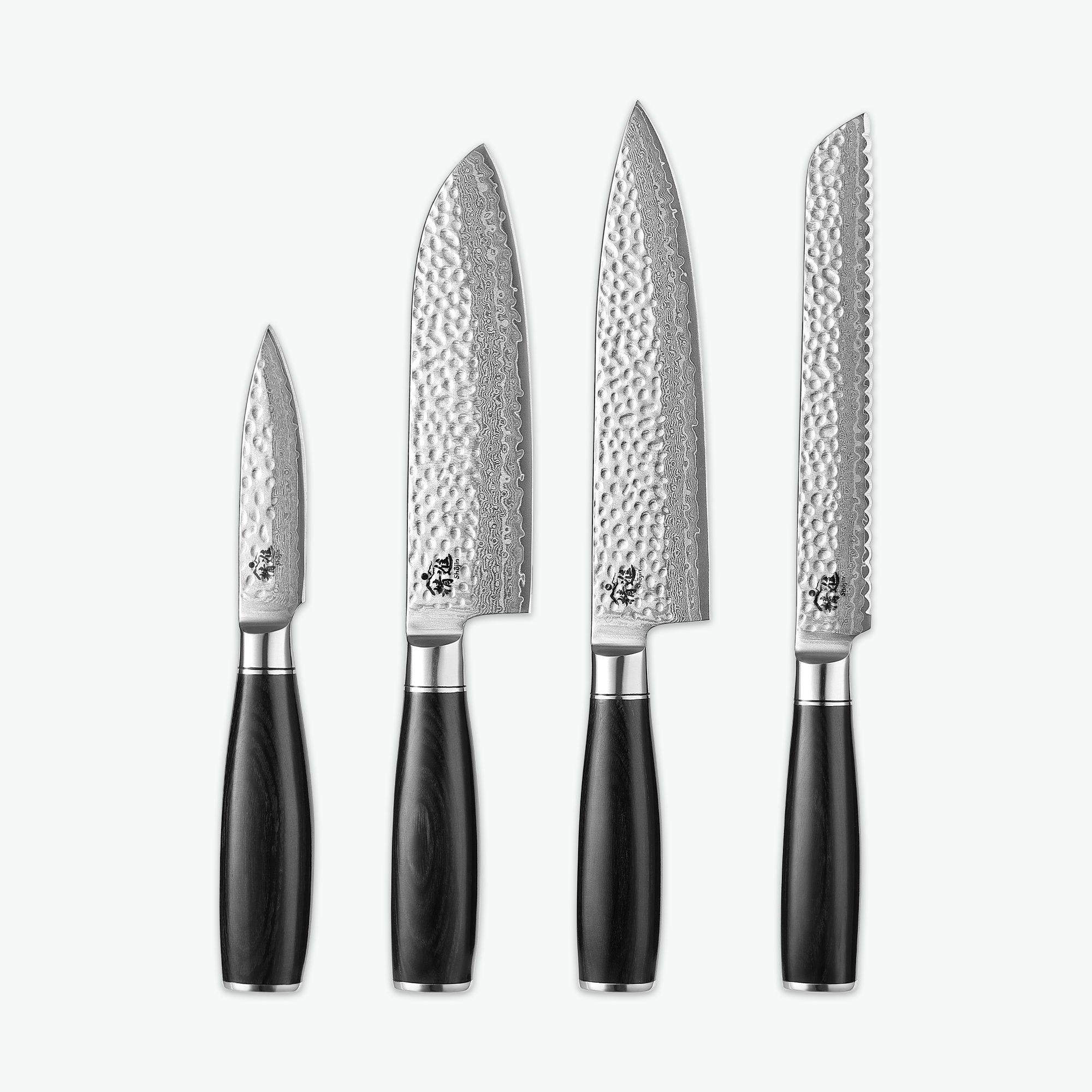
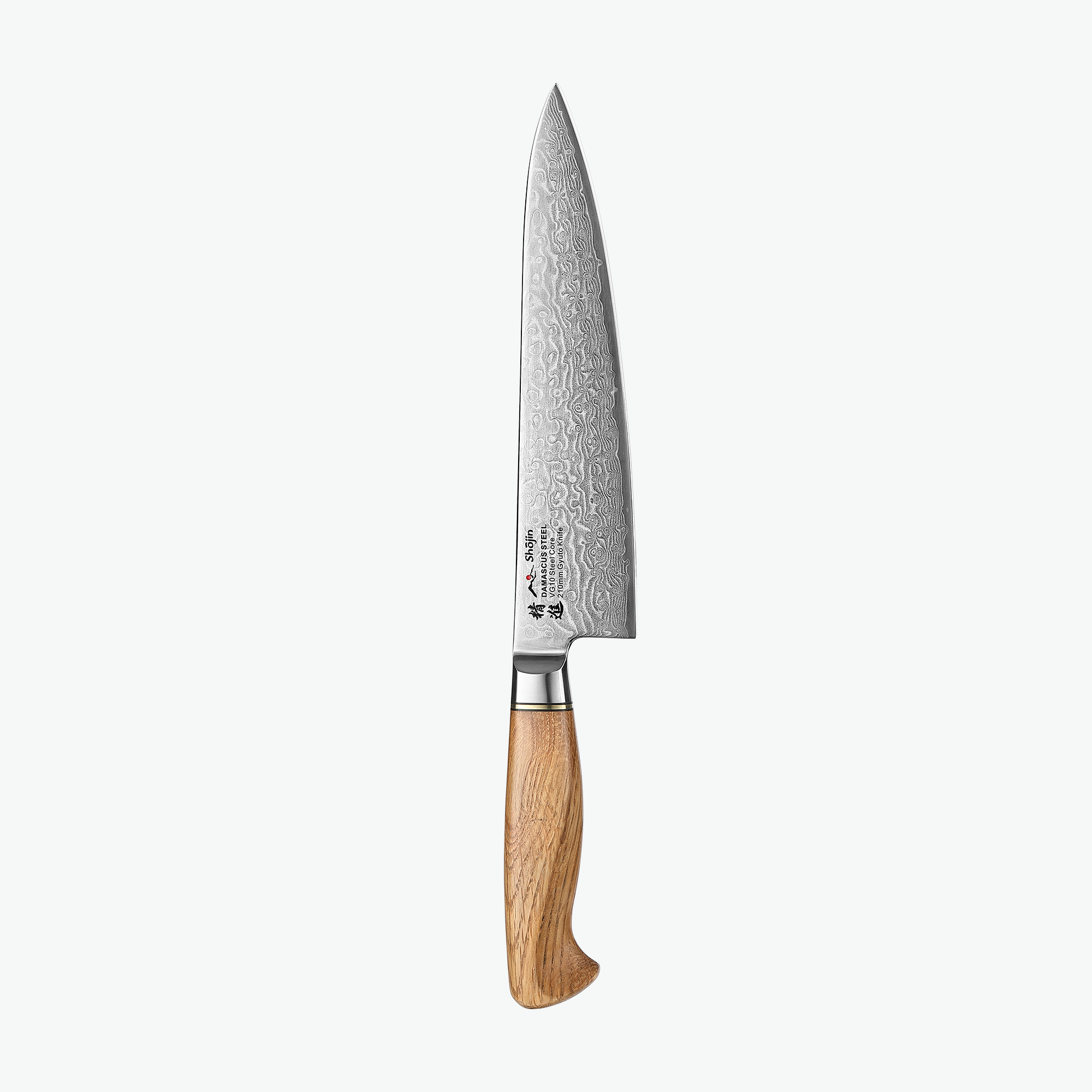
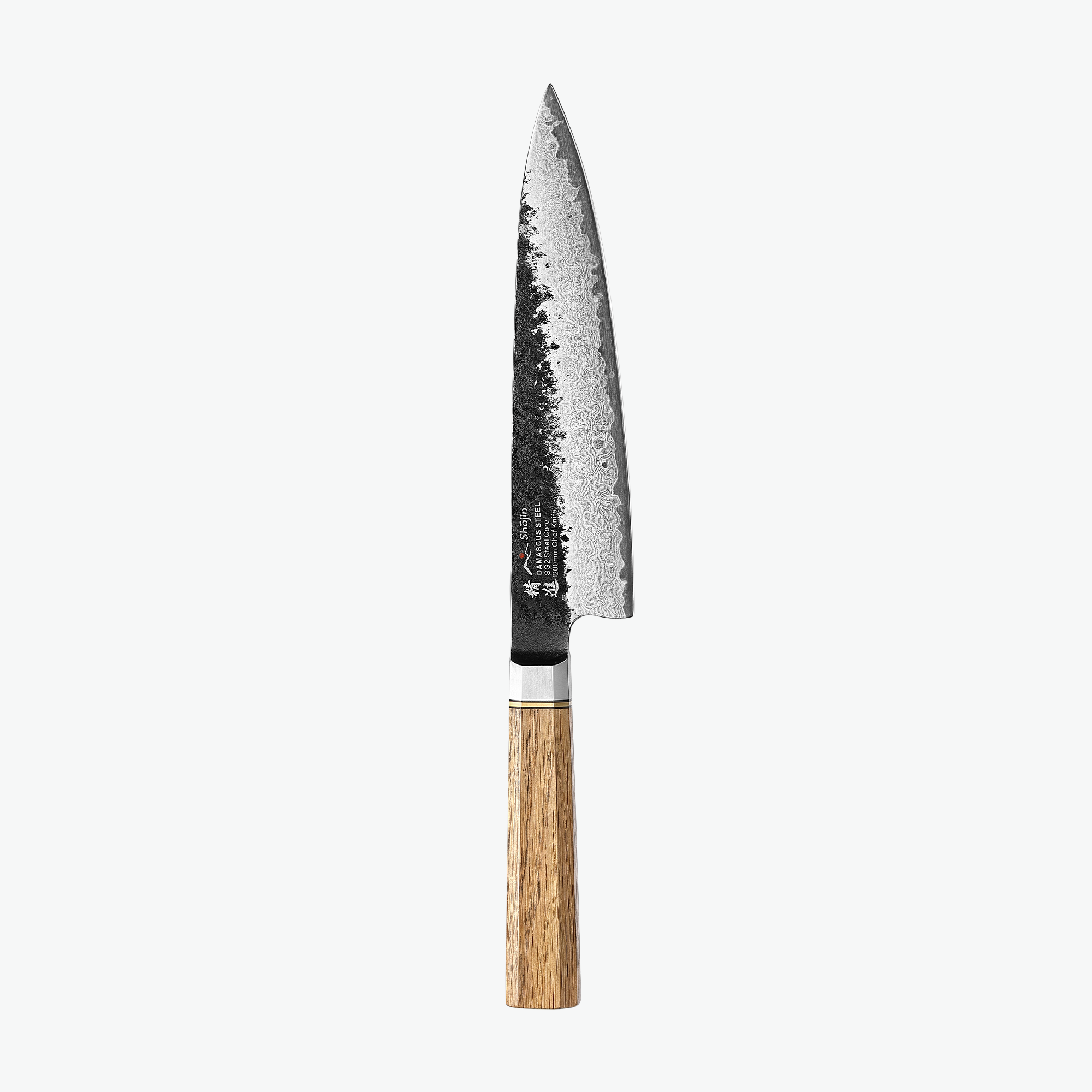
Craftsmanship and Use: We specifically choose oak for products where balance and durability are paramount. In our Shojin Kashi and Shojin Kaku knife series, the weight of the oak conveys a sense of control and precision. In our long-grain cutting boards, its robustness ensures a surface that can withstand generations of use without losing its integrity.
Walnut: The Elegant Virtuoso
Walnut is a high-quality hardwood valued for its deep, chocolate-brown color and complex, often wavy grain. Our walnut wood comes from South America.
-
Material Properties: Walnut's rich color results from chemical compounds that accumulate in the heartwood as it matures. The wood is robust, but relatively lightweight compared to other hardwoods like oak. This combination of strength and lightness allows us to create sturdy tools that don't feel bulky, but rather like an extension of the hand.
-
Craftsmanship and Use: We use walnut wood when we want to add extra elegance and warmth. It is the obvious choice for the handles of our Shojin Kashi and Kaku knives, where the deep luster of the wood complements the precision of the steel. Its elegant appearance also makes it ideal for our magnetic knife strips, transforming storage into an aesthetic presentation.
Bamboo: The Sustainable Sprinter
Although bamboo is botanically a grass, it possesses properties that rival the strongest hardwoods. Our bamboo grows in China.
-
The Anatomy of the Material: The secret of bamboo lies in its fiber structure. It grows incredibly fast and develops a dense, parallel fiber structure that offers an impressive strength-to-weight ratio. This dense structure makes the surface naturally moisture-resistant, which is a crucial advantage in the kitchen.
-
Craftsmanship and Use: Bamboo's light weight and durability make it an ideal material for our 6-piece cutlery set and the base of our sharpening stone, where stability is required. In our cutting boards, bamboo provides a hard surface that resists cuts and nicks while being relatively gentle on the knife edge.
The End Grain Duo: Acacia & Rubberwood
Our end grain cutting boards are an excellent example of how two different types of wood can work together to create a high-quality product.
-
The Anatomy of the Material:
-
Acacia is known for its dramatic, high-contrast tones and its dense, interlocked grain, which makes it naturally water-resistant and extremely durable.
-
Rubberwood is a more uniform and lighter wood with a dense, fine grain that provides high stability and resistance to warping. This is a sustainable by-product of the latex industry, as the wood is only harvested after the tree no longer produces latex.
-
-
Manufacturing and Use: By combining these two types of wood in an end-grain pattern, where the wood fibers stand vertically, a "self-healing" surface is created. When cutting, the knife edge glides between the fibers instead of cutting across them. This significantly preserves the sharpness of the knife and greatly extends the life of both the knife and the cutting board. The pattern is not only beautiful but also a functional consequence of combining these two complementary materials.
Our Foundation: Why We Exclusively Use FSC® Certified Wood
In a world full of vague claims about "green" and "eco-friendly" products, we believe in transparency and verifiability. That's why our standard is uncompromising: All wood used in Viretta products is 100% FSC® certified. But what does this label truly mean for you and the planet?
FSC® stands for the Forest Stewardship Council®. It is an international non-profit organization that has established the world's most respected standard for responsible forest management. When a product bears the FSC® logo, it is your guarantee that the wood comes from forests managed according to the strictest environmental and social standards.
This standard is based on three fundamental pillars that perfectly harmonize with Viretta's core values:
-
Environmental Responsibility: FSC certification ensures that forest management maintains the biological diversity, productivity, and ecological processes of the forest. This means protecting endangered species, preserving natural forest areas, and a commitment to avoid deforestation and the degradation of forest health.
-
Social Responsibility: This is an important but often overlooked aspect of sustainability. FSC is committed to protecting the rights of indigenous peoples and local communities who depend on the forest. At the same time, the standard ensures fair wages and safe working conditions for forest workers. This is directly reflected in our principle of "responsible production," where we demand respect for artisans and the planet from our partners.
-
Economic Viability: FSC ensures that forest management is economically viable without compromising ecological and social principles. This creates a long-term, sustainable model that benefits all stakeholders.
To ensure the complete integrity of this process, FSC uses a "Chain of Custody" system. This means that the wood is meticulously tracked from the forest, through the sawmill and production, all the way to us. This seamless chain is your guarantee that the finished product you hold in your hands is made from materials from a demonstrably responsible source.
For us, FSC® certification is more than just a label. It is a promise. It is proof of our holistic approach to quality, where the integrity of our materials is just as important as the final performance and aesthetics. It is your assurance that your Viretta tool is a responsible choice, from root to tip.

Leave a comment
This site is protected by hCaptcha and the hCaptcha Privacy Policy and Terms of Service apply.