

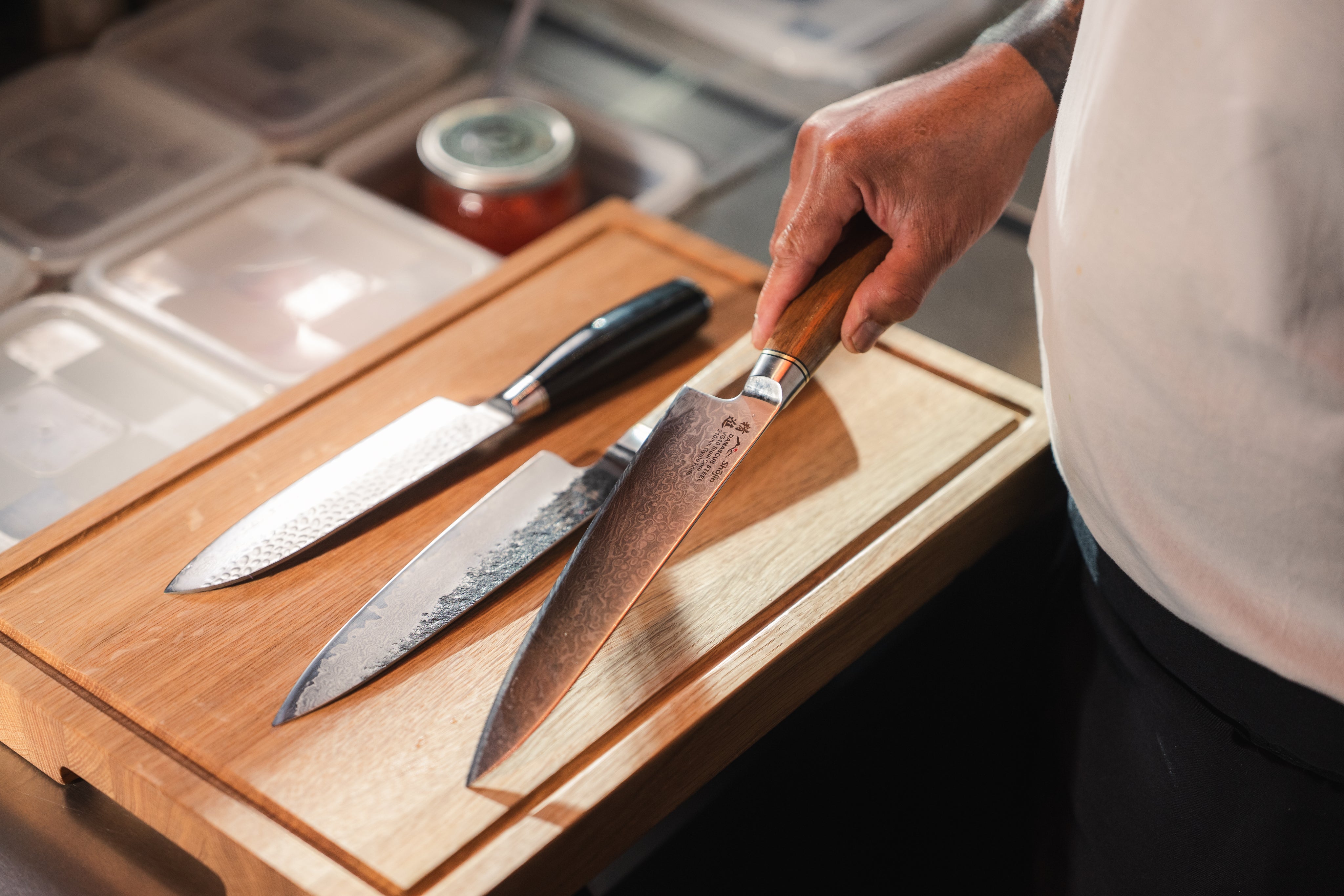
One of the most common questions we receive at Viretta concerns the beautiful, wavy patterns of our Shojin knives: What is Damascus steel and why is it more expensive than ordinary steel? The answer is simple, but the process behind it is incredibly complex. The price of a true Damascus knife reflects a time-consuming and artistic forging process, a high degree of craftsmanship, and the use of premium materials.
In this article, we'll take you into the forge to demystify Damascus steel. We'll explain what it is, how it's made, and why it represents an investment in both unparalleled performance and functional art for your kitchen.
What is Damascus Steel? From Ancient Legend to Modern Masterpiece
When it comes to Damascus steel, it's important to distinguish between two types:
-
Historical Damascus Steel (Wootz Steel): The original steel from antiquity, known from the Damascus region, was famous for its strength and characteristic patterns. Unfortunately, the technique behind this "Wootz" steel has been lost over time.
-
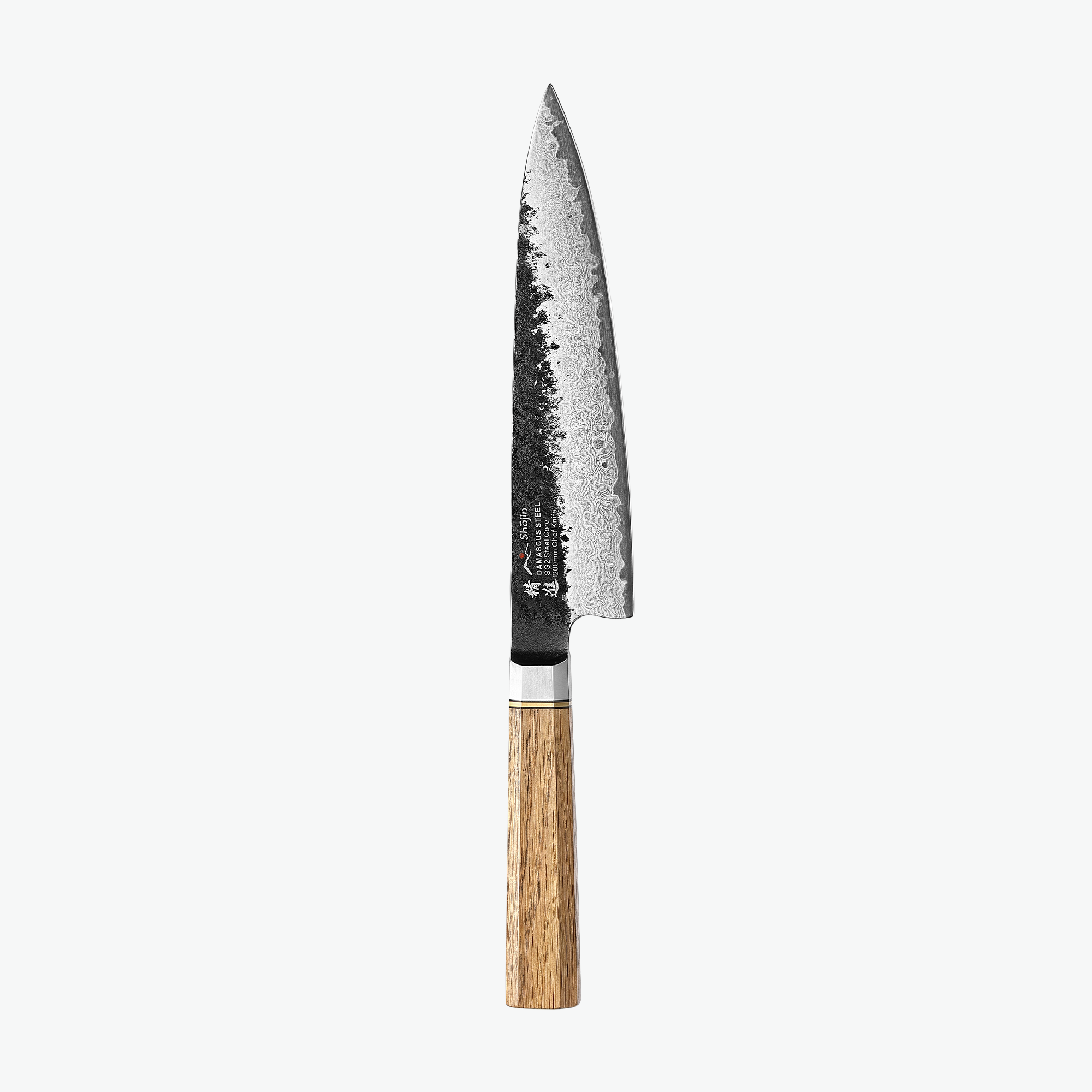
Modern Damascus Steel (Pattern-Welded Steel): Almost all modern Damascus steel is pattern-welded. This is an advanced forging technique where a smith layers, welds, and folds different types of steel to create a laminate with hundreds of layers. This is precisely the technique used in our Shojin Suna and Taru series.
So, it's not a single piece of metal, but a complex composite material that creates both the stunning aesthetics and functional advantages.
The 5 Reasons Why Damascus Steel is Expensive
The price of a Damascus blade is a direct consequence of the intense process required to create it. Let's break that down:
1. Manufacturing Process: A Symphony of Fire and Steel
Crafting a Damascus blade is a lengthy and physically demanding process, requiring precision at every step:
-
Layering: The smith begins by stacking thin plates of different steel types – often a mix of high- and low-carbon steel or different stainless alloys to create contrast.
-
Forge Welding: The stack is heated in a forge to a precise welding temperature (often over 1,000 °C) and then hammered with great force, fusing the layers at a molecular level.
-
Drawing and Folding: The block is hammered thinner and longer, then cut, folded, and re-welded. This process is repeated multiple times, exponentially increasing the number of layers – up to hundreds of layers.
-
Shaping: After reaching the desired number of layers, the laborious forging of the final blade contour begins.
-
Grinding and Etching: After hardening and grinding, the pattern becomes visible. The blade is immersed in an acid solution that reacts differently to the steel layers – some darken, others remain light – creating the distinctive, wavy Damascus pattern.
2. Craftsmanship: Experience and an Artistic Eye
This process cannot be automated. It requires an experienced smith with a deep metallurgical understanding and an artistic eye. The temperature must be controlled to within a few degrees, hammer blows precise, and the steel's behavior anticipated. A beautiful and functional pattern is an art form, and the price reflects the master behind it.
3. Materials: A Foundation of Quality
Premium blades require premium materials. The steels used in modern Damascus knives are themselves high-quality and expensive alloys. At Viretta, our Damascus blades consist of an extremely hard, high-performance core protected by the outer Damascus layers:
-
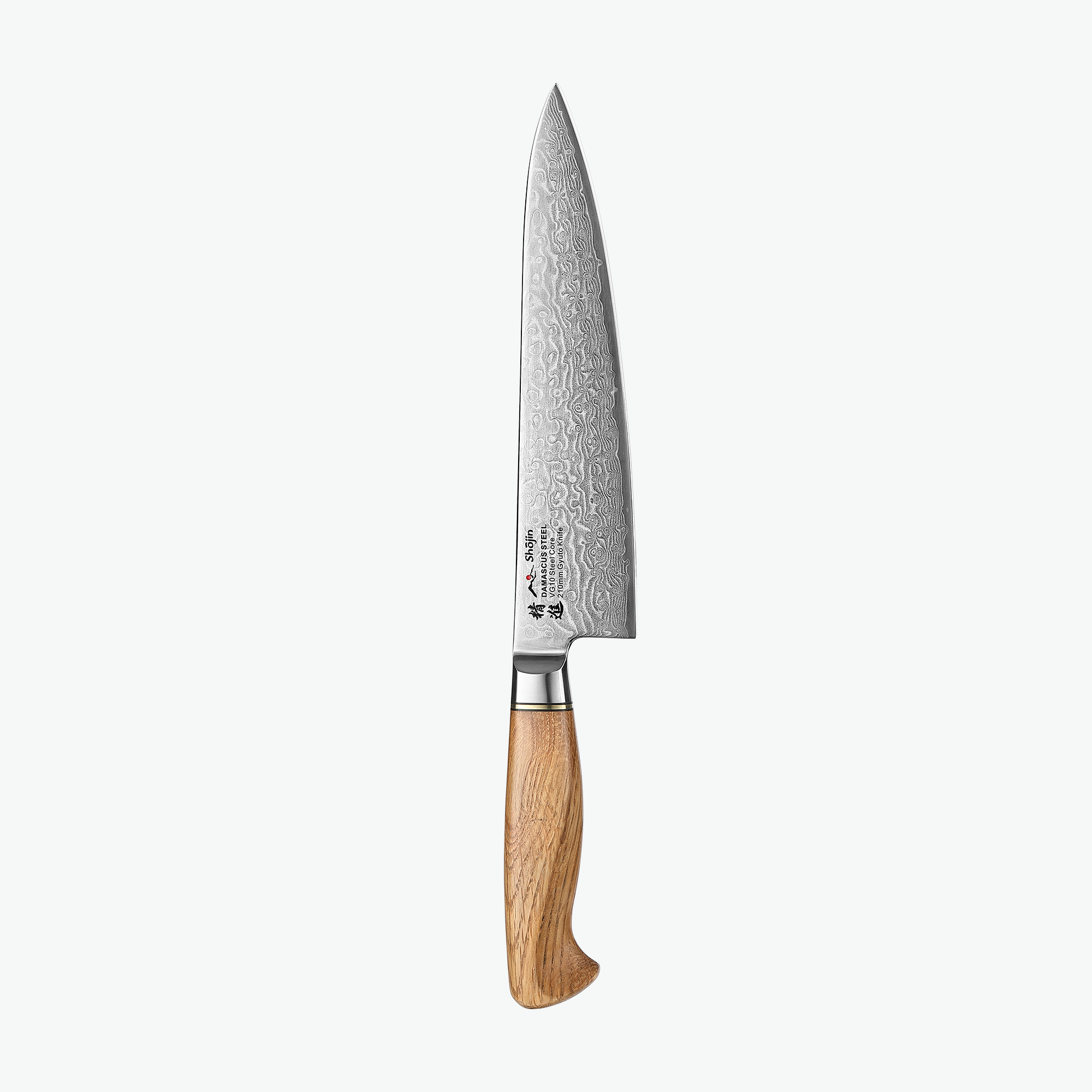
In our Shojin Taru and Akari series, we use a core of Japanese VG-10 steel.
-
In our Shojin Suna series, we use a core of high-performance 10Cr15CoMoV steel.
So you're not just paying for the many layers, but also for the exceptional steel choice at the heart of the blade.
4. Aesthetics: Every Blade is Unique
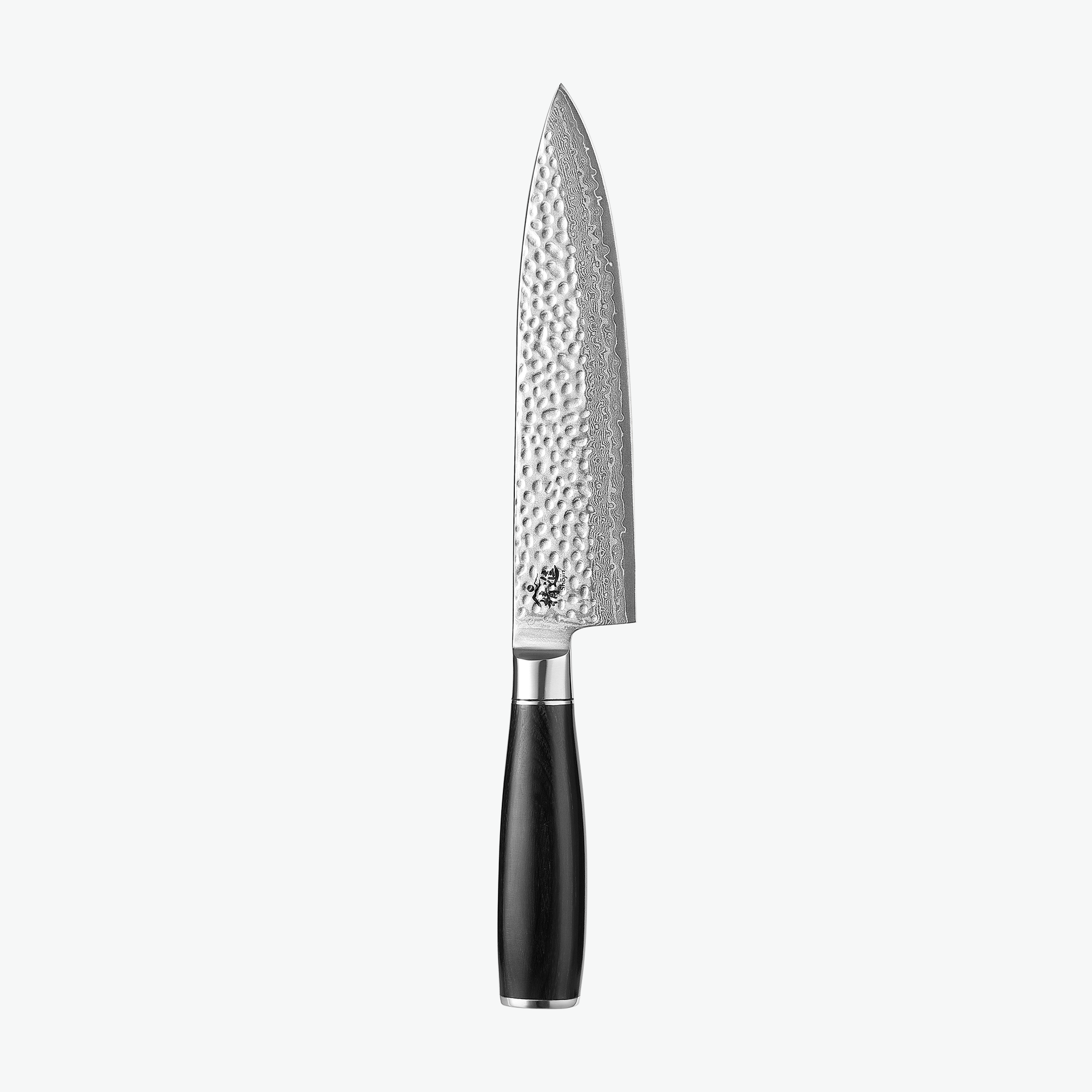
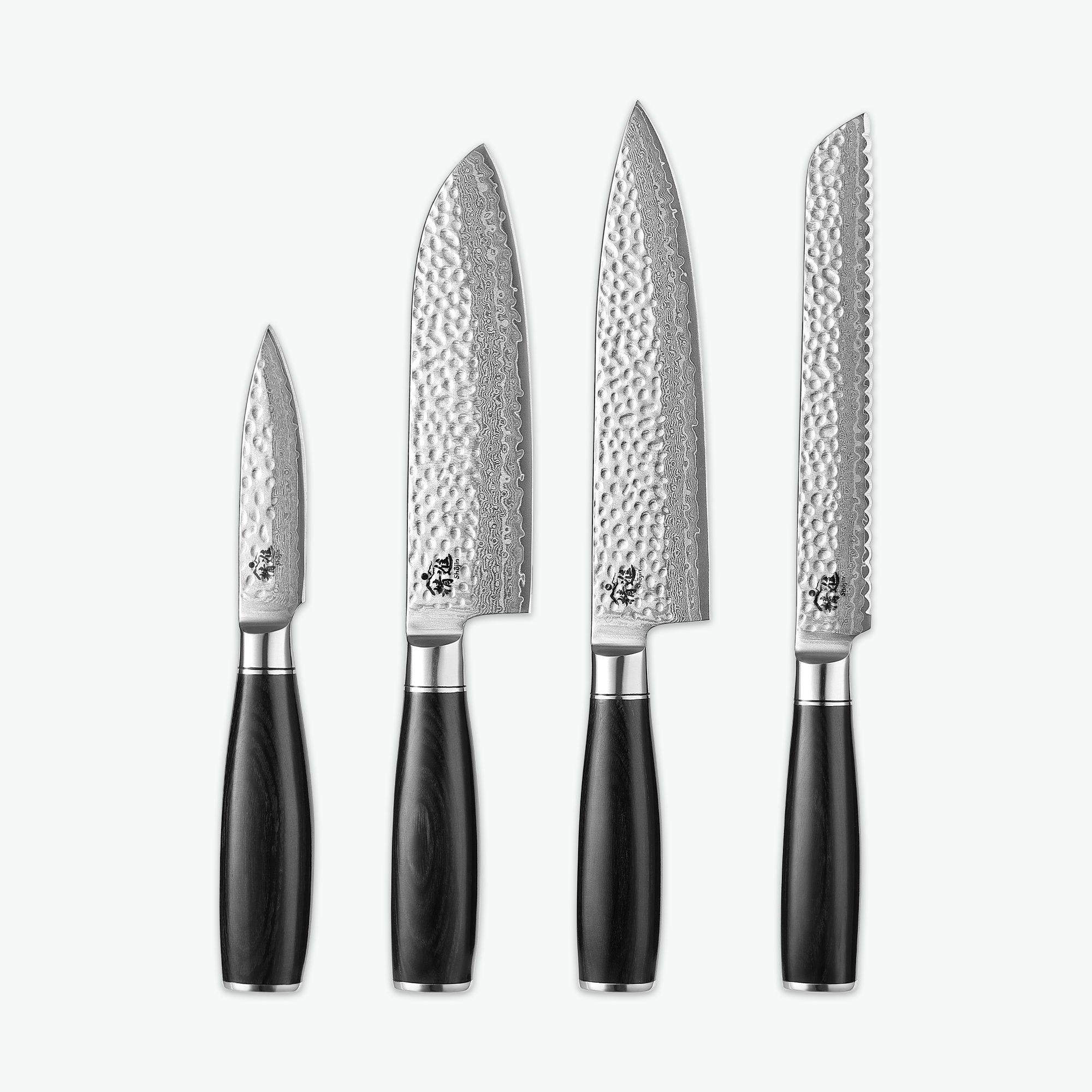
Due to the manual folding and forging process, no two Damascus knives are exactly alike. The pattern always shows small, unique variations. By purchasing a Damascus knife, you are acquiring a unique piece of functional art. Some blades, like those in our Shojin Taru series, even have a hand-hammered "Tsuchime" finish, further emphasizing their uniqueness. The copper-infused Damascus layer of our Shojin Akari series is another example of the material's artistic dimension.
5. Functional Advantage: More Than Just Looks
Beyond aesthetics, the Damascus construction also offers functional advantages. In modern stainless knives, the soft outer layers serve as a protective shield for the extremely hard core. This laminate gives the blade a certain flexibility and robustness, while the hard core maintains an ultra-sharp edge.
Is a Damascus Blade Worth It?
For someone solely seeking a functional cutting tool, a standard knife may suffice. However, for the passionate cook, enthusiast, or aesthete, a Damascus knife is a worthwhile investment.
You are investing in:
-
A history of ancient craftsmanship,
-
Superior cutting performance thanks to a premium steel core,
-
Daily joy working with a tool that is both beautiful and extremely functional.
It's an instrument that not only enhances your cooking but also enriches the experience.
Conclusion: The Price of True Craftsmanship
The price of a Damascus knife directly reflects the time, talent, and quality materials invested in its creation. Hundreds of hand-welded layers, shaped by a master and built around one of the best steels in the world.
A Damascus knife from Viretta is therefore more than just a knife. It is a promise of quality, a tribute to craftsmanship, and an investment in a piece of functional art that will bring you many years of joy in the kitchen.

Leave a comment
This site is protected by hCaptcha and the hCaptcha Privacy Policy and Terms of Service apply.